26/11 MUMBAI ATTACKS (2008) – A DEEP SECURITY ANALYSIS
The Night That Changed India Forever
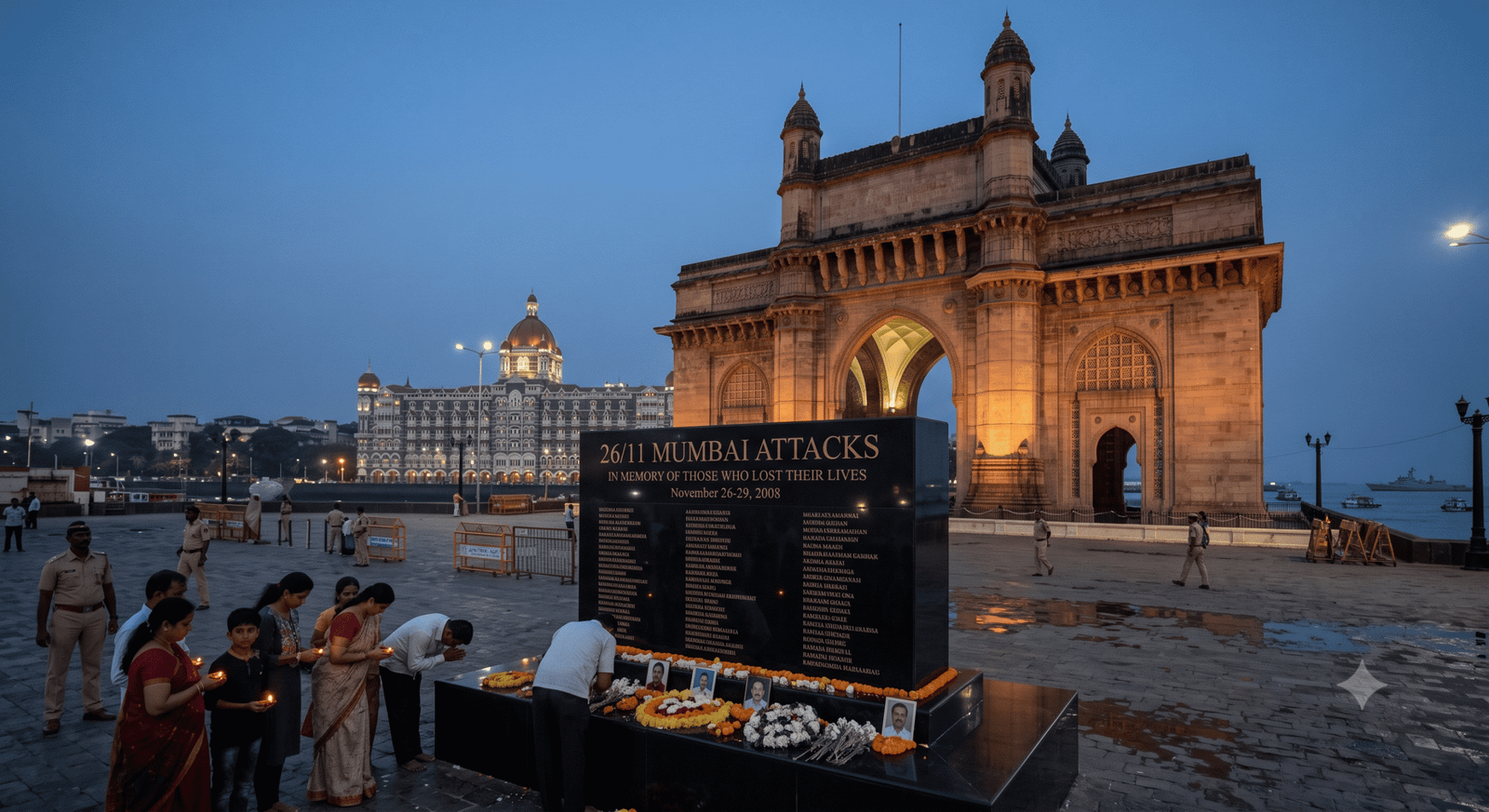
On the night of 26 November 2008, India’s financial capital, Mumbai, came under a coordinated terrorist assault that lasted nearly 60 hours.
It was not just an attack—it was a carefully planned urban siege.
Who Attacked and Why
-
10 terrorists from Lashkar-e-Taiba (LeT)
-
Trained in Pakistan
-
Objective:
-
Mass civilian casualties
-
Global media attention
-
Psychological trauma
-
Damage India’s international image
-
How the Attack Was Executed (Strategic View)
Sea Route Exploitation
-
Terrorists hijacked an Indian fishing trawler (Kuber)
-
Approached Mumbai by sea, undetected
-
Landed at multiple points near South Mumbai
👉 This exposed a critical maritime security gap
Multiple, Simultaneous Targets
The attackers split into teams and struck:
-
Chhatrapati Shivaji Terminus (CST)
-
Taj Mahal Palace Hotel
-
Oberoi-Trident Hotel
-
Leopold Café
-
Nariman (Chabad) House
-
Cama Hospital area
This overwhelmed local police and emergency services.
Urban Warfare Tactics
-
Automatic rifles and grenades
-
Constant movement
-
Use of hostages
-
Real-time instructions from handlers via phone
Handlers monitored Indian news channels, guiding attackers live.
👉 This revealed a media-security vulnerability
Security Failures Exposed
1. Intelligence Failure
-
Multiple warnings existed about:
-
Sea-borne infiltration
-
Lashkar plans
-
-
These were not effectively acted upon
2. Police Equipment Gap
-
Mumbai Police:
-
Outdated rifles
-
Bulletproof vests missing
-
No night-vision gear
-
Yet officers like Tukaram Omble fought terrorists barehanded, sacrificing their lives.
3. Response Delay
-
NSG commandos were in Delhi
-
Delay of several hours to reach Mumbai
-
No permanent elite force stationed locally
4. Inter-Agency Coordination
-
Poor coordination between:
-
Local police
-
State agencies
-
Central forces
-
The Counter-Terror Response
Operation Black Tornado
-
Conducted by NSG (National Security Guard)
-
Cleared:
-
Taj Hotel
-
Oberoi-Trident
-
Nariman House
-
After 60 hours:
-
9 terrorists killed
-
1 captured alive (Ajmal Kasab)
Casualties
-
166 people killed
-
300+ injured
-
Victims included:
-
Civilians
-
Police officers
-
Foreign nationals
-
Strategic & Security Reforms After 26/11
1. Coastal Security Overhaul
-
Coastal radar chain
-
Marine police stations
-
Fishing boat registration & tracking
2. Creation of NIA
-
National Investigation Agency formed
-
Central counter-terror investigations
3. NSG Regional Hubs
-
NSG units stationed in major cities
-
Faster response times
4. Intelligence Reforms
-
Better data sharing
-
Real-time threat monitoring
-
Strengthening of NATGRID
Why 26/11 Was a Turning Point
-
Shifted India from reactive to preventive security
-
Changed urban counter-terror doctrine
-
Exposed modern terrorism as media-driven warfare
Core Lesson
Modern terrorism targets society’s confidence, not just lives.
Security must evolve faster than threats.