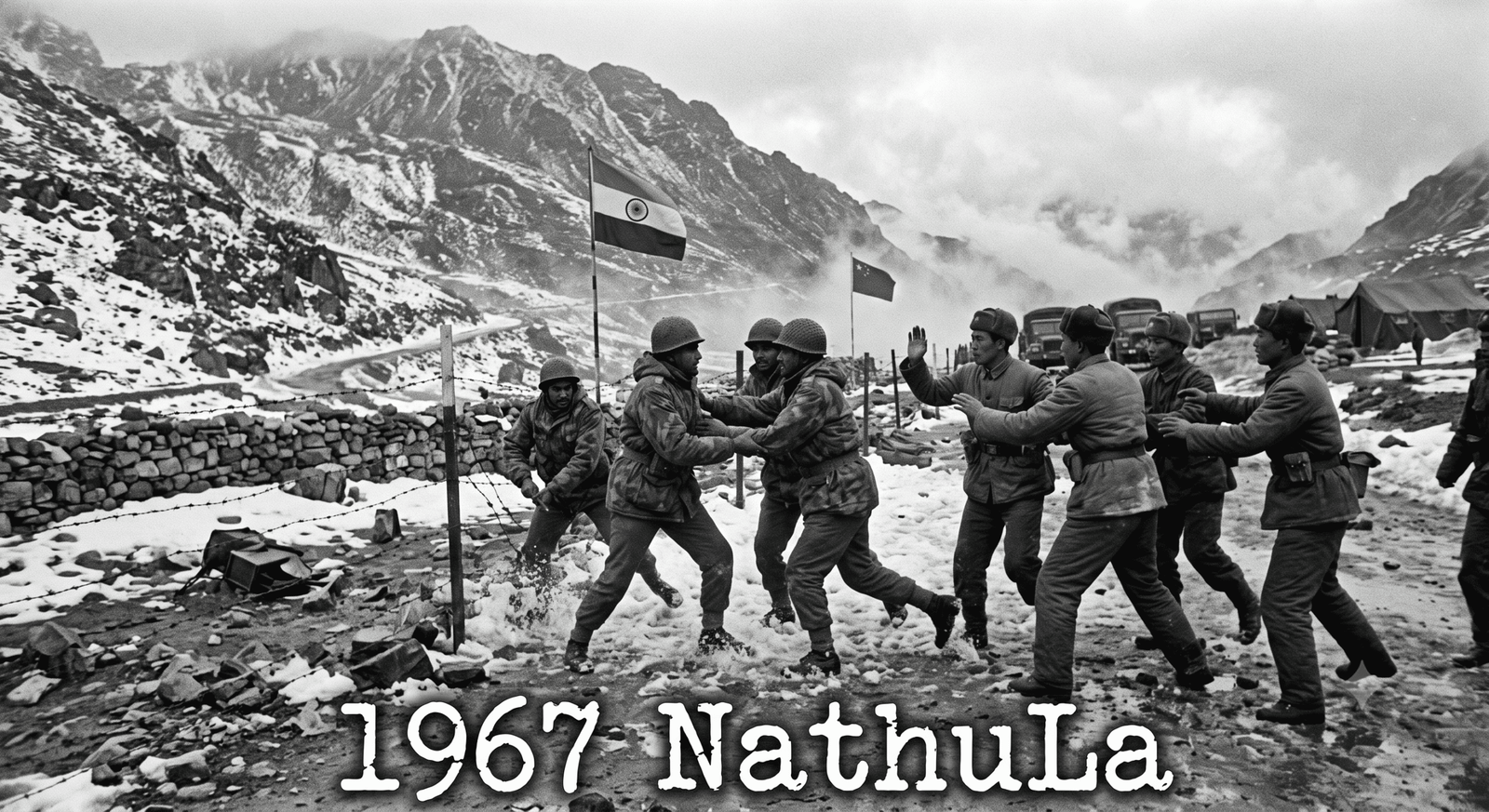
1967 Nathu La & Cho La Clashes – When India Fought Back
Historical Context
The 1962 Indo-China War left deep scars on India’s military and national confidence. China’s swift victory created a perception that India would avoid confrontation at any cost.
But by 1967, India had learned its lessons.
-
The Indian Army was reorganized
-
Troops were better trained
-
Artillery deployment was improved
-
Leadership was more assertive
At that time, Sikkim was an Indian protectorate, not yet a full state. China challenged India’s authority there.
Geography: Why Nathu La Matters
-
Nathu La Pass sits at 14,140 feet
-
It connects Sikkim to Tibet
-
Narrow ridges, freezing winds, and low oxygen
-
Whoever controls it controls movement across the eastern Himalayas
Trigger of the Conflict
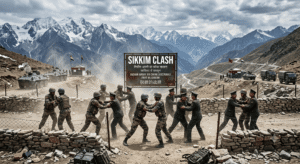
In August 1967, Indian troops began laying barbed wire fencing to clearly mark the border.
Chinese troops objected aggressively and demanded withdrawal.
Indian commanders refused.
The First Shots – September 11, 1967
Without warning, Chinese troops opened heavy artillery fire on Indian positions.
Indian soldiers were exposed—many were standing in the open.
But unlike 1962, India responded immediately and decisively.
-
Indian artillery units bombarded Chinese bunkers
-
Accurate fire destroyed supply lines
-
Chinese positions on higher ground were neutralized
Escalation at Cho La Pass
In October 1967, clashes spread to Cho La Pass, another strategic location.
Indian troops conducted offensive maneuvers, pushing Chinese forces back.
Casualties & Outcome
-
Indian casualties: ~80 killed
-
Chinese casualties: Estimated 300–400 (never officially confirmed)
For the first time, Chinese forces withdrew under fire.
Strategic Impact
-
China never again attempted such aggression in Sikkim
-
Nathu La remains peaceful to this day
-
India restored military confidence
This was not just a battle—it was psychological victory.
Lesson
Preparedness and political will can change the outcome of history.