Our Story preserves powerful moments, people, and cultures that shaped history. We bring the past to life through meaningful stories that inspire and educate.
Human Stories

A NIGHT OF FROST (POOS KI RAAT)

Introduction

“A Night of Frost” is one of Munshi Premchand’s most realistic and painful stories. It presents the harsh reality of poor farmers and exposes the cruelty of poverty, exploitation, and social injustice. The story shows how hunger and cold can crush human dignity and how survival becomes more important than honor.


The Story

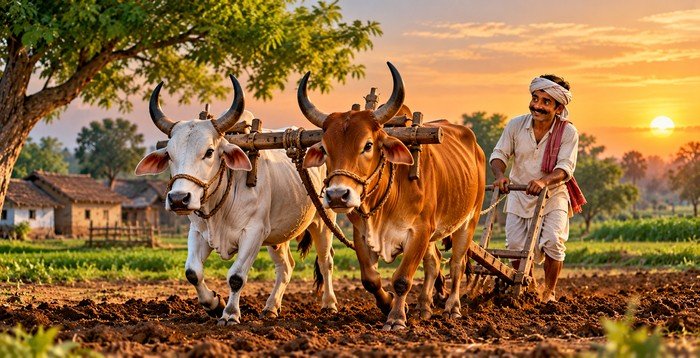
Halku was a poor farmer who lived with his wife, Munni, in a small mud hut on the outskirts of the village. His life was a constant struggle. He worked endlessly in the fields, yet poverty never left his doorstep.

The month of Poos had arrived. Winter nights were unbearably cold. Frost covered the fields like a white sheet, destroying crops silently. For farmers like Halku, winter was not just a season—it was an enemy.

One evening, Halku sat outside his hut, rubbing his hands together to keep warm. Munni was sitting near the hearth, cooking thin gruel.

“Halku,” she said, “the landlord’s man came again today.”

Halku sighed deeply.
“What does he want now?”

“He wants the rent,” Munni replied bitterly. “He says if we don’t pay, we’ll be thrown out.”

Halku laughed weakly.
“Thrown out? As if this hut is a palace.”

Munni looked at her husband with anger and pain.
“You joke, but I can’t sleep at night thinking about it. The cold is killing us. You promised to buy a blanket this year.”

Halku lowered his eyes.
“How can I buy a blanket? The landlord took all the money. If I don’t pay rent, he’ll seize the field.”

Munni’s eyes filled with tears.
“So we will freeze to death?”

That night, Munni cried silently. Halku felt helpless.

The next morning, Halku made a decision. He would pay the rent and forget about the blanket. Survival came before comfort.


The Landlord’s Cruelty

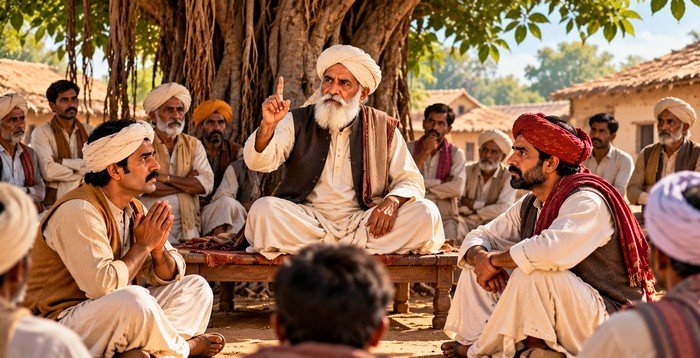
Halku went to the landlord’s house. The landlord sat on a raised platform, chewing betel leaves.

“I need the rent,” the landlord said coldly.

Halku folded his hands.
“Master, the harvest was poor this year. Please give me some time.”

The landlord laughed.
“Time doesn’t grow crops.”

Halku took out the money Munni had saved secretly for the blanket and handed it over.

On the way back, Halku felt as if he had sold his own warmth.


The Freezing Night

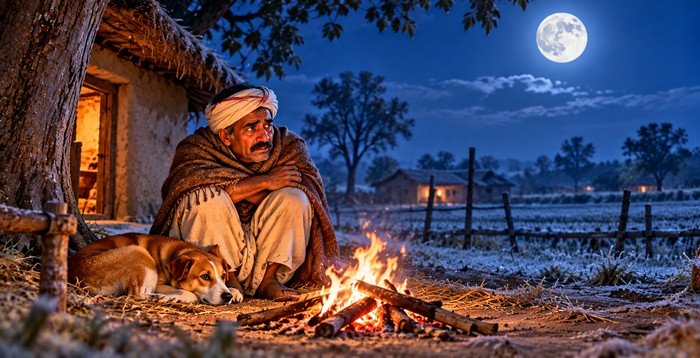
That night was the coldest of the season. The sky was clear, and the frost was thick.

Halku had to guard his field from wild animals. He took his dog Jabra with him and went to the fields.

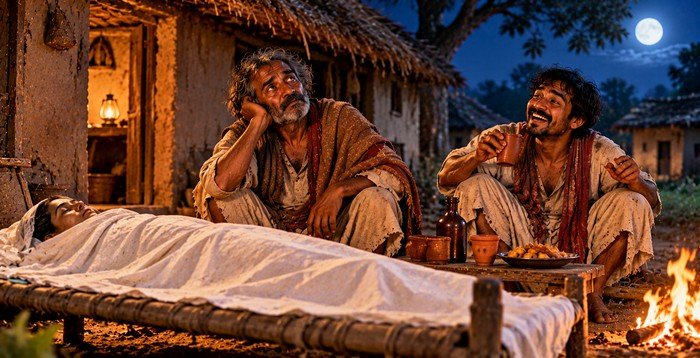
There was no blanket. Halku wrapped himself in a thin cotton sheet. The cold pierced his bones like needles.

He sat near a small fire, shivering uncontrollably. Jabra sat close to him.

“Hunger is one thing,” Halku murmured, “but this cold is worse.”

The fire slowly died out. Halku had no more wood.

His teeth chattered. His body trembled.

He walked around to keep himself warm, but exhaustion took over.

“Jabra,” he said, “why should we suffer like this?”

Jabra wagged his tail, unaware of human suffering.


The Enemy Wins

In the distance, Halku heard animals moving in the field. He knew they were destroying his crops.

For a moment, he thought of chasing them away.

Then he stopped.

“What does it matter?” he thought bitterly.
“Even if the crop survives, the landlord will take it.”

He sat down again, numb and defeated.

The animals continued eating freely.

Halku watched silently, too cold and too broken to care.


Morning After

When dawn arrived, Halku returned home.

Munni looked at him anxiously.
“Did you save the crop?”

Halku smiled weakly.
“No. The animals destroyed it.”

Munni was shocked.
“Why didn’t you stop them?”

Halku replied calmly,
“Let them eat. At least they didn’t make me freeze all night.”

Munni understood.

She said softly,
“Maybe next year we won’t have to guard the field.”

Halku lay down peacefully for the first time in many days.


Conclusion

The story ends without hope, without victory—only reality.

Premchand does not offer comfort. He forces the reader to confront the brutal truth:
poverty steals not only wealth, but courage, responsibility, and dreams.


Moral of the Story

Extreme poverty breaks the human spirit and makes survival more important than duty.
Social injustice turns honest workers into helpless victims.