Unique Durga Puja Traditions in India
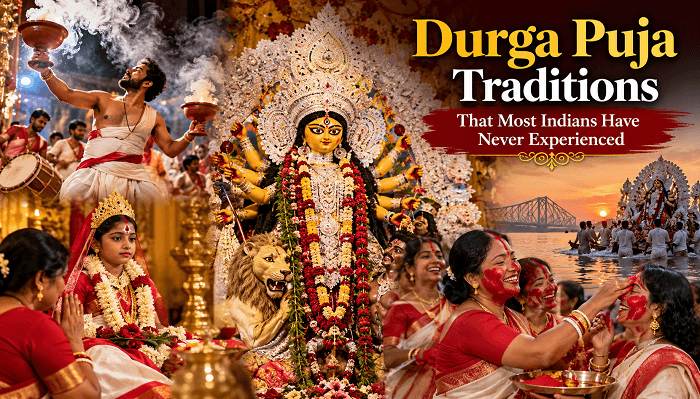
Durga Puja Traditions That Most Indians Have Never Experienced
Durga Puja is much more than a festival of decorated pandals, traditional sweets, and beautifully dressed crowds. Across West Bengal and other parts of India, the celebration brings together centuries-old beliefs, community traditions, artistic expression, and rituals that many people outside their regions may never have witnessed.
Some of the unique Durga Puja traditions in India are especially fascinating because they reveal how the same festival can carry different meanings for different communities. From worshipping a young girl as a symbol of divine feminine power to dancing with smoking incense burners, these customs offer a deeper understanding of Indian cultural heritage.
If you have only experienced Durga Puja through photographs or television, these lesser-known traditions will help you appreciate the festival beyond its colourful celebrations.
1. Kumari Puja: Worshipping the Divine in a Young Girl
One of the most meaningful Bengali Durga Puja rituals is Kumari Puja, in which a young, prepubescent girl is worshipped as a manifestation of Goddess Durga or the Divine Mother.
The ritual expresses the belief that feminine power is sacred and deserves respect. A girl is ceremonially welcomed, offered flowers and gifts, and honoured through prayers. The exact procedures and the age of the girl can vary according to the religious tradition followed by the organisers.
What makes Kumari Puja special?
Unlike rituals focused on a sculpted idol, Kumari Puja directs attention towards the living embodiment of divine feminine energy. It encourages devotees to reflect on dignity, compassion, and the importance of respecting girls and women.
The tradition is associated with different Shakta practices and is particularly well known at Belur Math, the headquarters of the Ramakrishna Math and Ramakrishna Mission near Kolkata.
For visitors, it is important to remember that this is a sacred ceremony, not a performance. Photography and close observation should follow the organisers’ instructions.
2. Dhunuchi Dance: A Devotional Performance with Fire and Incense
The Dhunuchi dance is among the most visually striking Durga Puja traditions. During the ritual, devotees dance while holding a dhunuchi, a traditional earthen incense burner containing burning charcoal and aromatic ingredients, often including coconut husk.
As incense smoke rises around the dancers, the rhythmic movements accompany the beats of the dhak, the traditional Bengali drum. The atmosphere becomes energetic without losing its devotional character.
Why is Dhunuchi dance performed?
Dhunuchi dance is associated with devotional offerings to Goddess Durga, especially during the evening aarti and other ceremonial moments. Participants may dance individually or in groups, following the rhythm of the drums.
Some pandals organise friendly competitions, while others maintain a more traditional atmosphere. The style differs from one community to another.
If you want to witness this ritual, arrive early enough to find a safe viewing position. Burning incense and hot charcoal can cause injuries, so visitors should never handle a dhunuchi without proper guidance.
3. Sindoor Khela: A Farewell Filled with Emotion
Sindoor Khela is a well-known Bengali custom associated with Vijayadashami, the final day of Durga Puja. Traditionally, married Bengali Hindu women apply vermilion, or sindoor, to the Goddess and to one another before bidding farewell to her idol.
The ritual represents a combination of devotion, celebration, and the emotional farewell that accompanies Durga’s departure from her parental home.
The symbolism is closely connected with Bengali understandings of Durga as a daughter who visits her family during the festival and returns to her divine abode afterwards.
Although the practice is traditionally associated with married women, participation and interpretations vary among communities. Some celebrations now welcome broader participation, reflecting changing social attitudes.
Visitors should avoid assuming that everyone wishes to participate. Respect for personal boundaries matters as much as appreciation of the custom.
4. Bodhon: Awakening the Goddess Before the Main Celebration
One of the more distinctive rituals in Durga Puja is Bodhon, the ceremonial invocation or awakening of Goddess Durga.
In many Bengali traditions, the main worship is preceded by rituals that establish the sacred presence of the Goddess. Bodhon is commonly associated with the evening of Shashthi, the sixth day of the lunar fortnight during the festival period.
The practice is linked to the story of Lord Rama invoking Durga before his battle with Ravana, although versions of the story and ritual details differ across traditions.
For devotees, Bodhon marks a spiritual transition: the days of preparation give way to the central worship of the Goddess. It also illustrates how mythology, ritual, and community celebration come together during Durga Puja.
5. Nabapatrika: Nine Plants Representing Sacred Power
Nabapatrika, also known as Kolabou in popular Bengali usage, is another fascinating element of traditional Durga Puja.
A bundle made from nine plants is ritually prepared, traditionally including a banana plant and other botanical elements. It is bathed and dressed in cloth before being placed near the image of Goddess Durga according to the customary procedure.
The nine plants are associated with sacred feminine power and agricultural abundance. Their precise symbolic explanations can vary among ritual traditions.
What does Nabapatrika represent?
The ceremony offers a reminder that traditional Indian religious practices often connect divinity with the natural world. Plants, crops, seasonal cycles, and human prosperity are woven into the festival’s symbolism.
Rather than viewing the custom simply as an unusual procession, visitors can appreciate it as a cultural expression of the relationship between agriculture, ecology, and religious life.
6. Mahalaya: The Beginning of Durga Puja’s Emotional Journey
For many Bengali families, Durga Puja begins emotionally before the main days of worship. Mahalaya marks an important point in the seasonal observance and is associated with the invocation of the Goddess.
Generations of listeners have connected Mahalaya with Mahishasura Mardini, the celebrated radio broadcast featuring devotional music, Sanskrit recitation, and narration of the Goddess’s victory over the buffalo demon Mahishasura.
The broadcast became an enduring part of Bengali cultural memory. Families may listen at home, share recordings, or revisit the programme as an annual tradition.
Mahalaya demonstrates that festivals are not experienced only through physical ceremonies. Music, storytelling, memory, and family routines can be equally important in keeping cultural traditions alive.
7. Bonedi Bari Puja: Durga Puja Inside Historic Family Homes
Not every Durga Puja takes place in a large public pandal. Kolkata and other parts of Bengal are also known for Bonedi Bari Pujas, organised by historic and traditionally prominent families in their ancestral homes.
These celebrations may feature distinctive architectural settings, family-specific rituals, traditional offerings, and customs passed down through generations.
Unlike public pandals designed for large crowds, some household celebrations preserve a more intimate atmosphere. The decorations and ceremonial arrangements often reflect the family’s own history.
The term Bonedi Bari is broadly associated with established or traditionally prominent Bengali households, but the customs are not identical across families.
For visitors interested in heritage, these household celebrations can offer a valuable glimpse into the relationship between domestic life, family identity, and religious tradition. Access is not universal, so check whether a household welcomes visitors before planning a visit.
Practical Tips for Experiencing Durga Puja Respectfully
If you plan to explore these unique Durga Puja traditions in India, a little preparation can make your experience more rewarding.
- Choose your timing carefully: Shashthi, Ashtami, Navami, and Dashami have different ceremonies. Check local schedules before travelling.
- Wear comfortable clothing: Expect walking, queues, crowded streets, and changing weather.
- Respect photography rules: Ask permission before photographing worshippers, children, or private household ceremonies.
- Learn the meaning before attending: Understanding a ritual makes it easier to appreciate why participants treat it as sacred.
- Explore beyond major pandals: Community celebrations and traditional family worship can reveal different aspects of Bengali culture.
- Prioritise safety: Follow crowd-control instructions and keep a safe distance from flames, incense burners, and ceremonial processions.
A respectful visitor does not need to participate in every ritual. Observing quietly and learning from knowledgeable local people can be just as meaningful.
Why Choose StoryAccount for Cultural Stories?
At StoryAccount, our goal is to make Indian history, festivals, biographies, travel, and cultural traditions easier to understand through engaging storytelling.
Rather than treating festivals as simple lists of dates and rituals, we aim to explore their historical context, regional differences, symbolism, and continuing relevance. This approach helps readers discover the stories behind familiar celebrations and appreciate India’s cultural diversity.
As you explore more articles on StoryAccount, look for stories that connect traditional practices with the people and communities who keep them alive. Cultural knowledge becomes more meaningful when it is understood in its proper context.
Conclusion: Discover the Meaning Behind Durga Puja
The unique Durga Puja traditions in India reveal a celebration that is far richer than its public festivities. Kumari Puja honours divine feminine power, Dhunuchi dance combines devotion with rhythmic movement, Nabapatrika connects worship with nature, and Mahalaya preserves generations of musical and spiritual memory.
Each tradition offers a different window into Bengali culture and the wider diversity of Indian religious life. Their meanings may vary between communities, but together they demonstrate how rituals preserve stories, values, and collective identity.
Want to discover more fascinating Indian traditions? Explore StoryAccount for more stories about India’s festivals, historical places, cultural heritage, and forgotten customs.
Frequently Asked Questions
1. What are the most unique Durga Puja traditions in India?
Some distinctive traditions include Kumari Puja, Dhunuchi dance, Sindoor Khela, Bodhon, Nabapatrika, Mahalaya observances, and Bonedi Bari Puja. Each reflects a different aspect of Bengali religious and cultural heritage.
2. What is the meaning of Kumari Puja?
Kumari Puja is a ritual in which a young girl is worshipped as a manifestation of the Divine Mother. It expresses the sacredness of feminine power and is observed according to specific religious traditions.
3. Why do people perform Dhunuchi dance during Durga Puja?
Dhunuchi dance is a devotional offering associated with Goddess Durga. Dancers move rhythmically while holding traditional incense burners, often accompanied by the beats of the dhak.
4. What is the significance of Nabapatrika in Durga Puja?
Nabapatrika involves the ritual preparation and worship of nine plants associated with sacred feminine power and agricultural abundance. It reflects the connection between nature, prosperity, and religious tradition.
5. When is the best time to experience traditional Bengali Durga Puja rituals?
The main celebrations occur from Shashthi through Dashami, with different rituals associated with particular days. Check local pandal schedules and household access arrangements because ceremonies vary by location and community.