Sharad Purnima Significance and Traditions
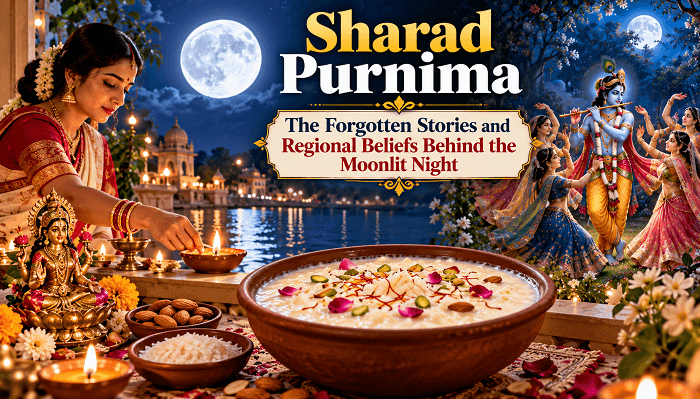
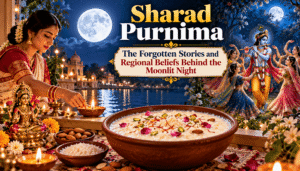
Sharad Purnima: The Forgotten Stories and Regional Beliefs Behind the Moonlit Night
On a clear autumn night, families in parts of India place bowls of kheer beneath the moonlight, temples hold special prayers, and stories about Goddess Lakshmi travel from one generation to another. This is Sharad Purnima, a full-moon observance that combines devotion, seasonal customs, and folklore.
Understanding the Sharad Purnima significance and traditions means looking beyond the familiar image of moonlight falling on a bowl of rice pudding. The observance is known by different names in different regions, and its customs reflect local religious beliefs, family practices, and stories passed down over centuries.
Some traditions connect the night with Goddess Lakshmi, others with Lord Krishna, and many with the seasonal beauty of the autumn full moon. However, religious beliefs, regional customs, and scientifically established facts are not the same thing. Exploring these distinctions makes the festival even more interesting.
1. What Is the Significance of Sharad Purnima?
Sharad Purnima falls on the full-moon day of the Hindu lunar month of Ashwin, usually during September or October. The precise Gregorian date changes each year.
The festival is associated with the arrival of autumn, a season traditionally celebrated in many parts of India for its pleasant evenings and clear skies. In religious practice, the full moon is regarded as auspicious, and devotees may observe fasting, offer prayers, or prepare special foods.
The Sharad Purnima significance and traditions vary by community. For some families, the main focus is Goddess Lakshmi and prosperity. For others, the night is associated with Lord Krishna’s divine dance, known as the Raas Leela, in Vaishnava devotional traditions.
These interpretations belong to India’s diverse religious heritage. They should be understood in their respective cultural and spiritual contexts rather than treated as one universally observed story.
2. The Sharad Purnima Kheer Tradition: Why Is It Prepared?
One of the most recognisable customs is the Sharad Purnima kheer tradition. Families prepare kheer, typically using rice, milk, and sugar, although recipes differ between households. The dish may be placed outdoors under the moonlight as part of a devotional or family observance.
The practice is connected with the belief that the moonlight on this night has special auspicious qualities. In some households, people believe that leaving kheer under the full moon makes it especially beneficial.
These are traditional religious and cultural beliefs, not scientifically established health effects. There is no reliable evidence that moonlight gives kheer unique medicinal properties.
Does moonlight change the food?
Moonlight is reflected sunlight and is far less intense than direct sunlight. There is no established scientific evidence that exposing kheer to moonlight significantly changes its nutritional value or provides special health benefits.
Food safety is more practical than mystical. Milk-based kheer is perishable, and leaving it outdoors for extended periods can expose it to insects, dust, and unsuitable temperatures.
If you wish to preserve the tradition, keep the food covered and minimise the time it remains unrefrigerated. You can perform the ritual respectfully without compromising food safety.
3. Kojagari Purnima: The Night Associated with Goddess Lakshmi
In parts of eastern India, particularly West Bengal, Odisha, and Assam, Sharad Purnima is associated with Kojagari Purnima. The name is commonly connected with the Sanskrit expression Ko jagarti?, meaning “Who is awake?”
According to popular religious belief, Goddess Lakshmi visits those who remain awake in devotion on this night and blesses them with prosperity. Families may perform Lakshmi Puja, decorate their homes, light lamps, and offer sweets or other foods.
The details differ by region and household. Some communities observe special prayers, while others place greater emphasis on family gatherings and devotional activities.
It is important to distinguish the belief from a verifiable historical event. The story of the Goddess visiting homes belongs to religious tradition and folklore; it is not a claim that can be established through scientific observation.
For families who observe Kojagari Purnima, the practice can also serve as a time to reflect on gratitude, responsible use of resources, and care for the household.
4. Sharad Purnima Stories: Krishna, the Moon and the Autumn Night
Several Sharad Purnima stories explain why the night is spiritually significant. Their details vary across texts, oral traditions, and devotional communities.
The story of Krishna’s Raas Leela
In Vaishnava traditions, Sharad Purnima is associated with Krishna’s Raas Leela, the divine dance described in devotional accounts of his life. The story is particularly important in the cultural and religious traditions of Braj, including Vrindavan.
Devotees interpret the Raas Leela as an expression of divine love and spiritual connection. Its significance is theological and devotional, not simply a romantic tale under the moon.
The belief in the moon’s special qualities
Popular accounts sometimes describe Sharad Purnima as the night when the moon shines with all sixteen kalas, a traditional concept associated with completeness or fullness.
This is a religious and symbolic interpretation. Astronomically, the Moon appears full when its Earth-facing side is illuminated by the Sun from our perspective. The term kala in devotional traditions should not be confused with a scientific measurement of lunar light or energy.
These stories demonstrate how communities use the moon as a symbol of completeness, beauty, devotion, and renewal.
5. How Different Regions Observe India’s Moon Festival
Although Sharad Purnima is often described as an Indian moon festival, its observance is not uniform across the country.
- West Bengal: Kojagari Lakshmi Puja is an important feature of the night in many households.
- Odisha: The full moon is associated with Kumar Purnima, a regional observance with distinctive customs, including traditions involving young women and prayers for an ideal partner.
- Braj region: Devotional traditions connect the full moon with Krishna’s Raas Leela.
- Maharashtra and other regions: Some families observe fasting, worship, or the preparation of special foods, while others may not celebrate Sharad Purnima as a major standalone festival.
These examples illustrate why regional context matters. Kumar Purnima and Kojagari Purnima have overlapping calendar associations in some years and places, but their rituals and cultural meanings are not identical.
If you are travelling during this period, local temples and community organisers are useful sources for confirming which ceremonies are actually held in a particular location.
6. Practical Tips for Observing Sharad Purnima
You do not need elaborate arrangements to appreciate the festival. A few thoughtful steps can make the occasion more meaningful.
- Check the lunar calendar: The festival date changes annually, and local observances may follow specific timings.
- Learn your family’s tradition: Ask older relatives about the prayers, foods, or stories they associate with the night.
- Prepare food safely: Keep milk-based dishes covered and avoid leaving them outside for long periods.
- Respect different beliefs: Not every Hindu community observes the same rituals, and participation is a personal choice.
- Distinguish folklore from evidence: Enjoy traditional stories while avoiding unsupported claims about supernatural or medical effects.
A common mistake is assuming that every family celebrates Sharad Purnima by placing kheer beneath the moon. It is a well-known custom, but it is not universal.
Why Choose StoryAccount for Indian Cultural Stories?
At StoryAccount, we explore India’s festivals, history, travel destinations, biographies, and regional customs through engaging storytelling.
Our aim is to help readers understand not only what people celebrate, but also why different communities attach meaning to their traditions. By separating documented customs, religious interpretations, and folklore, we encourage a more thoughtful appreciation of India’s cultural diversity.
Explore StoryAccount for more stories about lesser-known festivals, regional beliefs, and the history behind familiar traditions.
Conclusion: Discover the Meaning Behind Sharad Purnima
The Sharad Purnima significance and traditions reveal how a single full-moon night can carry different meanings across India. The Sharad Purnima kheer tradition reflects household devotion, Kojagari Purnima highlights beliefs associated with Goddess Lakshmi, and stories of Krishna’s Raas Leela express deep spiritual symbolism.
These customs are valuable not because every traditional belief can be scientifically verified, but because they preserve the ways communities understand devotion, nature, family, and seasonal change.
This Sharad Purnima, ask your family about the stories they remember, learn the meaning behind your local customs, and pass those traditions on with care.
Want to discover more fascinating Indian festivals and forgotten cultural stories? Visit StoryAccount and continue exploring India’s rich heritage.
Frequently Asked Questions
1. What is the main significance of Sharad Purnima?
Sharad Purnima is a Hindu full-moon observance associated with autumn, devotion, and regional religious traditions. Depending on the community, it may focus on Goddess Lakshmi, Lord Krishna, or other local customs.
2. Why do people place kheer under the moon on Sharad Purnima?
The custom is rooted in traditional beliefs that the full moon has special auspicious qualities on this night. Some families believe moonlight enhances the kheer, although this effect has not been scientifically established.
3. What is the difference between Sharad Purnima and Kojagari Purnima?
Kojagari Purnima is a name associated with Sharad Purnima in several eastern Indian traditions, particularly those involving Goddess Lakshmi. The names and associated rituals can vary by region.
4. Is Sharad Purnima connected to Lord Krishna?
Yes. In Vaishnava devotional traditions, Sharad Purnima is associated with Krishna’s Raas Leela. This connection is especially important in the religious and cultural traditions of the Braj region.
5. How can families celebrate Sharad Purnima at home?
Families may prepare kheer, perform prayers, read devotional stories, or spend time together under the autumn full moon. Customs vary, so families can follow their own traditions while observing food safety and respecting different beliefs.