How Karwa Chauth Traditions Have Changed
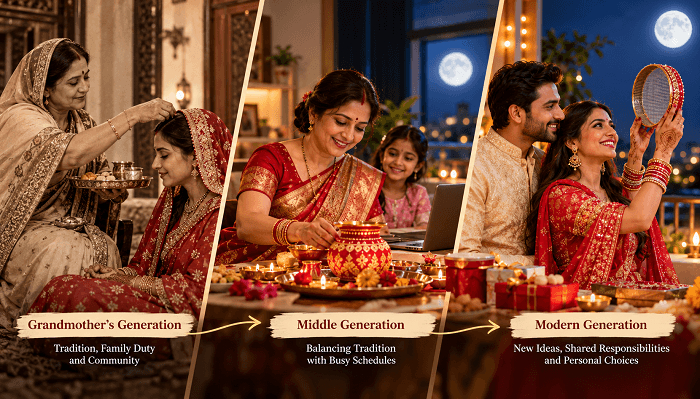
Karwa Chauth Across Generations: How the Festival Has Changed
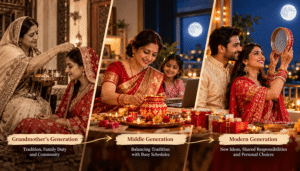
Ask a grandmother, her daughter, and her granddaughter what Karwa Chauth means to them, and you may hear three different answers. One might remember waking before sunrise to eat Sargi prepared by her mother-in-law. Another may recall gathering with neighbours after a long day at work. The youngest might describe coordinating outfits with her partner and planning a celebration together.
These imagined perspectives reflect an important question: how Karwa Chauth traditions have changed as Indian families, relationships, and lifestyles have evolved.
Karwa Chauth remains an important festival for many Hindu families, particularly in North India. Yet its meaning is no longer limited to inherited rituals. From shared fasting to simplified ceremonies, modern Karwa Chauth traditions demonstrate how people preserve cultural connections while making room for personal choices.
How Karwa Chauth Traditions Have Changed Across Generations
The most interesting changes often appear inside families rather than in public celebrations. The same household may preserve an old prayer book while introducing new ways to celebrate.
To understand these differences, consider three illustrative family perspectives. These are representative scenarios, not quotations from actual interviews.
The Grandmother’s Generation: Tradition and Family Duty
For many older women, Karwa Chauth was closely connected to family expectations, religious faith, and community participation. Preparations could begin days in advance, with shopping for bangles, mehendi, traditional clothing, and puja ingredients.
Sargi often carried particular emotional importance. A mother-in-law’s gift to her daughter-in-law represented care, hospitality, and the passing of family customs from one generation to another.
In communities where the festival was widely observed, women might gather to listen to the Karwa Chauth story, exchange ritual items, and share advice about marriage and family life.
For some women, these practices offered a sense of belonging. Others may have experienced the observance primarily as an obligation. Experiences were never identical, even within the same generation.
The Middle Generation: Tradition Meets Busy Schedules
For women balancing employment, childcare, and household responsibilities, Karwa Chauth often requires practical adjustments.
Imagine a woman who grew up watching her mother prepare elaborate festive meals but now works in an office. She might order some puja supplies online, prepare Sargi the previous evening, and arrange the evening ceremony around her work schedule.
The emotional connection remains, but the preparation looks different.
Television, urban migration, changing family structures, and easier access to shopping have also influenced how people experience the festival. Living away from parents or in-laws can make traditional gatherings difficult, encouraging smaller celebrations at home.
This generation often acts as a bridge between inherited customs and modern lifestyles.
Modern Karwa Chauth Traditions and Changing Relationships
Younger couples are increasingly finding personal ways to participate in the festival. Their choices vary, but several patterns are visible in contemporary celebrations.
Some husbands observe the fast alongside their wives. Others help with meal preparation, household chores, shopping, or organising the evening puja. Couples may exchange thoughtful gifts, take photographs, or celebrate with a special dinner after completing their chosen rituals.
Social media has also changed how Karwa Chauth is presented. Outfit inspiration, mehendi designs, festive reels, and family photographs can make the occasion more visible and encourage people to discover customs from other regions.
However, online images do not tell the whole story. A beautifully decorated thali does not necessarily indicate a more meaningful celebration, and a simple ceremony does not imply less devotion.
How Karwa Chauth Traditions Have Changed in Younger Families
Consider a newly married couple living in a city far from their extended family. The wife values the prayers she learned from her mother, while her husband wants to participate rather than simply wait for the fast to end.
They decide to prepare the puja thali together, call their parents before the evening ceremony, and follow the rituals that feel meaningful to them. The husband also takes responsibility for dinner preparations.
Their celebration differs from that of their grandparents, but it maintains a connection to family history.
This example highlights a broader shift: some couples are moving from viewing Karwa Chauth as an individual responsibility toward treating it as a shared occasion. Others continue to prefer traditional arrangements, and both approaches can coexist.
Karwa Chauth History and the Meaning Behind Its Evolution
Understanding the Karwa Chauth history helps explain why the festival has endured while its expressions have changed.
The festival is traditionally associated with prayers for a husband’s longevity and marital well-being. Its stories, rituals, and regional customs have been transmitted through families and communities over generations.
Like many changing Indian festivals, Karwa Chauth has also been shaped by migration, education, employment, mass media, and changing expectations within marriage.
In earlier settings, family and community participation often provided the main structure for the celebration. Today, television, digital communication, online shopping, and social platforms provide additional ways to learn about and participate in the festival.
Importantly, modernisation does not automatically mean abandoning tradition. A woman may wear her grandmother’s jewellery, follow a family prayer, and still choose a simpler celebration. Another may decide not to fast but participate in the evening gathering.
Cultural continuity can involve adaptation as well as preservation.
Karwa Chauth Today: Practical Ways to Celebrate Across Generations
Families do not need to agree on every ritual to enjoy the festival together. A few thoughtful steps can make celebrations more inclusive.
- Ask elders about family memories. Invite grandparents or parents to explain how they celebrated when they were younger. Their stories may reveal customs that are not written down.
- Preserve meaningful rituals. Choose a prayer, family recipe, song, or tradition that younger relatives can learn and carry forward.
- Share the preparation. Shopping, decorating, arranging the puja thali, and preparing the evening meal can become shared family activities.
- Make space for personal choice. Some family members may fast, while others may participate through prayers or companionship.
- Create new memories. Record family stories, take photographs, or prepare a small collection of recipes and memories from different generations.
Fasting also requires individual consideration. People with medical conditions, pregnancy, or medication-related dietary needs should consult an appropriate healthcare professional before undertaking a fast. No one should feel pressured to compromise their well-being to meet a family expectation.
Common Mistakes When Comparing Generations
It is easy to romanticise the past or assume that younger people have become less connected to their culture.
Older celebrations were not always easier or more meaningful for everyone, and modern celebrations are not necessarily less traditional. Each generation experiences different pressures and opportunities.
Another mistake is treating social media trends as proof that every family follows the same new practices. Experiences vary by region, household, personal belief, and economic circumstances.
The better approach is to listen before judging and recognise that traditions can carry different meanings for different people.
Why Choose StoryAccount for Indian Cultural Stories?
At StoryAccount, we explore Indian festivals, historical traditions, regional identities, and the stories that connect generations. Our aim is to help readers understand not only what people celebrate, but also why cultural practices matter and how they evolve.
Whether you are researching a festival for the first time or collecting memories from your own family, StoryAccount offers accessible cultural content that encourages curiosity and thoughtful conversations.
Explore more articles about Indian festivals, heritage, and the customs that continue to shape everyday life.
Conclusion: How Karwa Chauth Traditions Have Changed
Looking at how Karwa Chauth traditions have changed across generations reveals more than a shift in clothing, technology, or celebration styles. It shows how families negotiate faith, affection, responsibility, and individual choice in a changing society.
Grandparents may cherish the rituals they inherited, parents may adapt them to busy schedules, and younger couples may introduce shared practices. These approaches need not compete with one another.
The most meaningful celebrations are often those that honour family memories while allowing each generation to participate sincerely and comfortably.
What is one Karwa Chauth tradition your family has preserved or changed? Share your experience with your family and explore more stories about India’s evolving cultural heritage on StoryAccount.