Traditional Indian Festival Foods and Their History
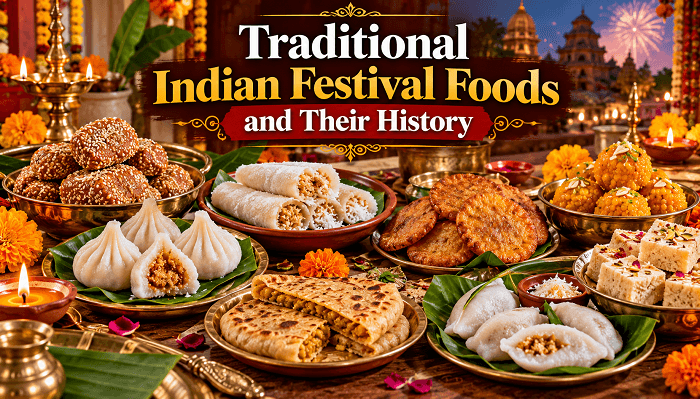
Forgotten Festival Foods of India and the Stories Behind
A festival in India is often remembered through the food prepared at home. The smell of freshly fried sweets, rice cakes steaming in banana leaves, and laddoos made by several generations of a family can bring back memories that last for years. Yet many traditional dishes are slowly disappearing from everyday celebrations as packaged sweets and modern desserts become more common.
Exploring traditional Indian festival foods and their history reveals much more than recipes. These dishes tell stories about regional agriculture, seasonal ingredients, religious customs, and the ways families preserve their cultural identity through cooking.
From Odisha’s delicate pithas to Maharashtra’s festive anarsa, India’s regional food traditions deserve attention for their flavours and the stories they carry. Here are seven lesser-known or overlooked festive foods that offer a closer look at India’s diverse culinary heritage.
1. Anarsa: Maharashtra’s Festive Rice Sweet
Anarsa is a traditional sweet associated with Diwali and other festive occasions in Maharashtra and parts of neighbouring regions. Its main ingredients commonly include rice, jaggery or sugar, and sesame seeds or poppy seeds, depending on the recipe.
Preparing anarsa requires patience. Rice is soaked, dried, and ground before being combined with the sweetener. The mixture is shaped into small discs and fried until the outside develops a distinctive texture.
Why is anarsa special?
Unlike sweets that can be prepared quickly, traditional anarsa depends on careful preparation and the right consistency of dough. Family recipes may specify how long the rice should dry or how the discs should be shaped.
These small details demonstrate how culinary knowledge passes from one generation to another. Anarsa is more than a Diwali treat; it is an example of how regional Indian sweets preserve household techniques that rarely appear in standard recipe collections.
2. Pitha: The Many Faces of India’s Rice Cakes
Pitha is a broad family of rice-based preparations found across eastern and northeastern India, particularly in Assam, Odisha, Bengal, and neighbouring regions.
Depending on the place and occasion, pitha may be steamed, fried, roasted, or cooked in a pan. Fillings can include coconut, jaggery, sesame, or other locally available ingredients.
In Assam, different varieties of pitha are strongly associated with Bihu celebrations, especially Magh Bihu, a harvest festival linked to the agricultural calendar. In Bengal, winter pithas often use newly harvested rice and date palm jaggery, known as nolen gur.
The diversity of pitha illustrates how a shared ingredient can produce very different dishes. Climate, harvest seasons, local preferences, and cooking equipment all influence the final result.
For families, making pitha can become a group activity in which younger members learn techniques by watching older relatives prepare the batter, shape the cakes, and judge when they are cooked.
3. Thekua: A Traditional Sweet from Bihar and Eastern Uttar Pradesh
Thekua is a firm, golden-brown sweet traditionally prepared with wheat flour, jaggery, and ghee or oil. It is particularly associated with Chhath Puja, a festival dedicated to the worship of the Sun God.
The dough is shaped into small pieces, often pressed into decorative patterns, and deep-fried. Its relatively dry texture helps it remain suitable for preparation ahead of the festival.
What connects thekua with Chhath Puja?
Chhath is known for its disciplined observances and offerings of seasonal produce and traditional foods. Thekua is among the best-known prasad preparations associated with the festival.
Its ingredients are familiar household staples, but the care taken during preparation gives the dish special significance. In many families, making thekua is part of the preparation for the larger ritual, with relatives sharing the work.
Thekua also shows how food can become inseparable from religious practice: its meaning comes not only from taste but from the occasion, preparation, and intention behind it.
4. Kozhukattai: Tamil Nadu’s Offering to Lord Ganesha
Kozhukattai is a rice-flour dumpling widely associated with Ganesh Chaturthi and other religious occasions in Tamil Nadu.
The dumplings are commonly filled with coconut and jaggery, although savoury versions also exist. The outer covering is made from rice flour, shaped around the filling, and steamed.
The sweet preparation is closely related to modak, a popular offering associated with Lord Ganesha in several parts of India. However, ingredients, shapes, names, and preparation methods vary by region.
What makes kozhukattai particularly interesting is its reliance on technique rather than elaborate ingredients. The dough must be soft enough to shape without cracking, while the filling needs the right consistency to remain inside during steaming.
Families often prepare these dumplings together before the puja. Children may help shape them, turning a traditional festive recipe into an opportunity to pass on practical cooking skills.
5. Adhirasam: A Festive Sweet with Deep Roots in Tamil Cuisine
Adhirasam is a traditional Tamil sweet made primarily from rice flour and jaggery. It is especially associated with Deepavali and other auspicious occasions.
The rice flour is combined with a jaggery syrup to make a dough that may need resting before it is shaped and fried. Getting the syrup consistency right is essential: small changes can affect whether the finished sweet is soft, dense, or overly hard.
Adhirasam highlights the importance of experience in traditional cooking. Experienced home cooks often judge the dough through its texture and feel rather than relying only on exact measurements.
This is one reason family recipes can be difficult to reproduce from ingredient lists alone. The technique, timing, and understanding of local ingredients are equally important parts of the recipe.
6. Patishapta: Bengal’s Winter Crepe
Patishapta is a thin crepe-like sweet popular in Bengal, especially during Poush Parbon, the winter harvest celebration.
The outer layer is typically made from a batter of rice flour, wheat flour, or other regional combinations. It is filled with a sweet mixture, often containing coconut, khoya, and jaggery.
Winter is significant because freshly harvested rice and seasonal date palm jaggery are important ingredients in many Bengali festive preparations. The use of local produce gives these dishes a strong connection to the agricultural calendar.
Patishapta is also an example of how festival food traditions adapt to regional availability. A dish prepared with one type of jaggery or filling in one household may taste quite different in another, while retaining its place in the celebration.
7. Puran Poli: Maharashtra’s Sweet Flatbread
Puran poli is a festive flatbread particularly associated with Maharashtra, where it is commonly prepared for occasions such as Holi and Gudi Padwa. Related preparations also exist in other Indian regions under different names.
The bread is filled with a sweet mixture called puran, usually made from cooked chana dal and jaggery, flavoured with cardamom or nutmeg. It is rolled carefully and cooked on a hot griddle.
Its combination of lentils, grain, and sweetener reflects the versatility of everyday pantry ingredients. The filling must be smooth enough to roll inside the dough without breaking through.
Puran poli demonstrates that Indian festive cooking is not limited to elaborate sweets. It also transforms familiar staples into dishes that carry strong seasonal and family associations.
How to Preserve India’s Forgotten Festival Food Traditions
You do not need to be a professional cook to help preserve Indian food heritage. Start with one dish that a parent, grandparent, or relative prepares for a festival.
- Record family recipes: Write down ingredient quantities, preparation steps, and cooking tips.
- Ask about regional origins: Find out which festival the dish belongs to and how the family learned to prepare it.
- Use seasonal ingredients: Where practical, choose ingredients traditionally associated with the dish, such as winter jaggery or locally grown rice.
- Document variations: Record how recipes differ between relatives or regions rather than assuming one version is the only authentic one.
Share the story with the recipe: Explain when the food is prepared, how it is served, and what it means to the family.
One common mistake is to assume that a traditional dish has a single, universally agreed origin. Many Indian foods have evolved across regions and generations. It is better to acknowledge these variations than to make unsupported claims about their exact age or birthplace.
Why Choose StoryAccount for Indian Food Heritage?
At StoryAccount, we explore India’s festivals, history, travel, biographies, and cultural traditions through reader-friendly storytelling. Our goal is to explain the meaning behind familiar customs and introduce readers to lesser-known regional practices.
Food stories are an important part of that mission because recipes preserve knowledge about local ingredients, family life, and seasonal celebrations. By exploring these connections, readers can understand Indian festivals beyond the decorations and public festivities.
Discover more stories on StoryAccount to explore India’s regional heritage, traditional celebrations, and cultural practices.
Conclusion: Keeping India’s Festival Food Heritage Alive
Exploring traditional Indian festival foods and their history reveals how recipes connect families with regional agriculture, religious observances, and generations of home cooks. Anarsa, pitha, thekua, kozhukattai, adhirasam, patishapta, and puran poli each offer a different perspective on India’s diverse culinary heritage.
These dishes are worth preserving not because every recipe must remain unchanged, but because their stories help us understand the people and communities behind them.
This festive season, ask a family member to teach you one traditional recipe. Write down its ingredients, learn the technique, and record the story behind it.
Want to discover more stories about India’s festivals and cultural heritage? Explore StoryAccount for more articles celebrating the traditions that make India’s regional cultures distinctive.
Frequently Asked Questions
1. What are some traditional Indian festival foods and their history?
Examples include thekua for Chhath Puja in Bihar and eastern Uttar Pradesh, pitha for harvest celebrations in eastern India, kozhukattai for Ganesh Chaturthi in Tamil Nadu, and puran poli for festivals in Maharashtra. Their histories reflect regional ingredients, religious practices, and family cooking traditions.
2. Which Indian festival foods are made with jaggery?
Several traditional sweets use jaggery, including thekua, adhirasam, anarsa in some regional recipes, patishapta, and puran poli. Jaggery provides sweetness and contributes distinct flavour and texture.
3. Why do Indian festival foods differ from state to state?
Regional climates, crops, religious customs, local ingredients, and historical influences all shape festival foods. Rice-based pithas are common in parts of eastern India, while lentil-filled puran poli is associated with Maharashtra and neighbouring culinary traditions.
4. Which traditional Indian festival foods are connected to harvest celebrations?
Pitha varieties are closely associated with Bihu and winter harvest celebrations in eastern India. Patishapta is popular during Bengal’s Poush Parbon, while other regions prepare seasonal foods using newly harvested grains and locally available ingredients.
5. How can families preserve traditional festive recipes?
Families can document ingredient quantities, record cooking demonstrations, interview older relatives, and preserve regional variations. Sharing the cultural story alongside the recipe helps younger generations understand why a dish is prepared and how it connects to a particular festival.