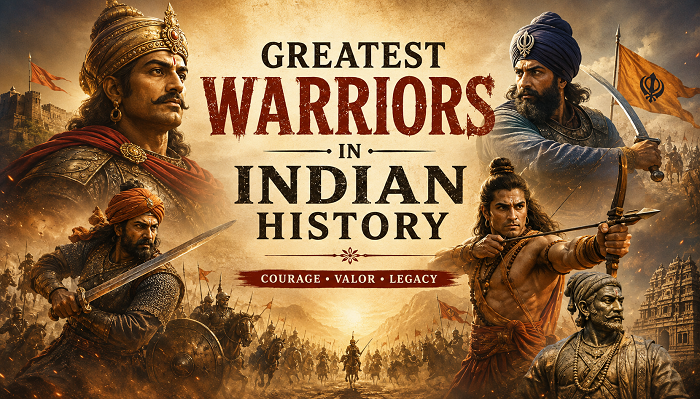
India’s military history stretches across thousands of years and includes rulers, commanders, queens, and resistance leaders who fought in very different political and military environments. Studying the greatest warriors in Indian history is therefore about more than identifying who won the most battles. Leadership, strategy, resilience, administration, and the ability to inspire soldiers all shaped a warrior’s historical reputation.
Historical sources also require careful interpretation. Court chronicles, inscriptions, regional traditions, and later accounts may present the same conflict differently. With that context in mind, here are several celebrated figures whose campaigns and battles left a lasting mark on Indian history.
Greatest Warriors in Indian History Who Changed the Battlefield
1. Maharana Pratap – The Battle of Haldighati
Maharana Pratap of Mewar remains one of the most recognised Rajput rulers in Indian history. In 1576, his forces confronted the Mughal army commanded by Raja Man Singh at the Battle of Haldighati.
Although the battle did not produce a decisive strategic victory for Pratap, his resistance continued. He later recovered significant portions of Mewar through sustained campaigning. His career demonstrates why battlefield outcomes alone cannot explain a warrior’s legacy; persistence and the ability to continue resistance can be equally important.
2. Chhatrapati Shivaji Maharaj – Master of Strategic Warfare
Chhatrapati Shivaji Maharaj built the foundations of the Maratha state while facing powerful regional opponents and the Mughal Empire. His military approach made effective use of mobility, forts, intelligence networks, and the difficult terrain of the Western Ghats.
One famous episode was the Battle of Pratapgad in 1659, associated with his confrontation with Afzal Khan and the forces of the Bijapur Sultanate. Shivaji’s campaigns illustrate how careful planning and knowledge of terrain could allow a smaller force to challenge larger armies.
3. Rani Lakshmibai – The Defence of Jhansi
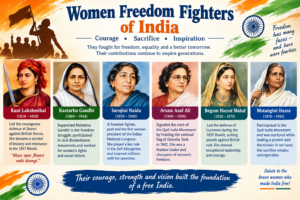
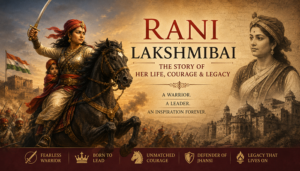
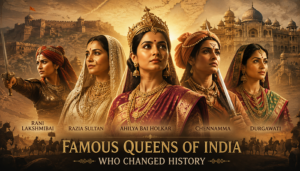
Rani Lakshmibai of Jhansi became one of the best-known leaders of the Indian Rebellion of 1857–58. During the British siege of Jhansi in 1858, she participated in the defence of the city before escaping and joining other rebel forces.
She later fought around Kalpi and Gwalior and died in battle near Gwalior in June 1858. Her leadership during a period of intense conflict turned her into an enduring symbol of resistance and courage.
Greatest Warriors in Indian History and Their Military Strategies
4. Maharaja Ranjit Singh – Builder of the Sikh Empire
Maharaja Ranjit Singh was not remembered for one legendary duel or battle alone. His greater achievement was transforming competing Sikh misls and territories into a powerful empire centred in Punjab.
He also modernised sections of his army by incorporating disciplined infantry, artillery, and European military expertise while retaining established regional fighting traditions. His reign shows that successful military leadership involves organisation and institution-building as much as personal bravery.
5. Lachit Borphukan – The Battle of Saraighat
Lachit Borphukan, a celebrated commander of the Ahom kingdom, is closely associated with the Battle of Saraighat in 1671. Ahom forces confronted the Mughal army on and around the Brahmaputra River.
The battle is particularly notable for its use of river warfare, local geography, defensive positions, and flexible tactics. Lachit Borphukan’s leadership helped the Ahoms resist Mughal expansion into Assam.
Tipu Sultan of Mysore fought repeatedly against the British East India Company and its allies during the Anglo-Mysore Wars. His forces are particularly associated with the development and battlefield deployment of Mysorean rockets.
Tipu died defending Seringapatam in 1799 during the Fourth Anglo-Mysore War. His military career remains an important subject for understanding warfare, state power, diplomacy, and technological experimentation in eighteenth-century India.
What Can We Learn From the Greatest Warriors in Indian History?
Lessons From the Greatest Warriors in Indian History
Their battles occurred centuries apart, but several practical lessons emerge from studying them:
Understand the terrain: Shivaji and Lachit Borphukan used geography as a strategic advantage.
Adapt military methods: Ranjit Singh strengthened his forces by combining different military traditions.
Maintain resilience: Maharana Pratap continued campaigning despite severe setbacks.
Lead under pressure: Rani Lakshmibai became renowned for taking an active leadership role during a major uprising.
Use technology strategically: Tipu Sultan’s forces demonstrated the growing importance of military innovation.
For students and history enthusiasts, comparing objectives, resources, terrain, alliances, and outcomes is more useful than simply ranking warriors by fame.
Common Mistakes When Studying Legendary Indian Battles
A common mistake is treating legends and historical evidence as interchangeable. Popular stories may preserve valuable cultural memory, but dates, army sizes, battlefield events, and outcomes should be checked against credible historical scholarship.
Another mistake is judging every conflict solely by its immediate winner. A battle can have political, strategic, and symbolic consequences that extend far beyond the battlefield.
Conclusion
The greatest warriors in Indian history represent different eras, regions, military systems, and political goals. Maharana Pratap demonstrated persistence, Shivaji Maharaj strategic adaptability, Rani Lakshmibai courageous leadership, Ranjit Singh military organisation, Lachit Borphukan mastery of local conditions, and Tipu Sultan technological ambition.
Their stories become far more meaningful when we move beyond legend and examine the strategies, historical circumstances, and consequences behind their famous battles.