Traditional Indian Festival Foods
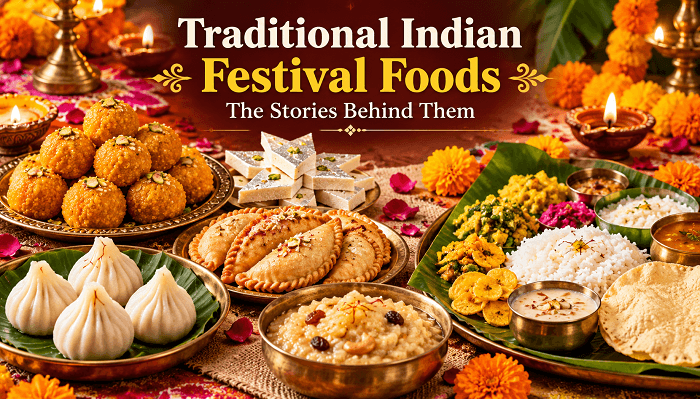
Traditional Indian Festival Foods and the Stories Behind Them
In India, festivals are celebrated with colourful decorations, family gatherings, prayers, and, of course, food. A plate of homemade sweets or a carefully prepared festive meal often carries memories that go back generations. Many traditional Indian festival foods are more than delicious recipes; they reflect religious beliefs, seasonal changes, regional agriculture, and the joy of sharing with others.
From laddoos offered during Ganesh Chaturthi to gujiya prepared for Holi, every celebration has its own culinary identity. Some dishes are connected with mythology, while others developed through local customs and the availability of seasonal ingredients.
Understanding these traditions makes festive meals more meaningful. Let’s explore some of India’s best-loved festival foods and the stories behind them.
1. Diwali Traditional Sweets and Significance
Diwali, the Festival of Lights, brings families together to celebrate hope, prosperity, and the triumph of light over darkness. Preparing and sharing sweets is an important part of the celebration, although the specific customs vary across communities and regions.
The Diwali traditional sweets and significance tradition is closely associated with hospitality, auspicious beginnings, and offering food during religious worship.
Laddoo, Kaju Katli, and Besan Barfi
Laddoos are popular during Diwali because they are easy to share with family, neighbours, and guests. Besan laddoos, made from roasted gram flour, ghee, and sugar, are especially appreciated for their rich aroma.
Kaju katli, prepared with cashews and sugar, is a familiar festive gift, while besan barfi offers a dense, nutty flavour. Families often exchange these sweets as a gesture of affection and goodwill.
There is no single origin story behind every Diwali sweet. Their significance comes from the wider tradition of preparing special foods for worship, welcoming visitors, and sharing prosperity.
Practical tip: Prepare sweets a day or two before your celebration, store them according to their ingredients, and use clean, airtight containers to preserve freshness.
2. Gujiya: The Sweet Taste of Holi
Holi is known for colours, music, and lively gatherings. In many parts of North India, especially Uttar Pradesh and Rajasthan, gujiya is one of the festival’s signature treats.
This crescent-shaped pastry is traditionally filled with khoya, sugar, and nuts, then fried until golden. Some families use coconut, semolina, or other regional fillings.
Gujiya represents the celebratory side of Holi: preparing food together, welcoming guests, and sharing homemade treats after the festivities. Recipes differ between households, which is why two families can make gujiya that look similar but taste remarkably different.
For a lighter variation, gujiyas can also be baked, although their texture differs from the traditional fried version.
3. Modak: A Beloved Offering During Ganesh Chaturthi
Modak holds a special place in Ganesh Chaturthi celebrations, particularly in Maharashtra. Lord Ganesha is traditionally associated with this sweet, making it an important offering during the festival.
The classic steamed ukadiche modak has a soft rice-flour covering and a sweet filling of coconut and jaggery. Fried versions are also popular in several households.
Why Is Modak Associated with Lord Ganesha?
In Hindu devotional traditions, modak is considered a favourite offering to Lord Ganesha. Its preparation is therefore connected with prayer, devotion, and the welcoming of blessings.
Making modaks can also be a family activity, with different members helping prepare the dough, shape the dumplings, and cook the filling.
Cooking tip: Keep the outer dough covered while shaping modaks. Rice-flour dough can dry quickly, making it harder to seal the filling properly.
4. Pongal: A Celebration of Harvest and Gratitude
Pongal, celebrated primarily in Tamil Nadu, honours the harvest and expresses gratitude for agricultural abundance. Food is central to the occasion because it reflects the relationship between farming, nature, and community life.
The festival’s signature dish, also called pongal, is prepared using rice and other ingredients. Sweet sakkarai pongal commonly combines rice, moong dal, jaggery, ghee, and cardamom, sometimes with cashews and raisins.
Traditionally, the dish is cooked as an offering, and the preparation itself forms part of the celebration. Its ingredients reflect the importance of the new harvest and the value of sharing what the land provides.
Unlike sweets made primarily for gifting, sakkarai pongal also carries a strong connection to seasonal abundance and gratitude.
5. Onam Sadya: A Feast of Kerala’s Culinary Heritage
Onam is a major harvest festival in Kerala, celebrated with cultural performances, family gatherings, and the elaborate Onam Sadya.
A Sadya is a traditional vegetarian feast served on a banana leaf. Depending on the household and region, it may include rice, sambar, avial, thoran, olan, pickles, and several other dishes.
Payasam, a sweet preparation made with ingredients such as milk, rice, vermicelli, or coconut milk, is often served as part of the meal.
The Sadya is meaningful because it brings many flavours and preparations together in one shared experience. Its variety also reflects Kerala’s agricultural produce, culinary knowledge, and hospitality.
Serving tip: When preparing Sadya at home, plan dishes by cooking time. Prepare pickles and certain side dishes early, then focus on freshly cooked rice and hot preparations closer to serving.
6. Eid al-Fitr: Sheer Khurma and the Joy of Sharing
After Ramadan, Eid al-Fitr is celebrated with prayers, family visits, and special meals. In many Indian households, sheer khurma is an important festive dessert.
This creamy preparation typically includes vermicelli, milk, dates, and nuts. Some versions use saffron, cardamom, or raisins for additional flavour.
Dates have a particular connection with Ramadan traditions, while the rich dessert marks the warmth of gathering with loved ones after a month of fasting.
Recipes vary among families and communities. Some prefer a thinner milk-based preparation, while others cook it until rich and creamy.
How to Enjoy Traditional Indian Festival Foods More Thoughtfully
Festival dishes are best enjoyed when preparation, sharing, and food safety receive equal attention.
Respect regional traditions: Try the original preparation before changing ingredients or cooking methods.
Use seasonal ingredients: Fresh produce, jaggery, grains, and nuts can add flavour and connect meals with local food traditions.
Control food waste: Prepare realistic quantities and share extra food safely with family or neighbours.
Store food correctly: Dairy-based sweets and cooked dishes may require refrigeration. Avoid leaving perishable foods at room temperature for extended periods.
Offer inclusive choices: Consider guests who avoid certain ingredients or have allergies. Clearly label nuts, dairy, and other common allergens.
Common Mistakes to Avoid
One common mistake is assuming that every Indian household celebrates a festival with the same dishes. Customs vary by region, religion, community, and family.
Another is treating every food tradition as if it has a single, universally accepted historical origin. Some stories come from religious texts, while others are based on oral traditions or long-standing household practices.
Finally, avoid sacrificing food safety for tradition. Use fresh ingredients, maintain clean cooking surfaces, and refrigerate perishable dishes promptly.
Why Choose StoryAccount for Cultural and Festival Stories?
At StoryAccount, our goal is to help readers explore India’s history, traditions, festivals, and everyday cultural experiences through accessible content. Food is an important part of that journey because recipes often preserve memories, regional identities, and family customs.
Explore our festival and cultural articles for more ideas about the stories behind Indian celebrations, traditional practices, and the diversity that makes each occasion distinctive.
Conclusion: Celebrate the Stories Behind Traditional Indian Festival Foods
The beauty of traditional Indian festival foods lies in the connections they create between generations, communities, and cultural traditions. Diwali sweets express generosity, modaks connect festive cooking with devotion, Pongal celebrates the harvest, and Onam Sadya brings people together through a shared meal.
These dishes are not simply items on a festive menu. They are part of how families remember their roots, welcome guests, and pass traditions to younger generations.
This festive season, try a traditional recipe from another Indian region, learn the story behind it, and share the experience with your family. Visit StoryAccount for more inspiring stories about India’s festivals, culture, and heritage.
Frequently Asked Questions
1. What are the most popular traditional Indian festival foods?
Popular examples include laddoos and kaju katli for Diwali, gujiya for Holi, modak for Ganesh Chaturthi, sakkarai pongal for Pongal, Onam Sadya for Onam, and sheer khurma for Eid al-Fitr.
2. Why are sweets important during Indian festivals?
Sweets are commonly associated with celebration, hospitality, auspicious occasions, and sharing happiness. In many traditions, sweets are also prepared as religious offerings, although their specific meanings differ.
3. What is the significance of Diwali traditional sweets?
Diwali traditional sweets and significance are closely linked with welcoming guests, exchanging gifts, making offerings, and celebrating prosperity and positive beginnings. Individual customs vary across communities and regions.
4. Which Indian festival foods are connected with harvest celebrations?
Pongal in Tamil Nadu is closely associated with the harvest. Onam in Kerala also celebrates agricultural abundance and community life, with the Sadya serving as an important part of the festivities.
5. How can I prepare traditional Indian festival foods at home?
Start with a simple, regionally authentic recipe, gather ingredients beforehand, and follow safe cooking and storage practices. Family recipes and guidance from experienced home cooks can help you understand traditional preparation methods and variations.