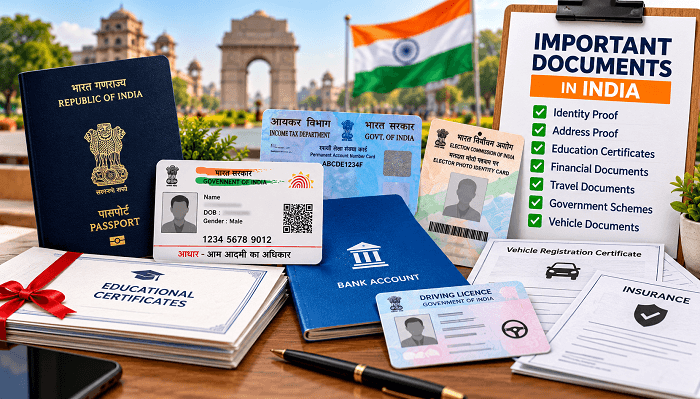
Essential Documents Every Indian Citizen Should Keep Updated
Imagine applying for a job, opening a bank account, receiving a government benefit, or booking an international trip, only to discover that your name differs across two documents. A small spelling mistake or an outdated address can lead to delays, extra paperwork, and unnecessary stress.
Keeping the important documents in India updated is a practical step that can make everyday life easier. Identity proof, address proof, educational certificates, financial records, and other official documents may be required at different stages of life. However, not every document serves the same purpose, and some updates are mandatory only under specific circumstances.
This guide explains which documents Indian citizens should review, what to check, and how to maintain their records safely.
Why Keeping Important Documents in India Updated Matters
Official documents help establish your identity, address, qualifications, financial details, and eligibility for particular services. Banks, employers, educational institutions, government departments, and travel authorities may request different records depending on the situation.
For example, a person applying for a job may need educational certificates and identity proof, while someone purchasing property may need identity documents, financial records, and transaction-related paperwork.
Keeping your documents organised can help you:
- Complete applications with fewer delays.
- Correct inconsistencies before they become bigger problems.
- Access eligible government services and benefits.
- Maintain accurate financial and employment records.
- Respond more easily to emergencies or important life events.
The key is to review documents regularly rather than waiting until an application deadline.
10 Important Documents in India Every Citizen Should Review
The following checklist covers commonly used documents. Your individual requirements will depend on your age, occupation, financial situation, and eligibility for particular services.
1. Aadhaar Card
Aadhaar is widely used for identity verification and, where permitted, authentication for various services. Review your name, date of birth, photograph, and registered mobile number for accuracy.
Update your address when necessary and check the current UIDAI rules for demographic or biometric updates. Aadhaar is not proof of citizenship, and it should not automatically be assumed to replace every other identity document.
2. PAN Card
A Permanent Account Number (PAN) is important for tax-related activities and many financial transactions. Check that your name and other particulars match your supporting records.
If your name changes after marriage or another legal event, check the prescribed correction process. Eligible individuals should also review applicable PAN–Aadhaar linking requirements and deadlines through official channels.
3. Voter ID Card
The Voter Photo Identity Card (EPIC) helps identify an elector, but voter registration and eligibility depend on electoral rules.
Review your name, address, and other details in the electoral roll. If you move, follow the prescribed process to update your registration rather than assuming your old address will automatically change.
4. Passport
A passport is essential for international travel and can also serve as an identity and address document where accepted.
Check its expiry date well before planning a trip. If your personal particulars change, determine whether a reissue is required. Visa and destination-country rules may impose additional requirements, so verify these before travelling.
5. Bank Account Records
Keep your bank account details, registered mobile number, email address, nominee information, and KYC records current.
If you change your address or contact details, inform your bank through its authorised channels. Review statements periodically and report suspicious transactions promptly.
6. Birth Certificate
A birth certificate records important details such as a person’s name, date of birth, and place of birth. It can be useful for school admissions, passport applications, and other official processes.
Check the information carefully. Corrections or delayed registration must follow the relevant state or local civil registration procedure.
7. Educational Certificates and Mark Sheets
School certificates, university degrees, mark sheets, and other qualifications may be required for employment, higher education, and professional applications.
Keep the original documents safe and maintain readable digital copies. If your name differs between certificates and identity documents, ask the relevant educational institution about the appropriate correction or supporting-document process.
8. Driving Licence and Vehicle Documents
If you drive, review your driving licence and the relevant vehicle records, including the registration certificate, insurance, and pollution-under-control certificate where applicable.
Check validity and renewal dates. Requirements vary by document and vehicle, so confirm the applicable rules before driving or completing a transfer.
9. Income Tax and Financial Documents
Maintain your Permanent Account Number details, filed income tax returns, Form 16 where applicable, tax-related certificates, and relevant financial statements.
These records can help with tax compliance, loan applications, and financial planning. Keep them for an appropriate period based on applicable legal and financial requirements.
10. Ration Card and Other Government Benefit Records
If you are eligible for a ration card, pension, scholarship, or another public benefit, check the details recorded in the relevant scheme.
Ensure that household information, address, and other required particulars are accurate. Eligibility and documentation requirements differ across schemes and states, so verify changes with the responsible department.
How to Keep Important Documents in India Updated
A simple document-management routine can prevent many common problems.
Create a Personal Document Checklist
Prepare a list of your documents and record their important details, such as expiry dates, correction requirements, and the department responsible for updates.
For example, passport renewal planning is different from correcting a birth certificate or updating bank KYC. Treat each requirement separately.
Follow Official Correction Procedures
Use the authorised government portal, bank, educational institution, or relevant service centre for updates. Check the required application form, supporting documents, fees, and processing time before applying.
Never assume that correcting one document will automatically update every other record.
Store Digital and Physical Copies Securely
Keep original documents in a safe, dry place. Store scanned copies in an access-controlled digital location, and maintain a secure backup.
DigiLocker can help users access and manage supported digital documents. Where applicable, use documents issued or made available through authorised systems rather than relying solely on ordinary photographs or scans.
Common Mistakes to Avoid
Even organised people can overlook small details that cause problems later.
- Ignoring expiry dates: Review passports, driving licences, insurance, and other time-limited documents in advance.
- Using inconsistent personal details: Check spelling, dates of birth, and addresses across records.
- Sharing sensitive information carelessly: Avoid sending identity documents to unknown people or unverified websites.
- Trusting unofficial agents blindly: Verify service providers and never share OTPs, passwords, or unnecessary authentication details.
- Keeping only physical copies: Secure digital backups can help if originals are lost or damaged.
- Assuming every document is compulsory: Requirements depend on the service, scheme, institution, and applicable law.
For legal, tax, or complex identity corrections, seek guidance from the relevant authority or a qualified professional.
Conclusion: Review Your Important Documents in India Today
Keeping the important documents in India accurate and accessible can make job applications, financial transactions, government services, and travel planning much smoother. Aadhaar, PAN, voter ID, passport, bank records, educational certificates, and other relevant documents each serve different purposes.
Start by checking the documents you use most often. Correct errors through authorised channels, note expiry dates, and store your records securely. You do not need to update everything at once; a short, regular review can help you stay organised.
Take action today: make your personal document checklist, identify any outdated details, and begin with the most urgent correction. A little preparation now can save time and trouble later.