How to Check Eligibility for Government Schemes in India
India offers numerous government schemes designed to support students, farmers, women, senior citizens, workers, entrepreneurs, and families with limited incomes. These programmes may provide scholarships, pensions, financial assistance, insurance, housing support, or help with self-employment. However, not everyone qualifies for every benefit.
Understanding government schemes eligibility before applying can save time, prevent unnecessary paperwork, and help you identify the benefits relevant to your circumstances. The important thing is to look beyond a scheme’s name and understand its actual eligibility rules, required documents, and application process.
In this guide, you will learn how to check eligibility, identify suitable schemes, prepare documents, and avoid common application mistakes.
Why Checking Government Schemes Eligibility Matters
Every government scheme has a specific purpose and target group. Some programmes are designed for households below a defined income threshold, while others focus on education, farming, disability support, employment, or entrepreneurship.
For example, a student seeking financial assistance may need to check educational qualifications, family income, academic performance, and institution requirements. A farmer may need to verify land records, farming status, and other scheme-specific conditions.
Checking eligibility first helps you:
- Identify schemes relevant to your personal and financial circumstances.
- Understand income limits, age requirements, and category-based conditions.
- Prepare the correct documents before submitting an application.
- Avoid applications that do not meet mandatory requirements.
- Reduce the risk of rejection caused by incomplete or incorrect information.
Remember that eligibility for one scheme does not automatically make you eligible for another, even if both programmes serve similar groups.
How to Check Government Schemes Eligibility Online
The easiest starting point is an official government portal. Depending on the scheme, you may find information through central government websites, state government portals, or dedicated department websites.
Step 1: Identify Your Category and Needs
Start by identifying the type of support you need. Consider whether you are looking for:
- Student scholarships and education assistance
- Farmer support and agricultural benefits
- Women-focused welfare programmes
- Pension and senior citizen assistance
- Housing and household support
- Employment, skill development, or self-employment assistance
- Benefits for persons with disabilities or eligible low-income households
This simple step narrows your search and makes it easier to find suitable programmes.
Step 2: Use Official Government Portals
Visit the National Portal of India at india.gov.in or the government’s MyScheme platform at myscheme.gov.in to explore relevant schemes and their eligibility criteria.
You can also check the official website of the ministry or state department responsible for a particular programme.
Read the scheme’s guidelines carefully. Look for the intended beneficiaries, eligibility conditions, benefits offered, required documents, application procedure, and any deadlines.
Do not rely solely on social media posts, forwarded messages, or unofficial websites. Scheme rules and application windows can change, so verify important details through the responsible government department.
Step 3: Check Every Eligibility Condition
Before applying, compare your circumstances with the scheme’s requirements.
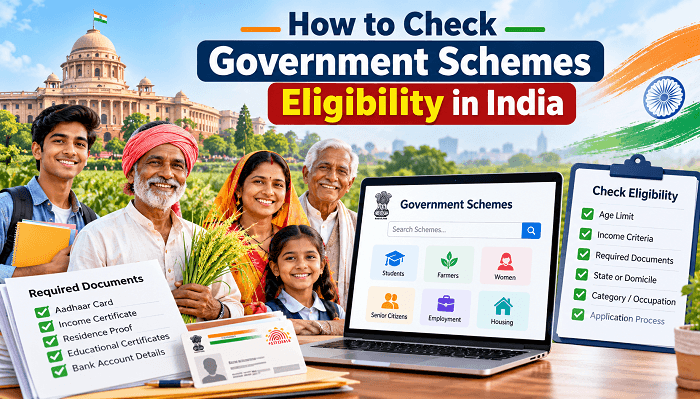
Common eligibility conditions include:
- Age: Some schemes have minimum or maximum age limits.
- Income: Benefits may depend on annual family income or a specified economic category.
- Residence: Certain programmes require residence in a particular state or region.
- Occupation: Some benefits are available only to farmers, registered workers, students, or specific professional groups.
- Education: Scholarships may require particular qualifications, marks, or enrolment status.
- Category or disability status: Some schemes include conditions related to officially recognised categories or disability certification.
Meeting one condition is not enough if the scheme has several mandatory requirements. Check every applicable rule before proceeding.
Documents Required for Government Schemes Eligibility
Document requirements differ from one programme to another. Preparing the relevant records in advance can make the application process smoother.
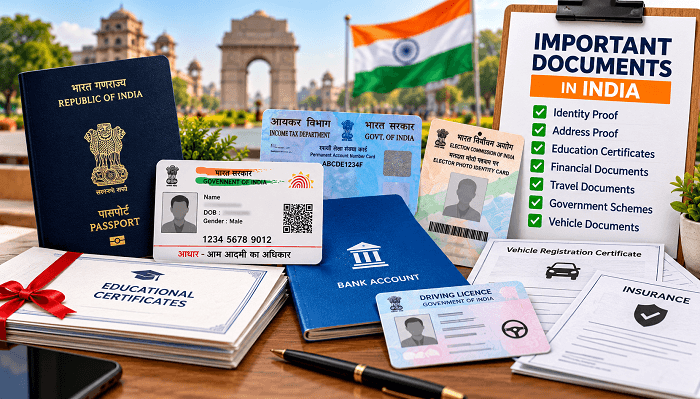
Commonly requested documents include:
- Aadhaar card or another accepted identity document
- Proof of residence or domicile certificate
- Income certificate or other accepted income evidence
- Bank passbook or account details
- Caste certificate, where applicable
- Educational certificates and mark sheets for scholarships
- Land records for relevant agricultural schemes
- Disability certificate, where applicable
- Passport-size photographs and a registered mobile number, if required
Important: This is a general checklist, not a mandatory list for every scheme. Always follow the official scheme guidelines. Ensure that your name, date of birth, address, and other details are consistent across documents wherever required.
How to Confirm Government Schemes Eligibility Before Applying
Finding a scheme is only the first step. You should also confirm whether its conditions match your situation and whether applications are currently being accepted.
Use the myScheme Eligibility Checker
Visit myScheme.gov.in and explore the scheme discovery feature. Enter the requested personal details, such as age, state, income range, occupation, and other relevant information.
The platform can help identify schemes that may suit your profile. Open the individual scheme details to review the eligibility rules, benefits, documents, and application instructions. You may then be directed to the responsible department’s application portal.
Treat the results as a starting point rather than a guarantee of approval. The concerned authority makes the final decision after checking the applicable rules and submitted information.
Verify Application Dates and Local Rules
Some schemes accept applications throughout the year, while others have specific application windows or annual deadlines. State-level programmes may also have different requirements from similar central government schemes.
Check the latest official notification before submitting your application. If any condition is unclear, contact the relevant department, authorised service centre, or designated scheme office.
Common Mistakes to Avoid When Checking Eligibility
Even applicants who appear to qualify can encounter problems because of avoidable mistakes.
1. Trusting unofficial information: Old articles and forwarded messages may contain outdated income limits or application dates. Verify details with the responsible authority.
2. Ignoring state-specific conditions: A central scheme and a state scheme may have different rules. Confirm your state of residence and any domicile requirements.
3. Submitting incomplete documents: Missing certificates, unclear scans, or incorrect bank details can delay processing.
4. Assuming eligibility means guaranteed benefits: Meeting the basic conditions does not always guarantee approval. Verification, available funds, selection criteria, or other scheme-specific rules may apply.
5. Paying unverified agents: Be cautious of anyone promising guaranteed approval for an advance fee. Use official portals and authorised assistance channels, and never share your OTP, PIN, or banking password.
Practical Example: Finding a Suitable Scheme
Suppose a college student from a rural household wants financial assistance for education. Instead of searching only for general government benefits, the student can explore scholarship programmes and filter the options according to state, course, academic performance, family income, and other relevant conditions.
After identifying a potentially suitable scholarship, the student should check whether the institution is eligible, confirm the application deadline, gather the required certificates, and submit the application through the designated official portal.
The same approach works for farmers, job seekers, women, senior citizens, and small business owners: identify the need, check the conditions, verify the documents, and follow the official application process.
Conclusion: Check Government Schemes Eligibility the Right Way
Checking government schemes eligibility is an important step towards finding financial assistance, educational support, pensions, employment opportunities, and other public benefits. Start by identifying your needs, use official government portals to discover suitable programmes, and carefully review every eligibility condition before applying.
Visit myScheme.gov.in to explore schemes relevant to your circumstances. Verify the latest requirements with the responsible department, prepare your documents, and apply through the authorised channel.