How to Check Eligibility for Government Schemes in India
India offers numerous government schemes designed to support students, farmers, women, job seekers, senior citizens, small business owners, and low-income households. However, finding the right scheme is only the first step. You also need to understand its eligibility conditions, required documents, application process, and deadlines.
For example, a student looking for financial assistance may qualify for a scholarship, a skill-development programme, or free online courses for students offered through an eligible educational initiative. Similarly, a rural household may qualify for housing, healthcare, or livelihood assistance depending on its circumstances.
The challenge is knowing which benefits apply to you without wasting time on unsuitable applications. This guide explains how to check government scheme eligibility in India, verify important details, and avoid common mistakes before applying.
Why Checking Government Scheme Eligibility Matters
Government schemes have different objectives and eligibility rules. Some are intended for specific income groups, while others focus on education, employment, agriculture, healthcare, or entrepreneurship.
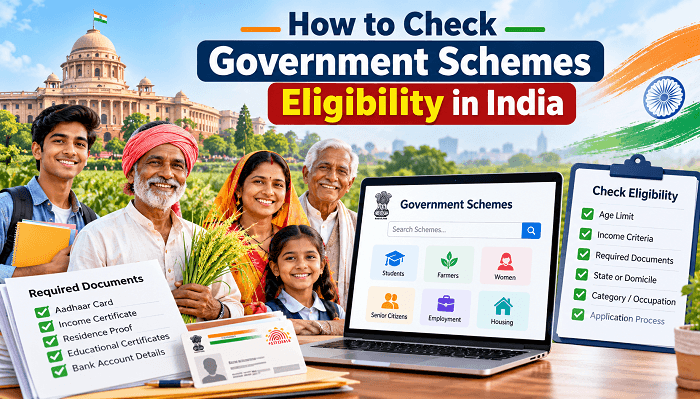
Eligibility may depend on several factors:
- Age and residential status
- Annual family income
- Educational qualifications or current course
- Occupation and employment status
- Caste or category, where applicable
- Rural or urban residence
- Land ownership, household details, or other scheme-specific conditions
Meeting one condition does not automatically mean you qualify. You must satisfy all mandatory requirements applicable to the scheme.
For students, checking eligibility early can help identify scholarships, vocational training programmes, digital learning resources, and free online courses for students before application deadlines pass.
Check Eligibility for Government Schemes
You do not always need to visit a government office to begin your search. Many schemes publish eligibility information and application instructions online.
Step 1: Identify the Right Scheme
Start by defining what you need. Are you searching for educational support, a scholarship, employment training, healthcare coverage, housing assistance, or financial support for a business?
For example, a college student may investigate central or state scholarships, while an unemployed young person may explore skill-development programmes. A farmer should look for agricultural schemes relevant to their landholding, occupation, and state.
Make a short list of schemes that match your situation instead of applying randomly.
Step 2: Check the Official Eligibility Criteria
Read the scheme’s eligibility requirements carefully. Look for minimum and maximum age limits, income ceilings, education requirements, residency rules, exclusions, and application dates.
Pay attention to the difference between mandatory conditions and preferences. If a scheme requires a particular qualification or income certificate, meeting its other conditions may not be sufficient.
Also check whether the scheme is currently accepting applications. An old article or social media post may describe a programme that has changed or closed.
Step 3: Use Government Portals to Verify Information
Government portals can help you discover schemes and understand their requirements. Depending on the scheme, useful starting points include:
- National Portal of India: General information about government services and initiatives.
- myScheme: A government platform designed to help users discover schemes based on their details.
- National Scholarship Portal: Information and application facilities for participating scholarship programmes.
- Skill India Digital Hub: Information about eligible skill-development and learning opportunities.
These platforms serve different purposes, so choose the one relevant to your needs. Always review the individual scheme’s current guidelines and the responsible department’s instructions before applying.
Free Online Courses for Students and Government Benefits
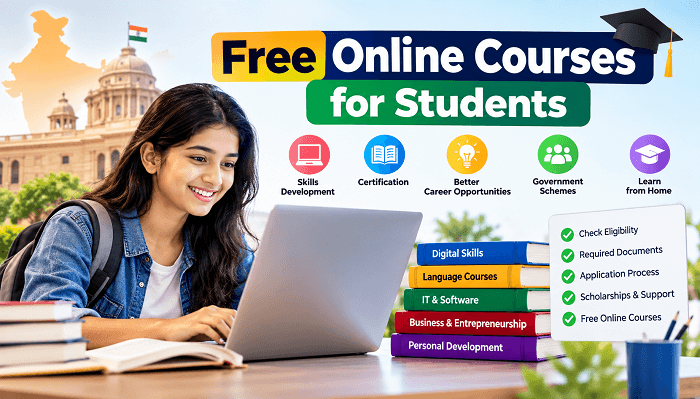
Education-related benefits can extend beyond scholarships. Students may also find online learning opportunities, vocational training, certification programmes, and digital skills courses.
Free online courses for students can be particularly useful for learners who want to improve their employability without paying substantial training fees. However, course availability, eligibility, certification charges, and assessment requirements vary by provider.
How to Find Free Online Courses for Students
Start by checking government-supported learning and skill-development platforms. Review each course’s entry requirements, language, duration, learning format, and certificate policy.
Before enrolling, ask these questions:
- Is the course genuinely free, including its assessment and certificate?
- Is it open to school students, college students, graduates, or working learners?
- Does it require an institutional email address or identity verification?
- Is the certificate recognized by the relevant employer, institution, or programme?
- Does completing the course qualify you for any additional benefit, or is it only a learning opportunity?
Remember that a free course does not automatically make you eligible for a scholarship or financial assistance scheme. Check the rules of each programme separately.
Documents You May Need Before Applying
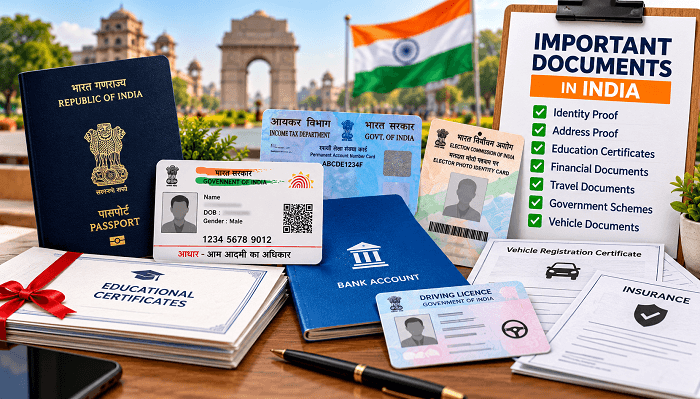
Once you identify a suitable scheme, prepare the documents listed in its official guidelines. Common requirements may include:
- Aadhaar or another accepted identity document
- Proof of residence
- Income certificate, where required
- Educational certificates and mark sheets
- Bank account details or accepted proof of account ownership
- Caste or category certificate, if applicable
- Passport-size photograph and a working mobile number
Not every scheme requires all these documents. Some may ask for additional records, while others may use online verification.
Check that your name, date of birth, bank details, and other information match across your documents. Correct discrepancies before submitting an application whenever possible.
Common Mistakes to Avoid When Checking Eligibility
A few simple mistakes can delay an otherwise valid application.
Relying on outdated information: Scheme rules, funding, and application windows can change. Verify the current notification.
Assuming everyone qualifies: Benefits may be restricted by income, age, course, occupation, or location.
Ignoring state-specific schemes: A central programme may not be the only option. Your state government may offer additional assistance.
Submitting incomplete documents: Missing certificates or inconsistent personal details can cause delays or rejection.
Paying unofficial agents: Be cautious of people promising guaranteed approval for a fee. Use official application channels and never share OTPs or banking passwords.
Confusing registration with approval: Submitting an application does not guarantee that you will receive the benefit. Wait for the official status or decision.
Practical Tips for a Successful Application
Create a checklist before applying. Record the scheme name, eligibility conditions, required documents, application deadline, official application portal, and status-checking method.
If you are unsure about a condition, contact the department responsible for the scheme or use its official helpdesk. Keep your application reference number and copies of submitted documents.
Students can follow the same process when comparing scholarships, free online courses for students, and vocational training opportunities. Prioritize programmes that match your educational background, career goals, and financial circumstances.
Conclusion
Checking eligibility for government schemes in India becomes easier when you understand your needs, review the official conditions, prepare the correct documents, and apply through the appropriate portal. Students should explore scholarships, skill-development opportunities, and free online courses for students, while other applicants can investigate benefits relevant to their household, occupation, or location.
Do not rely solely on forwarded messages or promises of guaranteed benefits. Verify current rules before sharing personal information or submitting an application.
Take the next step: Visit a relevant government portal, shortlist schemes that match your circumstances, and check their latest eligibility requirements. A few minutes of careful verification can save time and help you identify opportunities that genuinely fit your needs.