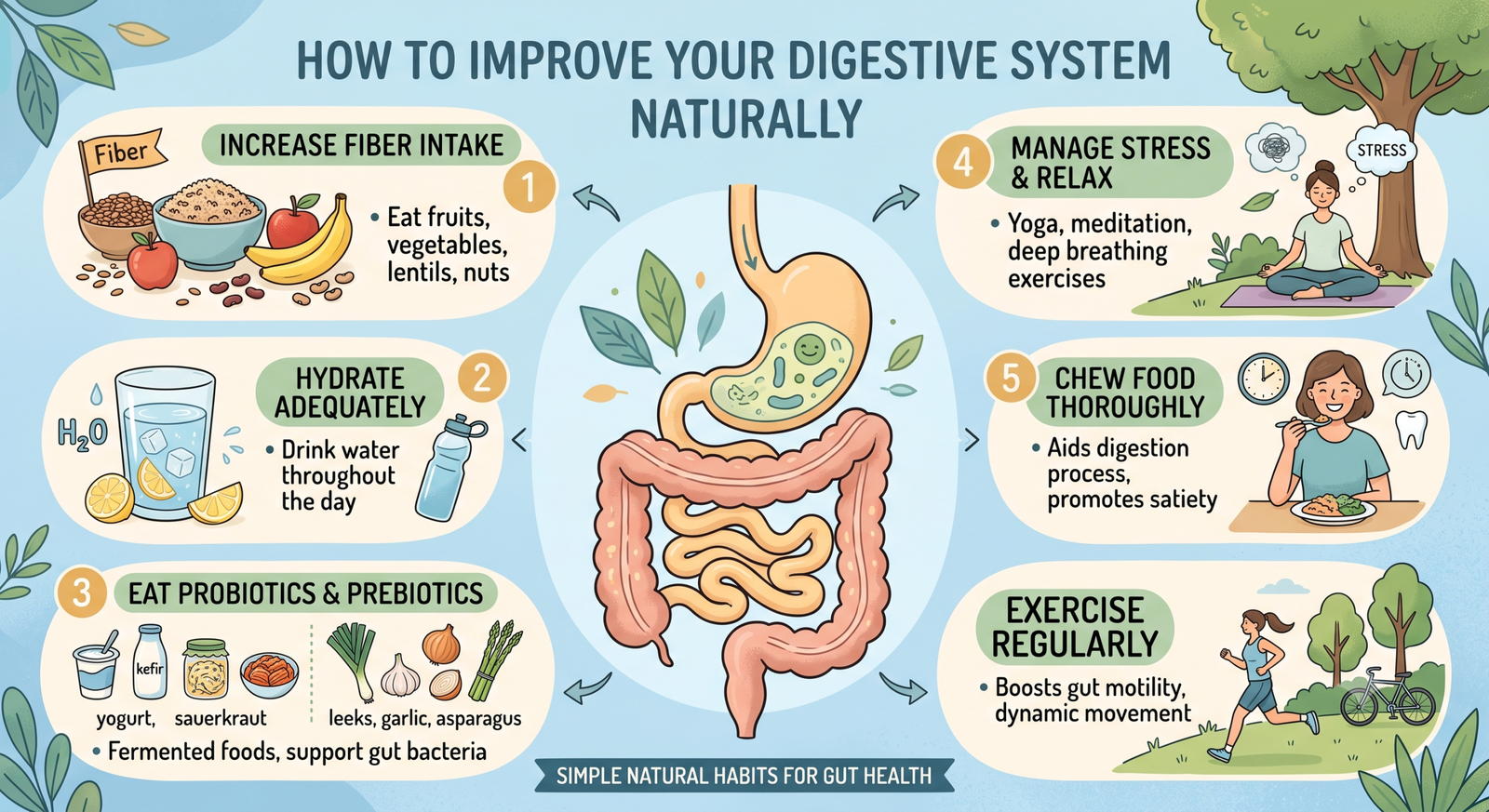
How to Improve Your Digestive System Naturally
Good digestion plays a vital role in keeping our bodies healthy. Many people struggle with issues like bloating, gas, constipation, or a feeling of heaviness after meals. The good news is that simple daily habits can effectively support better digestion.
Common Signs of Poor Digestion
* Bloating
* Gas formation
* Constipation
* Heaviness after eating
* Frequent burping
* Abdominal discomfort
* Irregular bowel movements
1. Eat Fiber-Rich Foods
What to Eat?
* Fruits
* Green vegetables
* Lentils and beans
* Whole grains
* Oats
* Nuts and seeds
How to Consume?
Gradually increase your fiber intake. Make sure to drink plenty of water alongside it.
How It Helps: Fiber helps maintain regular bowel movements and prevents constipation.
2. Drink Enough Water
What You Need
* Clean water
How to Consume?
Keep sipping water in small amounts throughout the day. Your water needs may vary based on the weather, age, and physical activity levels.
How It Helps: Adequate water intake supports normal digestion and bowel movements.
3. Chew Your Food Thoroughly
What to Do?
* Eat slowly.
* Chew every bite thoroughly.
* Avoid rushing while eating.
How It Helps: Thorough chewing breaks food into smaller pieces, making it easier for the digestive process to begin.
4. Exercise a Little Every Day
What to Do?
* Walk for 20–30 minutes daily.
* Do light stretching.
* Engage in any physical activity you enjoy.
How It Helps: Regular physical activity supports overall health as well as normal bowel movements.
🥣 5. Include curd and fermented foods
What can you consume?
* Plain curd (dahi)
* Yogurt
* Kefir
* Other suitable fermented foods
How to consume?
If these foods suit your body, they can be part of a balanced diet.
How it helps: Some fermented foods contain microorganisms that can be beneficial for gut health.
6. Maintain a regular meal schedule
Frequently skipping meals and then eating too much at once can cause stomach discomfort.Try to keep your meal times consistent and avoid overeating.
7. Pay attention to sleep and stress
Digestion depends on more than just food. Stress and poor sleep can also aggravate stomach-related issues.
What to do?
* Get adequate sleep.
* Take time to relax every day.
* Go for a light walk.
* Practice deep breathing exercises.
8. Cut down on highly processed foods
Reduce intake of:
* Deep-fried foods
* Excessively sugary foods
* High-fat foods
* Highly processed foods
Instead, include fruits, vegetables, whole grains, and other nutritious foods in your diet.
9. Understand your body
Everyone’s digestion is different. A food that suits one person might cause gas or bloating in another.
If you repeatedly experience discomfort after eating a specific food, pay attention to which food acts as a trigger for you.
👨⚕️ When to consult a doctor?
Consult a doctor if digestive problems persist for a long time or recur frequently.
Seek medical advice if you experience **severe stomach pain, persistent vomiting, blood in the stool, sudden weight loss, difficulty swallowing, or a sudden, significant change in bowel habits.
🌿 The Bottom Line
Improving digestion doesn’t require a single “magic” food or home remedy. Drinking enough water, eating fiber-rich foods, eating slowly, staying active daily, getting good sleep, and reducing stress—these small habits can effectively support your digestive health in the long run.