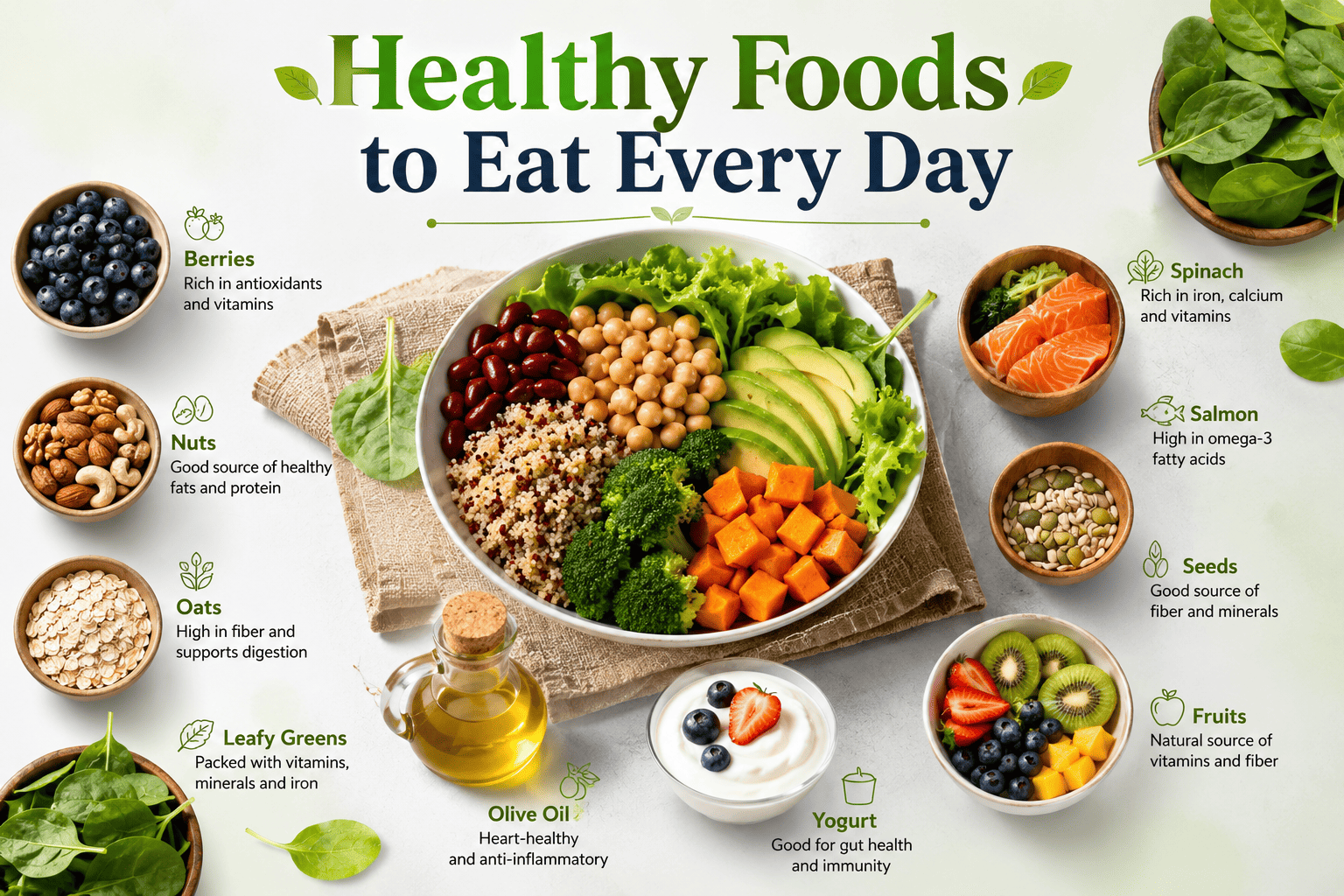
Healthy Foods to Eat Every Day for Better Overall Wellness
Eating well does not require complicated meal plans, expensive superfoods, or strict food rules. In practice, one of the most useful nutrition principles is consistency: regularly choosing nutrient-dense foods from different food groups.
The healthy foods to eat every day should provide a useful balance of protein, fiber, healthy fats, vitamins, minerals, and carbohydrates. Variety matters too. No single ingredient supplies everything your body needs, which is why a balanced plate is generally more valuable than focusing on one fashionable “superfood.”
Here are practical food groups you can incorporate into everyday meals to support better overall wellness.
Why Healthy Foods to Eat Every Day Matter
Daily food choices influence energy levels, digestion, muscle maintenance, bone health, and overall nutrient intake. A varied diet built around minimally processed foods can also make it easier to get important nutrients without depending heavily on highly processed snacks and convenience meals.
A useful approach is to build meals around vegetables or fruits, a protein source, high-fiber carbohydrates, and a source of unsaturated fat.
For example, breakfast might include oatmeal, fruit, nuts, and plain yogurt. Lunch could combine lentils, vegetables, whole-grain roti, and curd. Dinner might feature brown rice, mixed vegetables, and paneer, tofu, fish, eggs, beans, or another protein source.
Vegetables: Build More Color Into Your Plate
Vegetables are among the most valuable healthy foods to eat every day because they provide fiber and a wide range of vitamins, minerals, and plant compounds.
Instead of eating the same vegetable repeatedly, rotate your choices. Include leafy greens such as spinach, along with carrots, tomatoes, bell peppers, broccoli, peas, cauliflower, beans, and other seasonal vegetables.
Different colors often represent different combinations of plant nutrients, so variety is a simple way to improve dietary diversity.
Healthy Foods to Eat Every Day: Start With Vegetables
If increasing vegetables feels difficult, make small changes. Add spinach to an omelet, include cucumber and tomato with lunch, mix extra vegetables into dal or soup, or keep chopped vegetables ready for quick meals.
The goal is not to create a perfect plate overnight. Make vegetables a normal part of meals rather than an occasional addition.
Eat Whole Fruits Instead of Relying on Juice
Apples, oranges, bananas, berries, guava, papaya, pears, and other fruits can contribute fiber, vitamins, minerals, and antioxidants to your diet.
Whole fruit is generally a better everyday choice than fruit juice because it retains its natural fiber and tends to be more filling.
Choose fruits according to availability, preference, and season. Combining fruit with yogurt, nuts, or seeds can also create a more satisfying snack.
Include Quality Protein in Regular Meals
Protein supports the maintenance and repair of body tissues and is particularly important for maintaining muscle.
Useful protein sources include eggs, lentils, chickpeas, kidney beans, tofu, paneer, yogurt, fish, poultry, nuts, and seeds. Your choices can easily be adapted to vegetarian or non-vegetarian eating patterns.
Rather than consuming most of your protein in one meal, consider including a suitable protein source throughout the day.
Choose Whole Grains and High-Fiber Carbohydrates
Carbohydrates do not need to be eliminated from a healthy diet. The type and overall portion are more important.
Oats, brown rice, whole wheat, barley, millets, quinoa, and other whole grains provide carbohydrates alongside fiber and micronutrients. They can be paired with protein and vegetables to create more balanced meals.
For example, dal with vegetables and whole-grain roti offers a more diverse nutritional profile than relying primarily on refined carbohydrates.
Add Nuts, Seeds, and Other Healthy Fats
Almonds, walnuts, peanuts, flaxseeds, chia seeds, sesame seeds, and similar foods provide unsaturated fats along with other nutrients.
Avocado and oils rich in unsaturated fats can also fit into a balanced eating pattern. However, portion awareness matters because fats are energy-dense.
A small serving of unsalted nuts can be a convenient snack, while seeds can be added to oatmeal, yogurt, salads, or smoothies.
Don’t Forget Water and Fermented Foods
Hydration is an important part of overall wellness. Keep water readily available throughout the day rather than waiting until you feel extremely thirsty.
Fermented foods such as plain yogurt or curd can also be incorporated into a varied diet. When buying packaged options, check labels for added sugars, sodium, and other ingredients.
Common Mistakes to Avoid
One common mistake is assuming that a food labeled “healthy” can be eaten without considering portions or the rest of the diet. Another is eliminating entire food groups without a medical or nutritional reason.
Relying heavily on juices, sweetened smoothies, protein bars, or packaged “diet” foods can also make a diet less balanced than it appears.
Most importantly, avoid chasing individual superfoods. Eating blueberries occasionally cannot compensate for a diet consistently low in vegetables, protein, fiber, and other nutrient-rich foods.
Conclusion: Make Healthy Eating a Daily Habit
Choosing healthy foods to eat every day is less about following a perfect diet and more about creating a sustainable routine. Build meals around vegetables and fruits, quality protein, whole grains or other fiber-rich carbohydrates, healthy fats, and adequate fluids.
Start with changes you can realistically maintain. Add one more vegetable to lunch, replace a refined snack with fruit and nuts, or include a protein source at breakfast. Small improvements repeated consistently can make your overall diet more nutritious and varied.
CTA: Start by reviewing what you normally eat in a day and choose one realistic upgrade for your next meal. For individualized nutrition advice, especially if you have a medical condition, food allergy, pregnancy, or specific dietary requirements, consult a qualified healthcare professional or registered dietitian.