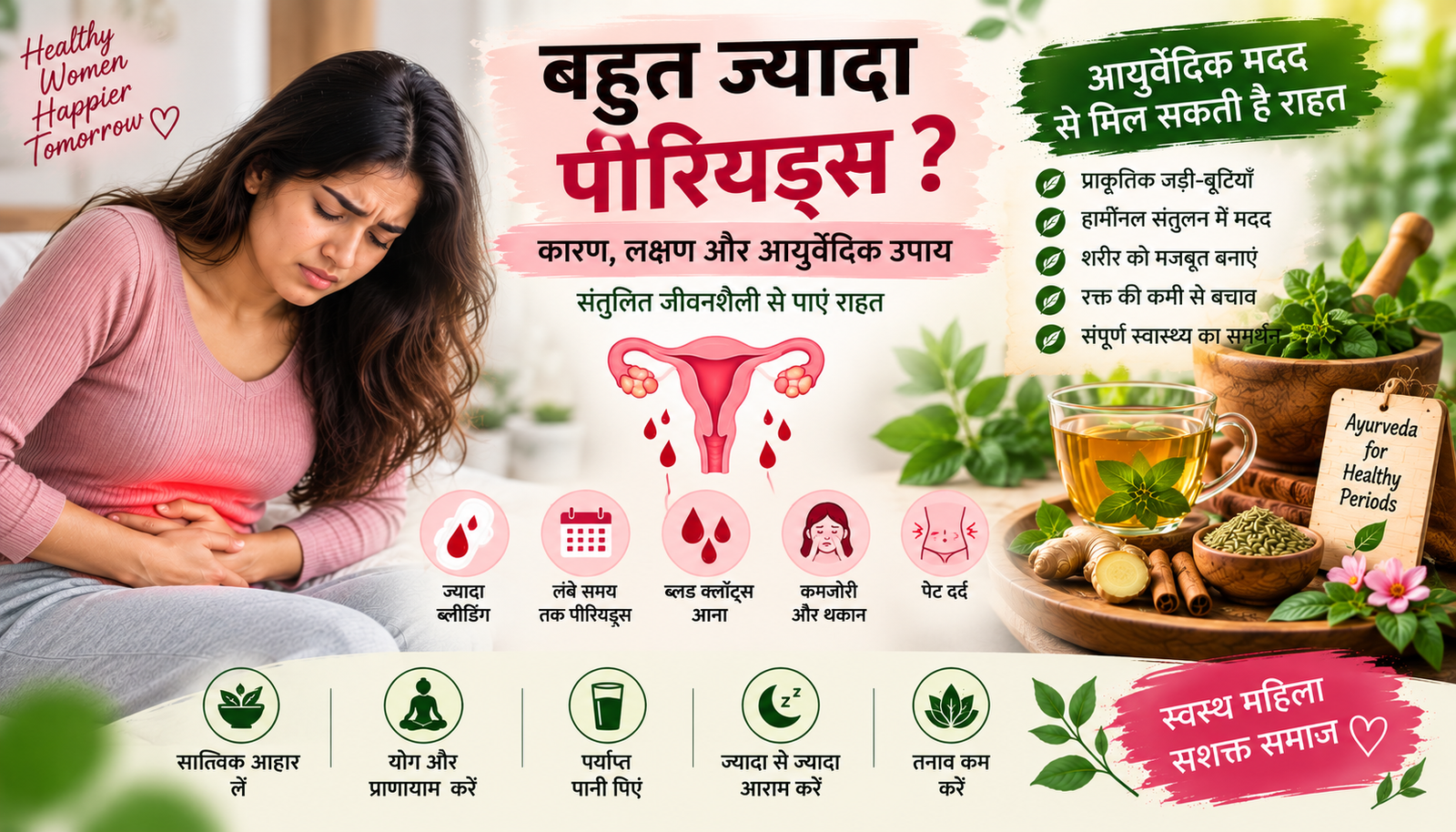
Why Do Heavy Periods Occur? Causes, Symptoms, and Ayurvedic Approaches
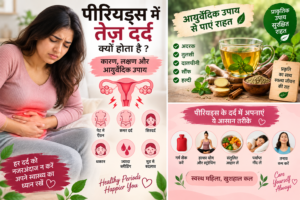
Many women experience heavier-than-normal bleeding during their periods. If you need to change your pad or tampon frequently, the bleeding lasts longer than 7 days, you pass large blood clots, or the bleeding interferes with your daily activities, it can be classified as “Heavy Periods”.
You should not attempt to stop excessive bleeding solely with home remedies; identifying the underlying cause is crucial.
1. About Heavy Periods
In medical terms, heavy periods are referred to as “Heavy Menstrual Bleeding” or “Menorrhagia”.
While some women naturally experience heavier bleeding, it is essential to consult a healthcare professional if the bleeding has suddenly increased or is affecting your daily life.
Potential causes of heavy periods include:
* Fibroids
* Endometriosis
* Adenomyosis
* Certain hormonal issues
* Pelvic inflammatory disease
* Certain bleeding disorders
* Certain medications
* Hormonal changes during perimenopause
Sometimes, no clear cause can be identified.
2. Symptoms of Heavy Periods
Common signs of heavy periods include:
1. Frequent pad changes
If you need to change your pad or tampon every 1–2 hours, the bleeding may be excessive.
2. Bleeding lasting longer than 7 days
If your period continues for more than 7 days, it is advisable to get it checked.
3. Large blood clots
Passing clots that are approximately 2.5 cm or larger during your period can be a sign of heavy bleeding.
4. Bleeding leaking onto clothes or bedding
If the bleeding is heavy enough to frequently stain your clothes or bedding, consult a doctor.
5. Excessive fatigue
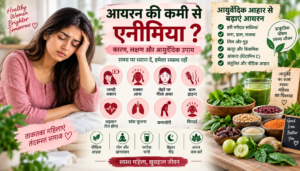
Prolonged, heavy blood loss can lead to iron deficiency and anemia, causing symptoms such as fatigue, weakness, or shortness of breath.
6. Disruption of daily activities
If your period makes it difficult to exercise, work, study, or go out, a medical evaluation may be necessary. —
3. How can Ayurveda and lifestyle changes help?
The causes of heavy periods vary; therefore, there is no single Ayurvedic remedy that serves as a proven cure to stop them.
An Ayurvedic lifestyle can be adopted as a form of “supportive care”.
Balanced Diet
If bleeding is heavy, including iron- and protein-rich foods in your diet can be beneficial.
Examples:
* Spinach and other green leafy vegetables
* Lentils (Dal)
* Chickpeas (Chana)
* Kidney beans (Rajma)
* Beans
* Sesame seeds
* Eggs
* Meat/fish (if you consume them)
Consuming iron-rich foods alongside foods rich in Vitamin C can help improve iron absorption.
Adequate Rest
Heavy bleeding can lead to fatigue. Ensure your body gets enough rest and sleep.
Light Physical Activity
If you are not experiencing extreme weakness or excessive bleeding, light walking and gentle stretching are permissible.
Do not exercise if you feel very weak; instead, seek medical advice.
4. Ingredients for an Iron-Rich Homemade Meal
During heavy periods, a simple and nutritious “Spinach-Lentil (Palak-Dal) Soup” can be consumed as a meal.
While this is not a medication to stop heavy bleeding, it serves as a source of iron and protein within a balanced diet.
Ingredients
* Spinach – 1 cup
* Moong dal (split yellow lentils) – ½ cup
* Water – 2 cups
* Tomato – 1 small
* Cumin seeds – ½ teaspoon
* Turmeric – A small amount
* Salt – To taste
* Lemon – A little
5. Method for Preparing Spinach-Lentil Soup
Step 1
Wash the spinach thoroughly.
Step 2
Wash the moong dal and cook it in water.
Step 3
Add the spinach and tomato to the dal.
Step 4
Add cumin seeds and a little turmeric, then cook thoroughly.
Step 5
Once the dal and spinach have softened, you can blend the mixture lightly.
Step 6
Finally, add a little lemon juice.
This can be consumed as part of a balanced meal.
Note: This soup is not a cure for stopping heavy menstrual bleeding.
6. Precautions
Caution is crucial when dealing with heavy periods.
Keep the following in mind:
* Do not rely solely on home remedies to stop heavy bleeding.
* Do not take high doses of iron tablets or herbal supplements without a doctor’s advice.
* If you are already taking medication, consult a healthcare professional before using herbal products.
* Seek a medical evaluation if you experience persistent weakness, dizziness, or shortness of breath.
* It is important to identify the underlying cause if heavy bleeding occurs repeatedly.
* Consult a doctor if bleeding occurs between periods.
* Bleeding after sexual intercourse should also be medically investigated.
When to seek immediate medical help?
Seek immediate medical care if heavy bleeding is accompanied by symptoms such as:
* Dizziness or fainting
* Severe weakness
* Shortness of breath
* Rapid heartbeat
* Severe abdominal or pelvic pain
7. Healthy Routine for Heavy Periods
Morning
* Adequate water intake
* Nutritious breakfast
* Iron and protein-rich foods
Afternoon
* Lentils (dal), chickpeas, or kidney beans (rajma)
* Green vegetables
* Whole grains
* Vitamin C-rich foods
Evening
* Fruits
* Nuts or seeds
* Adequate water intake
Night
* Light and balanced meal
* Adequate rest
* Try to sleep on time
How to prevent iron deficiency?
Persistent heavy bleeding during periods can lead to iron deficiency in the body.
This can cause symptoms such as:
* Fatigue
* Weakness
* Dizziness
* Shortness of breath
In cases of heavy periods, doctors may recommend blood tests can help screen for issues like iron-deficiency anemia.
Therefore, instead of relying solely on diet, consult a doctor regarding blood tests and appropriate treatment if necessary.
When should you see a doctor?
You should consult a gynecologist or healthcare professional if:
* You need to change your pad or tampon every 1–2 hours
* Your period lasts longer than 7 days
* You pass large blood clots
* Bleeding interferes with your daily activities
* You experience extreme fatigue or shortness of breath
* Your periods are very painful
* You experience bleeding between periods
* You experience bleeding after sexual intercourse
Conditions such as fibroids, endometriosis, or adenomyosis could be underlying causes for these symptoms; therefore, an accurate diagnosis is essential.
Conclusion
Excessive menstrual bleeding should not be dismissed as normal or ignored for a prolonged period. Persistent heavy bleeding can lead to iron deficiency and anemia.
While a balanced diet, iron-rich foods, adequate rest, and a healthy lifestyle can support the body, “one should not rely solely on Ayurvedic home remedies to stop heavy bleeding.”
If the bleeding is excessive or recurrent, consulting a gynecologist is crucial to identify the underlying cause and receive appropriate treatment.