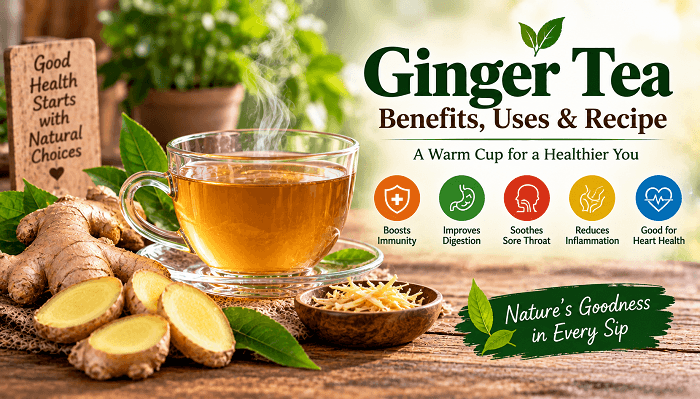
Ginger Tea Benefits: Uses, Nutrition and Simple Recipe
A review of current clinical guidance reveals a useful distinction: ginger has been studied extensively, but most trials test supplements rather than homemade tea. That matters when discussing ginger tea benefits because a lightly brewed cup delivers a different dose from a concentrated capsule.
Even so, fresh ginger tea can be a soothing, low-sugar drink. Its warm, spicy flavor may be welcome after a heavy meal, during cold weather or when mild nausea makes other beverages unappealing. The key is to enjoy it as food—not treat it as a cure.
Evidence-Based Ginger Tea Benefits
Ginger comes from the rhizome of Zingiber officinale. It contains naturally occurring compounds, including gingerols and shogaols, that have been investigated for antioxidant and anti-inflammatory effects.
The strongest human evidence concerns nausea. According to the National Center for Complementary and Integrative Health, ginger may help with nausea and vomiting associated with pregnancy. However, evidence for motion sickness is largely unconvincing, while findings for postoperative and chemotherapy-related nausea remain uncertain.
That does not mean a cup of tea will produce the same results seen in supplement studies. Preparation method, ginger quantity and steeping time all affect the strength of the drink. Fresh ginger tea may provide gentle comfort, but it should not replace anti-nausea medication or medical care.
Research also suggests that ginger supplements might reduce the severity of menstrual cramps. Evidence for knee osteoarthritis is less reliable because many studies have been small or methodologically weak. Claims that ginger tea “detoxes” the liver, melts body fat or prevents infections are not supported by strong clinical evidence.
Ginger Tea Benefits for Everyday Hydration
Plain ginger tea contains very few calories when prepared with water and no sweetener. It does not provide meaningful amounts of protein, fiber or essential vitamins in a typical serving, so it should not be marketed as a nutritional powerhouse.
Its practical value is simpler: it adds flavor to fluid without requiring caffeine or large amounts of sugar. Someone trying to reduce sweetened drinks, for example, might replace an afternoon soda with hot or iced ginger tea.
Fresh ginger gives the drink a brighter, sharper taste. Dried ginger powder is more concentrated and can feel hotter on the throat or stomach. Lemon adds acidity and aroma, while cinnamon contributes sweetness without sugar. Honey is optional and should be used sparingly if blood sugar or calorie intake is a concern.
Ginger Tea Benefits: Fresh Root or Tea Bags?
Fresh root offers control over strength and ingredients. Tea bags are convenient, but some contain only a small amount of ginger or combine it with licorice, caffeine-containing tea, flavorings or added sweeteners.
For a straightforward drink, choose firm ginger with smooth skin and a fresh, citrusy aroma. Young ginger often tastes milder; mature roots tend to be more fibrous and pungent. Store unpeeled ginger in the refrigerator and cut away any moldy or badly shriveled sections.
Simple Fresh Ginger Tea Recipe
For one generous cup, you will need:
- 1 to 2 inches of fresh ginger
- 1½ cups of water
- 1 lemon wedge, optional
- ½ to 1 teaspoon honey, optional
Wash the ginger well, then slice it thinly. Peeling is optional if the root is clean. Add the slices and water to a small saucepan, bring to a gentle simmer and cook for 5 to 10 minutes. Longer simmering creates a stronger, spicier tea.
Strain the liquid into a cup. Add lemon or honey after tasting it plain. For iced tea, make a double-strength batch, cool it promptly and serve over ice.
Precautions and Common Mistakes
Ginger can cause abdominal discomfort, heartburn, diarrhea, or irritation of the mouth and throat. If a strong brew produces burning or reflux, use less ginger, shorten the simmering time or stop drinking it.
People who take medication should discuss regular or concentrated ginger use with a doctor or pharmacist because herbal products can interact with medicines. Pregnant people should also seek professional guidance before using ginger supplements. NCCIH notes that supplements may be safe during pregnancy, but little is known about ginger’s safety while breastfeeding.
One common mistake is assuming stronger tea provides greater benefits. Excess ginger may only increase digestive side effects. Other missteps include adding several spoonfuls of honey, using tea to delay treatment for persistent vomiting and assuming a homemade drink matches the standardized doses used in research.
Seek medical advice for nausea accompanied by dehydration, severe pain, blood, fever, confusion or unexplained weight loss.
Conclusion: Using Ginger Tea Benefits Wisely
The most realistic ginger tea benefits are modest: a flavorful caffeine-free drink, possible relief from mild nausea and an easy alternative to sugary beverages. Research on ginger is promising in selected areas, but tea strength varies and many health claims remain unproven.
Start with the simple recipe, keep the brew mild and notice how your body responds. If symptoms persist or you plan to use ginger therapeutically, ask a qualified healthcare professional for guidance.