High-Protein Indian Foods to Add to Your Daily Diet
A frequent problem in everyday Indian meals is not the complete absence of protein, but its uneven distribution. Breakfast may consist mainly of tea and toast, lunch may contain only a small bowl of dal, and most of the day’s protein is left for dinner.
Adding high protein Indian foods to every main meal can support muscle maintenance, tissue repair, immune function, and healthy growth. Protein also makes meals more satisfying, which may help reduce unplanned snacking.
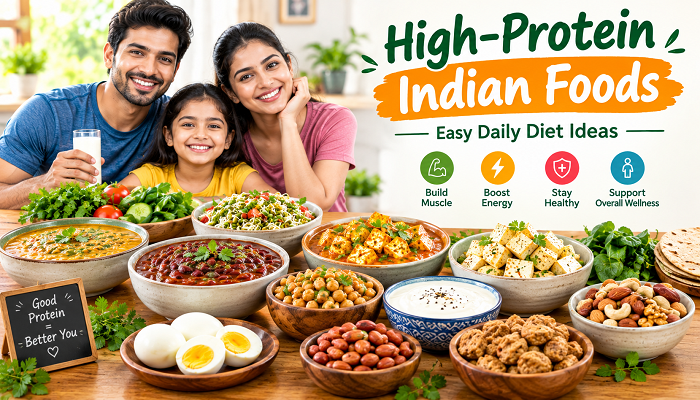
You do not need expensive powders or a heavily meat-based diet. Pulses, dairy products, soy foods, eggs, fish, and lean meats can all contribute to a practical protein-rich Indian diet.
Vegetarian High Protein Indian Foods
1. Lentils and dals
Moong, masoor, urad, arhar, and chana dal provide protein along with fibre, complex carbohydrates, and minerals. Instead of serving thin dal as a small side dish, prepare a thicker portion and combine it with vegetables, rice, or roti.
Dal does not need to be eaten with rice at every meal to “create” protein immediately. Eating a varied diet containing pulses, grains, nuts, seeds, and dairy throughout the day can provide the essential amino acids your body requires.
2. Chickpeas, rajma, and lobia
Whole pulses such as kala chana, kabuli chana, kidney beans, and black-eyed peas are satisfying choices for lunch or dinner. They work well in curries, salads, wraps, chaats, and grain bowls.
Soak dried beans properly and cook them until soft. Start with smaller portions if you are not accustomed to fibre-rich meals.
3. Paneer, curd, and milk
Paneer offers concentrated protein and can be added to bhurji, vegetable curry, sandwiches, or salads. Curd and milk are convenient options for breakfast or snacks.
Choose dairy products according to your overall energy needs and tolerance. Someone trying to reduce saturated fat may prefer toned milk, plain curd, or paneer prepared from lower-fat milk.
4. Soybeans, tofu, and soy chunks
Soy foods are among the most useful vegetarian high protein Indian foods. Tofu can replace paneer in bhurji or curry, while soy chunks can be added to pulao, keema-style dishes, and mixed vegetable preparations.
Select minimally processed, unsweetened soy foods when possible. Soy chunks are protein-dense, but they should be part of a varied diet rather than the only protein source.
5. Nuts and seeds
Peanuts, almonds, sesame seeds, pumpkin seeds, and flaxseeds contribute protein, healthy fats, and minerals. Sprinkle seeds over curd, add peanut chutney to breakfast, or eat a small handful of nuts as a snack.
Because nuts and seeds are calorie-dense, treat them as useful additions rather than unlimited snack foods.
Non-Vegetarian High Protein Indian Foods
6. Eggs
Eggs are affordable, versatile, and easy to portion. An omelette with vegetables, egg bhurji with roti, or boiled eggs with a salad can turn a light meal into a more balanced one.
Egg whites contain protein, while the yolk provides protein and several important nutrients. Whether whole eggs suit your diet depends on your broader health needs and medical advice.
7. Fish and seafood
Fish supplies protein and varies in fat content depending on the species. Rohu, pomfret, sardines, mackerel, and other locally available fish can be grilled, steamed, baked, or cooked in curry.
The complete “protein package” matters. The Harvard Nutrition Source advises considering the fats, fibre, sodium, and other nutrients that accompany a protein food—not protein alone.
8. Chicken and lean meat
Skinless chicken and lean cuts of meat provide complete protein. Tandoori chicken, lightly cooked chicken curry, or homemade keema with vegetables may be preferable to regularly eating processed or deep-fried meats.
Portion the meal sensibly and include vegetables, whole grains, or pulses instead of making meat the entire plate.
How to Use High Protein Indian Foods at Every Meal
Which High Protein Indian Foods Work in a Daily Menu?
For breakfast, try moong dal chilla with curd, paneer-stuffed roti, egg bhurji, or vegetable oats with milk. Lunch could include rajma with rice and salad, tofu curry with roti, or fish with vegetables.
For an evening snack, choose roasted chana, plain curd, boiled eggs, or a small serving of nuts. Dinner might include dal khichdi with curd, paneer bhurji, grilled chicken, or soybean pulao.
The MedlinePlus guide to dietary protein explains that protein needs vary with age, body size, health, and activity level. Athletes, pregnant women, older adults, and people recovering from illness may need personalised guidance.
Common Protein Mistakes
Do not assume that every food advertised as “high protein” is automatically healthy. Packaged shakes, bars, and flavoured yoghurts may contain considerable sugar, sodium, or calories.
Another mistake is increasing protein while neglecting vegetables, fruits, fibre, and hydration. Very high-protein diets and unmonitored supplements may be unsuitable for people with kidney or certain metabolic conditions.
Most importantly, avoid copying an athlete’s protein target. Your requirement should reflect your body, activity, medical history, and goals.
Conclusion: Build a Diet With High Protein Indian Foods
The most practical high protein Indian foods include dals, beans, paneer, curd, soy, nuts, eggs, fish, and lean meat. Variety helps supply protein alongside fibre, healthy fats, vitamins, and minerals.
Review tomorrow’s meals and add one clear protein source to breakfast, lunch, and dinner. For a personalised target—especially during pregnancy, illness, athletic training, or kidney treatment—consult a registered dietitian or qualified healthcare professional.