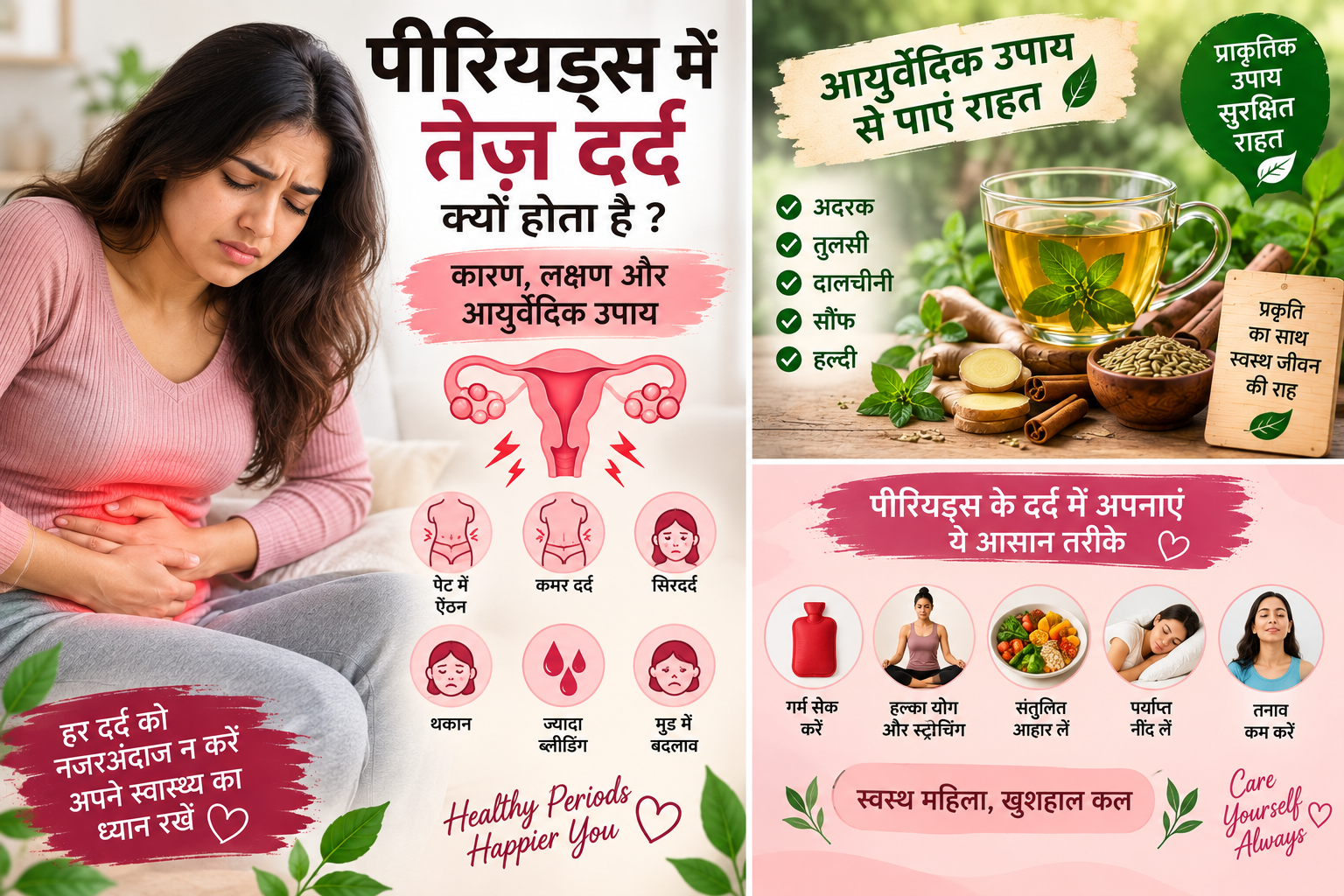
Why Does Severe Period Pain Occur? Causes, Symptoms, and Ayurvedic Remedies
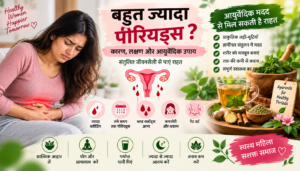
Experiencing pain or cramps in the lower abdomen during periods is quite common. Many women feel cramps just before their period starts or during the initial days. This pain can also radiate to the lower back and thighs. Normal period pain usually lasts for a few days.
However, if the pain is severe, worsens every month, or begins to affect your daily life, it should not be ignored as merely normal period pain.
1. About Period Pain
In medical terms, period pain is known as “Dysmenorrhea”.
During periods, the uterus contracts; this process, along with the bleeding, can cause abdominal cramps and pain.
For some women, the pain is mild, while for others, it can be severe enough to make performing daily tasks difficult.
Severe period pain can sometimes be caused by conditions such as:
* Endometriosis
* Adenomyosis
* Fibroids
* Pelvic inflammatory disease
* Other pelvic conditions
2. Symptoms of Period Pain
Common symptoms of period pain include:
1. Abdominal Cramps
Cramps or a sensation of pulling/tightness may be felt in the lower abdomen.
2. Lower Back Pain
The pain may radiate to the lower back.
3. Thigh Pain
Some women may feel cramps extending to their thighs.
4. Abdominal Heaviness
A sensation of pressure or heaviness may be felt in the lower abdomen.
5. Headache
Some women may experience headaches around the time of their period.
6. Fatigue
Weakness or fatigue may occur due to the pain and hormonal changes.
7. Difficulty with Daily Activities
If the pain is severe enough to affect studies, work, household chores, or routine activities, one should seek medical advice.
3. How Can Ayurveda Provide Relief from Period Pain?
Ayurveda emphasizes factors such as lifestyle, diet, rest, and keeping the body warm.
The measures mentioned here are intended to provide **supportive relief from pain**. They should not be considered a definitive cure for period pain.
Warm Compress
Applying a warm compress to the lower abdomen can help reduce cramps. The NHS also recommends using a heat pad or a hot water bottle wrapped in a cloth and placing it on the abdomen.
Gentle Massage
A gentle massage of the abdomen and lower back can provide relief for some women.
Light Exercise
Instead of strenuous exercise during your period, you can engage in activities such as:
* Light walking
* Gentle yoga
* Stretching
* Light cycling
Gentle exercise can help alleviate period pain.
Rest and Stress Reduction
Stress and lack of sleep can intensify discomfort. Therefore, incorporating adequate sleep and relaxation into your daily routine is beneficial.
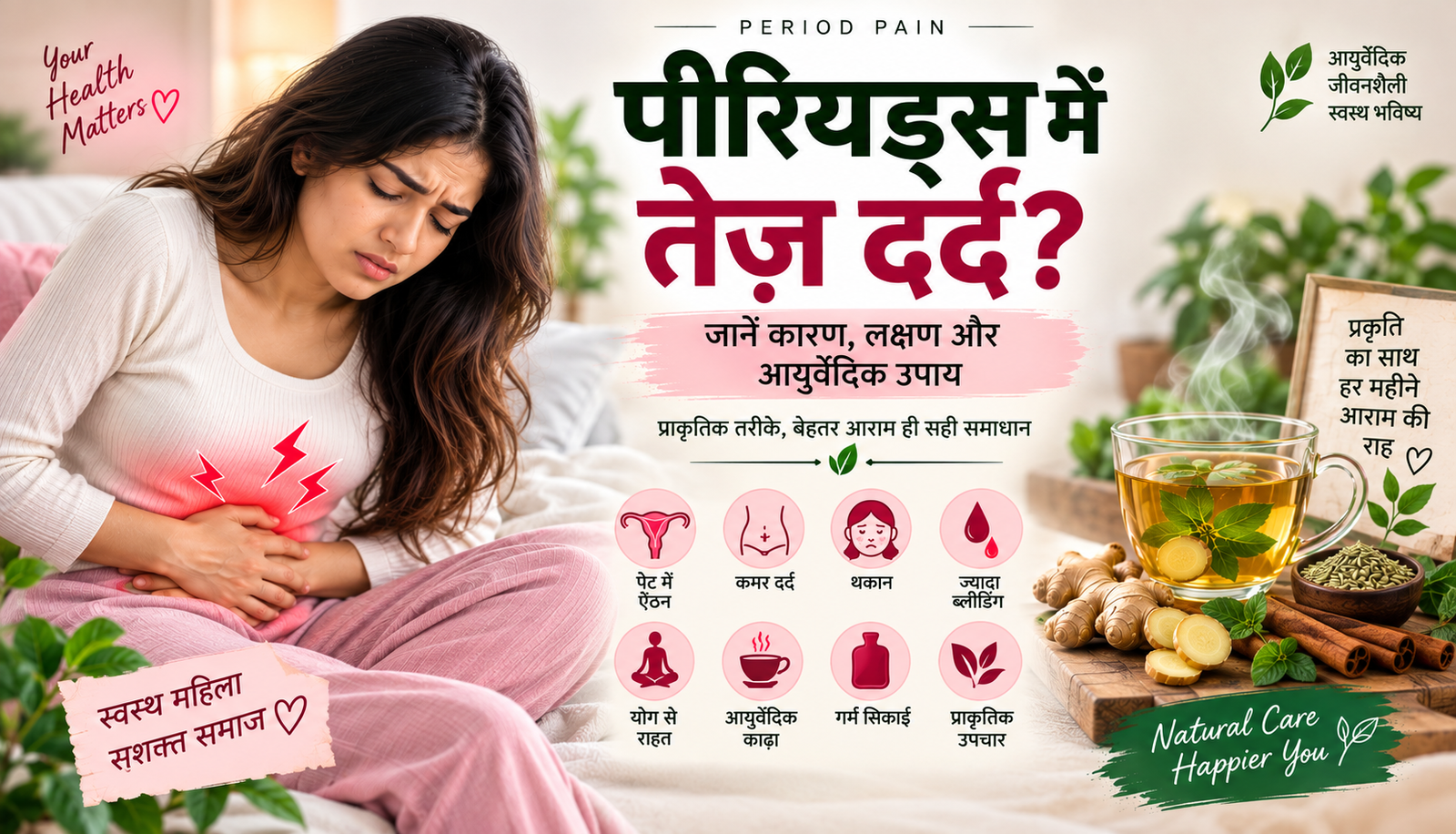
4. Ingredients for an Ayurvedic Homemade Drink
A mild “Warm ginger-tulsi (holy basil) drink”can be part of a general wellness routine.
Ingredients
* Water – 1 cup
* Fresh Tulsi (Holy Basil) – 4–5 leaves
* Ginger – Approximately ½ inch piece
* Cinnamon – A very small amount (optional)
Important: Do not consider this drink a medication or a definitive cure for period pain.
5. Preparation Method
Step 1
Take 1 cup of water in a pan.
Step 2
Add the cleaned Tulsi leaves to it.
Step 3
Lightly crush the ginger and add it to the water.
Step 4
Heat the mixture on a low flame for a few minutes.
Step 5
You may add a very small amount of cinnamon if desired.
Step 6
Strain the drink and consume it while it is still warm.
Do not use any ingredient if it causes an allergy or discomfort.
6. Precautions Regarding Period Pain
Not all cases of period pain are suitable for management through home remedies alone.
Keep these points in mind:
* Do not ignore severe pain.
* Consult a gynecologist if the pain worsens each month.
* Medical evaluation may be necessary if the pain interferes with daily activities.
* Do not take high doses of herbal supplements or Ayurvedic medicines without a doctor’s advice.
* If you are planning a pregnancy or might be pregnant, consult a healthcare professional before taking any herbal preparation regularly.
* If you are already taking medication, consult a doctor or pharmacist before using herbal products.
* Seek medical advice if severe pain is accompanied by heavy bleeding.
* Consult a doctor if bleeding occurs between periods.
7. Healthy Routine to Reduce Period Pain
Morning
* Warm water
* Light walk (10–20 minutes)
* Balanced breakfast
During the Day
* Adequate water
* Green vegetables
* Lentils (dal) and protein-rich foods
* Fruits and whole grains
During Periods
* Applying gentle heat to the abdomen
* Rest
* Gentle stretching
* Adequate sleep
At Night
* Light meal
* Deep breathing to reduce stress
* Try to sleep on time
When is Period Pain Not Considered Normal?
Consult a doctor if period pain:
* Is severe
* Has worsened compared to before
* Is not relieved even by painkillers
* Affects daily activities
* Causes pain during sexual intercourse
* Causes pain during urination or bowel movements
* Is accompanied by heavy bleeding
Such symptoms could be linked to endometriosis or other pelvic conditions.
Seek urgent medical care if pelvic pain is sudden and severe, progressively worsens, causes dizziness or fainting, or is accompanied by heavy vaginal bleeding. may be required.
Conclusion
Mild to moderate pain during periods is common for many women. Some may find relief through heat therapy, light exercise, rest, and a healthy lifestyle.
Ayurvedic home remedies, such as a ginger-tulsi (holy basil) drink, can be consumed for general wellness, but they should not be considered a definitive cure for severe period pain.
If the pain is intense, progressively worsening, or interfering with your daily life, consulting a gynecologist to identify the underlying cause is crucial.