What is PCOS? Symptoms, Causes, and Ayurvedic Management
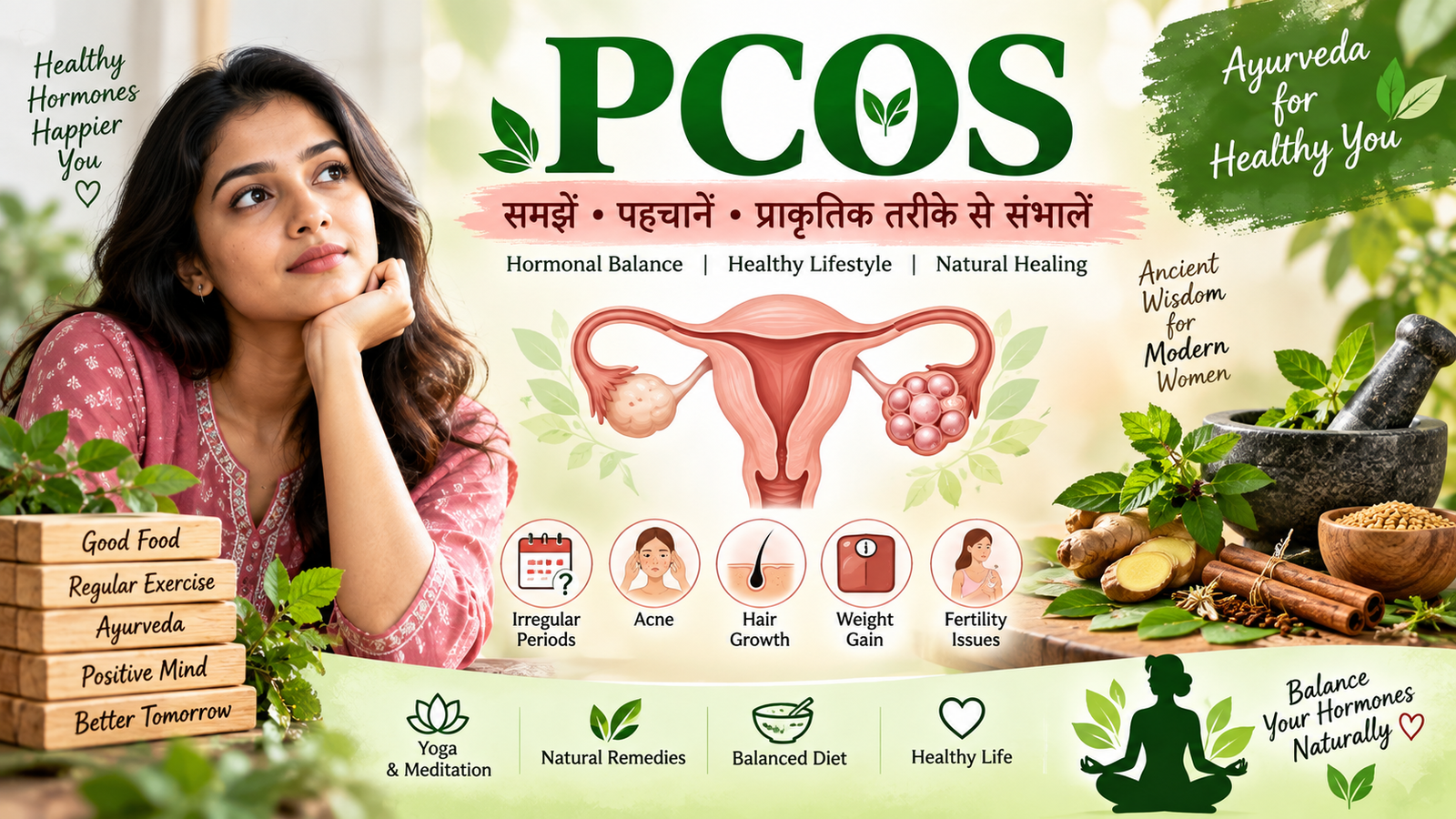
PCOS, or ”Polycystic Ovary Syndrome‘‘(पॉलीसिस्टिक ओवरी सिंड्रोम), is a common hormonal disorder affecting women. It can lead to irregular menstrual cycles, elevated levels of male hormones in the body, and—in some women—the appearance of multiple small follicles in the ovaries.
Symptoms of PCOS can vary from woman to woman. A proper diet, regular exercise, adequate sleep, and medical treatment as advised by a doctor can help manage these symptoms.
1. About PCOS
PCOS is a condition that affects hormonal balance. It can disrupt ovulation—the process where an egg is regularly released from the ovary.
Some common issues associated with PCOS include:
* Irregular menstrual cycles
* Delayed periods
* Excess facial or body hair growth
* Acne and oily skin
* Weight gain or difficulty losing weight
* Thinning hair on the scalp
* Difficulty conceiving
There is no single cause for PCOS. Genetic and hormonal factors, as well as insulin resistance, can play a role in its development.
Important: Claims that PCOS can be completely cured solely through home remedies are incorrect. Lifestyle changes and medical treatment prescribed by a doctor (when necessary) are crucial for managing its symptoms.
2. Symptoms of PCOS
Symptoms of PCOS can vary among women. Common symptoms include:
1. Irregular Periods
Periods not arriving on time or occurring with gaps of several weeks or months can be a common sign of PCOS.
2. Scanty or Heavy Periods
Some women may experience very light bleeding, while others may have heavy bleeding.
3. Excess Facial and Body Hair
Excessive hair growth may occur on the upper lip, chin, chest, or abdomen. ### 4. Acne
Hormonal changes can lead to acne on the face, chest, or back.
5. Weight Gain
Some women may experience weight gain, particularly around the abdomen.
6. Hair Loss
Thinning of hair or excessive hair loss may occur.
7. Difficulty Conceiving
Irregular ovulation can make it difficult for some women to get pregnant.
3. How Can Ayurveda Help with PCOS?
Ayurveda places great importance on “diet, daily routine, exercise, and lifestyle” for maintaining health. Adopting a healthy lifestyle is often the most beneficial and relatively safe starting point for managing PCOS.
Healthy Morning Routine
After waking up, drink plenty of water and engage in light physical activity suited to your capacity.
Regular Exercise
About 30 minutes of daily physical activity—such as:
* Brisk walking
* Yoga
* Cycling
* Light strength training
—can help improve weight management and metabolic health.
Yoga
Regular yoga practice can help reduce stress and improve overall well-being in cases of PCOS. Depending on your capacity, you can practice:
* Bhujangasana (Cobra Pose)
* Balasana (Child’s Pose)
* Tadasana (Mountain Pose)
* Setubandhasana (Bridge Pose)
* Pranayama (Breathing exercises)
Do not perform any pose that causes pain or discomfort.
4. Ingredients for a Homemade Ayurvedic Drink for PCOS
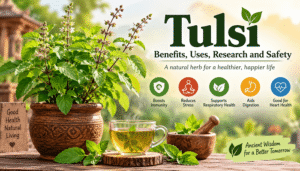
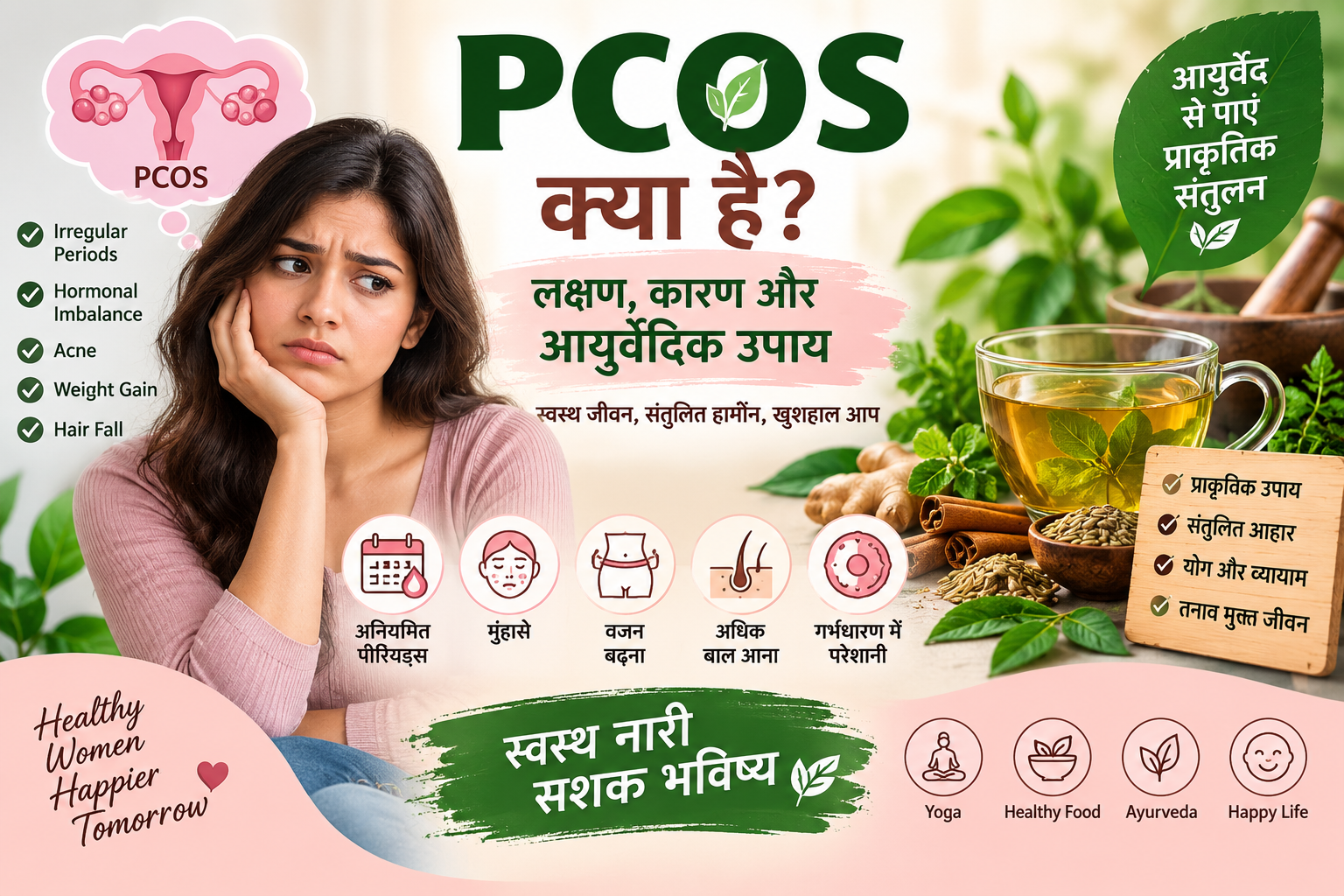
A mild “ginger-tulsi (holy basil) drink” can be consumed for general health and hydration. Please note that this is not a cure for PCOS.
Ingredients
* Water – 1 cup
* Fresh Tulsi leaves – 4–5
* Ginger – A small piece (approx. ½ inch)
* Cinnamon – A very small amount (optional)
Note: Do not consider these ingredients a proven cure for PCOS; they are intended for use as a simple homemade beverage.
5. Preparation Method
Step 1
Pour 1 cup of water into a pan.
Step 2
Add the cleaned Tulsi (holy basil) leaves and a little grated ginger to it.
Step 3
Boil it over a low flame for a few minutes.
Step 4
Turn off the heat and let the drink cool down slightly.
Step 5
Strain it and drink it at room temperature.
Drinking this does not guarantee a cure for PCOS. Diet, exercise, sleep, and medical advice are more important in managing PCOS.
6. Precautions for PCOS
One should not rely solely on home remedies for PCOS.
Keep these points in mind:
* Do not start taking hormonal or herbal supplements without a doctor’s advice.
* If you are planning a pregnancy, consult a doctor before starting the regular consumption of any herbal preparation.
* If you are already taking medication, consult a healthcare professional before taking herbs or supplements.
* Limit the intake of very sugary and highly processed foods.
* Avoid crash dieting.
* Get adequate sleep.
* Engage in regular physical activity.
* Consult a doctor if you miss your period for several months, experience excessive bleeding, or face pregnancy-related issues.
* Seek immediate medical care if you experience severe symptoms like intense abdominal pain, excessive bleeding, dizziness, or weakness.
7. What to eat for PCOS?
No single “magic food” can eliminate PCOS-related issues; a balanced diet is more important.
Include the following in your diet:
* Green vegetables
* Seasonal fruits
* Lentils and beans
* Whole grains
* Nuts and seeds
* Adequate protein
* Adequate water
Limit the following:
* Excessive sugary drinks
* Excessive sweets
* Highly processed foods
* Frequent deep-fried foods
* Excessive refined carbohydrates
Simple Daily Routine to Manage PCOS
Morning: Water + light physical activity
Breakfast: Balanced meal rich in protein and fiber Meals
Lunch:Vegetable dish + Dal (lentils)/other protein source + Roti/whole grains
Evening: Light, healthy snack
Evening/Night: 20–30 minute walk
Dinner: Light, balanced meal and adequate sleep
When should you see a doctor?
It is advisable to consult a gynecologist if your periods are consistently irregular, you have missed periods for several months, experience excessive bleeding, notice sudden excessive hair growth on your face or body, or face difficulties in conceiving.
PCOS is not diagnosed based on symptoms alone. Depending on the need, a doctor may review your medical history, conduct a physical examination, and recommend specific tests.
Conclusion
PCOS is a common hormonal condition that may require long-term management. A healthy diet, regular exercise, adequate sleep, and stress management are vital components of a healthy lifestyle.
Ayurvedic home remedies should be viewed merely as “supportive lifestyle practices”. One should not claim that PCOS can be cured solely by a specific decoction, tea, or home remedy.
If symptoms persist or if there are issues related to pregnancy, consulting a qualified gynecologist or healthcare professional is of utmost importance.