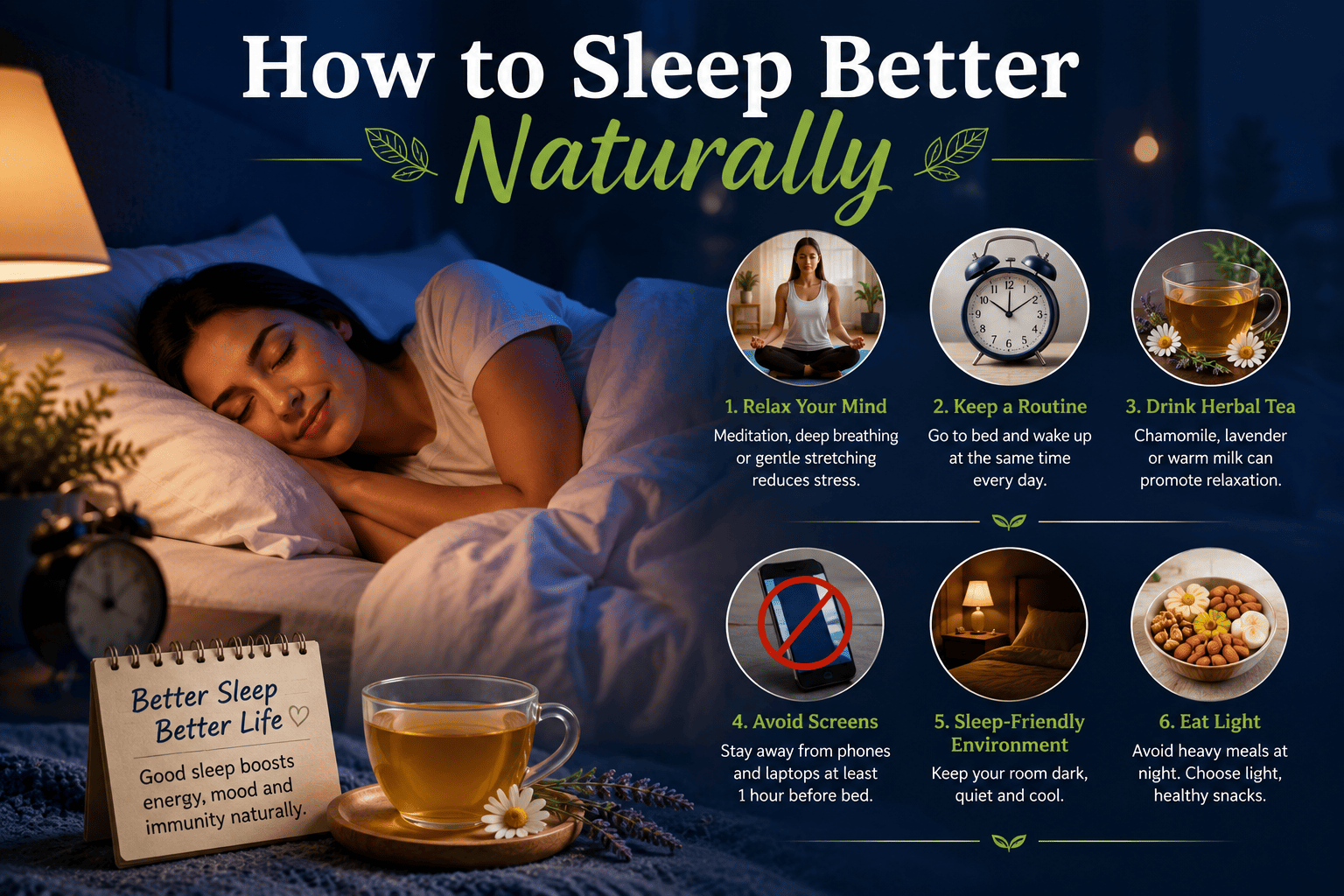
A good night’s sleep can change how you feel the next day. Concentration may feel easier, your mood can be steadier, and everyday tasks often become more manageable. Yet many people struggle to fall asleep, wake repeatedly during the night, or start the morning feeling as though they barely rested.
If you’re wondering how to sleep better naturally, the answer usually isn’t one special tea, supplement, or bedtime trick. Sleep is influenced by your daily schedule, exposure to light, physical activity, caffeine intake, bedroom environment, and what you do during the final hours before bed.
Sleep experts commonly emphasize consistency and healthy sleep habits. The following strategies can help you build a routine that supports more restful sleep without making bedtime unnecessarily complicated.
How to Sleep Better Naturally With a Consistent Schedule
Your body follows an internal 24-hour rhythm known as the circadian rhythm. Regular sleep and wake times help reinforce this natural cycle.
Try going to bed and getting up at approximately the same time each day, including weekends. Large differences between weekday and weekend schedules can make it harder to settle into a predictable sleep pattern.
Start with your wake-up time. If you need to get up at 7:00 a.m., keep that time reasonably consistent and work backward to create enough opportunity for sleep.
Adults generally need around seven or more hours of sleep per night, although individual needs vary.
How to Sleep Better Naturally by Creating a Bedtime Routine
Your evening routine can act as a transition between a busy day and sleep.
About 30–60 minutes before bed, switch to quieter activities. You might take a warm shower, read a physical book, listen to relaxing audio, practice gentle stretching, or prepare your clothes and schedule for the following morning.
The specific activity matters less than consistency. Over time, repeating a calm routine can help establish a stronger association between those activities and bedtime.
Reduce Bright Light and Screens Before Bed
Phones, tablets, televisions, and laptops can keep your mind engaged when you are trying to wind down. Bright light in the evening may also interfere with the body’s normal preparation for sleep.
Instead of scrolling until the moment you close your eyes, consider creating a screen-free period before bedtime.
If completely avoiding devices isn’t realistic, reduce unnecessary screen use, lower brightness, and avoid stimulating work, social media, or emotionally intense content close to bedtime.
Morning light matters too. Getting natural daylight after waking can help reinforce your body’s day-night rhythm.
Create a Bedroom That Supports Restful Sleep
Your sleeping environment can have a surprisingly large effect on comfort.
Keep your bedroom reasonably cool, dark, and quiet. Blackout curtains may help if outdoor lighting enters the room, while earplugs or steady background noise can be useful when environmental sounds are disruptive.
Your mattress and pillows should also provide appropriate comfort and support.
Try to keep work, eating, and prolonged phone browsing outside the bed whenever practical. The goal is to strengthen the mental connection between your bed and sleep.
Pay Attention to Caffeine and Evening Meals
Caffeine can remain active in the body for hours. Coffee, tea, energy drinks, cola, chocolate, and some supplements may therefore affect sleep when consumed later in the day.
If falling asleep is difficult, experiment with moving your last caffeinated drink earlier and observe whether your sleep improves.
Large, heavy meals immediately before bed may also cause discomfort. If you’re hungry later in the evening, choose a lighter option rather than going to bed overly full.
Alcohol is another common trap. Although it can initially make someone feel sleepy, it may disrupt sleep quality later in the night.
Exercise Regularly, but Find the Right Timing
Regular physical activity supports general health and can contribute to healthier sleep.
You don’t necessarily need an intense workout. Walking, cycling, swimming, yoga, strength training, or another activity you enjoy can all be useful when performed consistently.
Some people sleep comfortably after evening exercise, while others feel energized by vigorous late-night workouts. Pay attention to your response and adjust your timing accordingly.
Calm a Busy Mind Before Bed
Stress can make the body tired while leaving the mind wide awake.
If thoughts about tomorrow repeatedly appear at bedtime, write down your tasks or concerns earlier in the evening. This simple habit can reduce the feeling that you need to mentally rehearse everything while lying in bed.
Slow breathing, meditation, progressive muscle relaxation, or quiet reading may also help you shift away from active problem-solving.
Common Sleep Mistakes to Avoid
Trying to force yourself to sleep is rarely productive. Spending long periods awake in bed can increase frustration and make bedtime feel stressful.
Other common mistakes include sleeping very late after a poor night, taking long or late naps, consuming caffeine close to bedtime, checking the clock repeatedly, and using alcohol as a sleep aid.
Another mistake is expecting immediate results. Healthy sleep habits often work best when followed consistently rather than tested for only one or two nights.
Conclusion: How to Sleep Better Naturally Starts With Consistency
Learning how to sleep better naturally doesn’t require transforming your entire lifestyle overnight. Start with a regular wake time, create a calming evening routine, manage caffeine, stay physically active, and make your bedroom comfortable for sleep.
Choose two or three habits and practice them consistently for the next couple of weeks. Track what time you go to bed, how easily you fall asleep, and how refreshed you feel in the morning.
CTA: Start tonight by choosing one realistic change—such as putting your phone away earlier or setting a consistent wake-up time. If sleep problems continue for several weeks, significantly affect daytime functioning, or involve symptoms such as loud snoring, breathing interruptions, or severe daytime sleepiness, speak with a qualified healthcare professional.