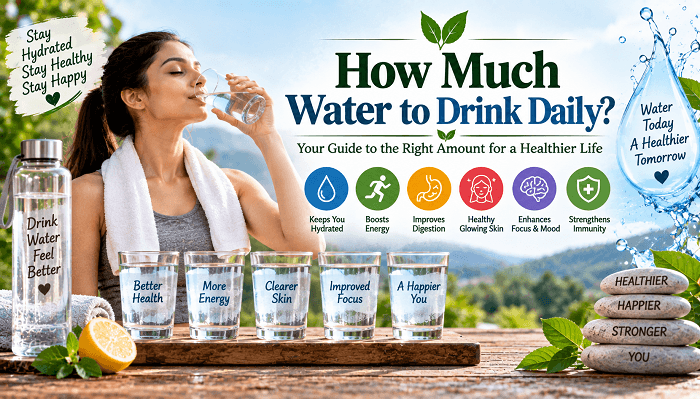
How Much Water Should You Drink Every Day?
Try a simple one-day hydration audit: note what you drink, what you eat, how often you feel thirsty, and the color of your urine. Most people discover that their intake changes considerably from morning to evening—and that “eight glasses” does not tell the whole story.
If you are wondering how much water to drink daily, there is no universal number that suits every body or every day. Your activity level, environment, diet, health, age, and pregnancy status all influence your needs. The goal is not to chase an arbitrary bottle count. It is to replace the fluid your body loses and maintain normal hydration.
How Much Water to Drink Daily: The General Guideline
For healthy adults, a widely used reference point is approximately:
- 3.7 liters (15.5 cups) of total fluid per day for men
- 2.7 liters (11.5 cups) of total fluid per day for women
These figures cover total water intake, not plain drinking water alone. Water in coffee, tea, milk, soups, fruit, vegetables, and other foods also counts. Food typically supplies around 20% of a person’s daily fluids, although the amount varies with diet.
According to Mayo Clinic guidance, the familiar eight-glasses-a-day rule can be a reasonable starting goal, but some people require more and others need less.
For example, someone who eats oatmeal, yogurt, soup, oranges, and vegetables may get substantial water from food. A person eating mostly dry, packaged meals will depend more heavily on beverages.
What Changes How Much Water to Drink Daily?
Your daily water intake should respond to your circumstances rather than remain fixed.
How Much Water to Drink Daily During Exercise
Exercise increases fluid loss through sweat and breathing. Drink before, during, and after physical activity, especially when a workout is long, intense, or performed in warm conditions.
There is no reliable one-size-fits-all amount for exercise because sweat rates differ. A practical approach is to start well hydrated, drink periodically, and replace fluid afterward. During prolonged, strenuous activity, electrolytes may also be useful—but most casual workouts do not require a sugary sports drink.
You may also need more fluid when:
- The weather is hot or humid
- You spend time at high altitude
- You have a fever, vomiting, or diarrhea
- You are pregnant or breastfeeding
- Your diet contains large amounts of fiber
- You work outdoors or wear heavy protective clothing
Certain kidney, heart, or liver conditions can require fluid restrictions. Diuretics and other medications may also change hydration needs. Follow individualized medical advice instead of increasing your intake independently.
How to Tell Whether You Are Drinking Enough
Thirst is useful, but it should not be your only measure—particularly for older adults, whose thirst response may be less noticeable.
Urine color offers a convenient daily check. Pale yellow usually suggests adequate hydration, while dark yellow urine, infrequent urination, dry mouth, headache, tiredness, or dizziness may indicate dehydration. The NHS dehydration guidance recommends drinking regularly and aiming for pale-colored urine.
Remember that supplements, medications, and foods such as beetroot can alter urine color. Use the indicator alongside thirst, activity, weather, and how you feel.
Practical Ways to Improve Your Daily Water Intake
Build hydration into routines you already follow:
Drink a glass of water with each meal.
Keep a reusable bottle within reach at work or while traveling.
Drink before you exercise rather than trying to catch up afterward.
Add lemon, cucumber, mint, or berries if plain water feels unappealing.
Choose water instead of a sugar-sweetened drink at least once a day.
Eat water-rich foods such as melon, strawberries, tomatoes, cucumbers, and soup.
The Centers for Disease Control and Prevention notes that water supports temperature regulation, joint cushioning, tissue protection, and waste removal. Replacing sugary beverages with water can also reduce calorie intake.
Common Hydration Mistakes
Waiting until you are extremely thirsty is one mistake. Drinking several liters quickly to “make up” for a low-intake day is another. Spreading fluids across the day is generally more comfortable and practical.
Do not assume more is always better. Excessive water intake can dilute blood sodium and cause hyponatremia, a potentially life-threatening condition. This is uncommon in healthy adults but can occur during endurance events or compulsive water consumption.
Also, avoid treating coffee and tea as automatically dehydrating. Moderate amounts contribute to fluid intake, although water remains the simplest calorie-free option.
Conclusion: Find the Right Daily Amount for You
Understanding how much water to drink daily starts with a general guideline, then requires adjustment for your body, diet, activity, health, and climate. Monitor thirst, urine color, and changes in fluid loss rather than forcing yourself to meet an inflexible target.
Start your one-day hydration audit today. If you experience persistent thirst, unusually frequent urination, recurring dizziness, or have a condition affecting fluid balance, ask a qualified healthcare professional to recommend a safe personal intake.