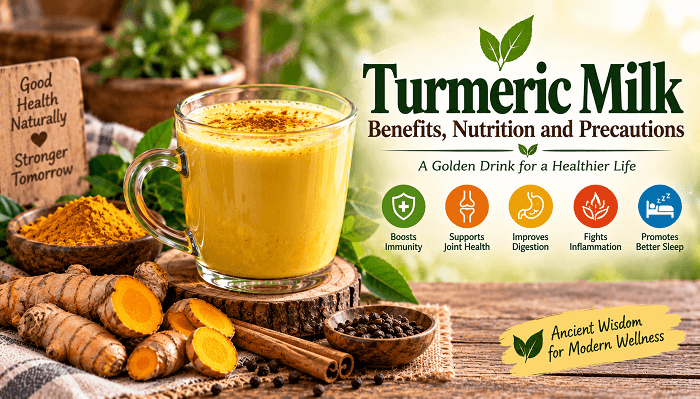
Turmeric Milk Benefits: Traditional Uses, Nutrition and Precautions
A warm cup of turmeric milk—often called golden milk—has long been served in Indian households as a comforting drink. Families commonly prepare it during cold weather or when someone has a cough, sore throat or minor aches.
But tradition and clinical evidence are not the same thing. A review of current guidance from the U.S. National Center for Complementary and Integrative Health (NCCIH) shows that turmeric has promising properties, yet research does not conclusively prove that it treats any specific health condition.
So, what can you reasonably expect? The most credible turmeric milk benefits come from combining a nutrient-rich milk with turmeric, rather than treating the drink as medicine.
Turmeric Milk Benefits and Traditional Uses
Known as haldi doodh in Hindi, turmeric milk has roots in Indian food culture and Ayurveda. Turmeric itself has also appeared in Chinese, Thai and other traditional health systems. Historically, people used it for concerns ranging from indigestion and colds to joint discomfort.
Modern interest centers on curcumin, the yellow pigment and best-studied active compound in turmeric. Laboratory research suggests curcumin has antioxidant and anti-inflammatory activity. However, it is poorly absorbed, and results from concentrated curcumin supplements cannot automatically be applied to a homemade drink containing a small amount of turmeric.
Early clinical evidence is most encouraging for reducing some symptoms of knee osteoarthritis. Even here, NCCIH says better-quality research is needed. Golden milk should therefore be viewed as a nourishing beverage—not a treatment for arthritis, infections, liver disease or other medical conditions.
Nutrition Behind Turmeric Milk Benefits
The nutritional value of golden milk depends mainly on its base. Dairy milk supplies protein, calcium, phosphorus and vitamin B12. Fortified milk may also provide vitamin D, which helps the body absorb calcium. According to the NIH Office of Dietary Supplements, milk, yogurt and cheese are major calcium sources in many diets.
Plant-based drinks vary considerably. Fortified soy milk generally offers more protein than almond, oat or coconut drinks, but formulations differ. Check the label for protein, calcium, vitamin D and added sugar rather than assuming every milk alternative is nutritionally equivalent.
Turmeric contributes color, flavor and plant compounds, although the half-teaspoon used in a typical cup provides only modest quantities. Ginger or cinnamon can add flavor without much sugar.
Turmeric Milk Benefits: Does Black Pepper Help?
Black pepper contains piperine, which can increase curcumin absorption. A small pinch is enough for flavor; more is not necessarily better. Piperine may also affect how the body processes certain medicines.
Adding some dietary fat may help curcumin dissolve, which is one reason whole milk or a drink containing a little healthy fat works well. This does not mean you need butter, coconut oil or a high-dose curcumin extract. For an everyday beverage, simplicity is usually the safer choice.
How to Make Golden Milk at Home
For one serving, gently warm:
- 1 cup dairy milk or an unsweetened, fortified plant drink
- ½ teaspoon ground turmeric
- ¼ teaspoon cinnamon
- A small pinch of black pepper
- Optional fresh ginger or ½ teaspoon honey
Whisk the ingredients over low heat for three to five minutes without boiling. Taste before adding sweetener. If turmeric is new to you, begin with ¼ teaspoon and see how your stomach responds.
One practical use is replacing a heavily sweetened evening drink with unsweetened golden milk. It can also accompany breakfast, especially when the chosen milk contributes meaningful protein.
Precautions and Common Mistakes
Culinary quantities of turmeric are generally different from concentrated supplements. NCCIH reports that oral turmeric may cause nausea, reflux, stomach upset, diarrhea or constipation. Stop using it if it repeatedly worsens digestive symptoms.
Speak with a doctor or pharmacist before consuming turmeric regularly if you take prescription medicines, particularly blood thinners, or if you have gallbladder, bleeding or liver concerns. Turmeric supplements may be unsafe during pregnancy, while the safety of amounts above normal food use during breastfeeding is uncertain.
Common mistakes include using several spoonfuls per cup, adding excessive sugar and assuming “natural” means risk-free. Another is expecting golden milk to cure a cold or replace prescribed treatment. Highly absorbable curcumin supplements deserve extra caution because rare liver injuries have been reported. Read the current NCCIH turmeric guidance before considering one.
Conclusion: Making Turmeric Milk Benefits Practical
Turmeric milk can be a flavorful way to include milk nutrients and a small culinary amount of turmeric in your routine. Its warmth may feel soothing, but the strongest claims made online run ahead of the evidence.
Choose an unsweetened, nutrient-rich milk, keep turmeric portions modest and discuss regular use with a healthcare professional if you take medication or manage a medical condition. Try the simple recipe once, then adjust the spice—not the safety precautions—to suit your taste.