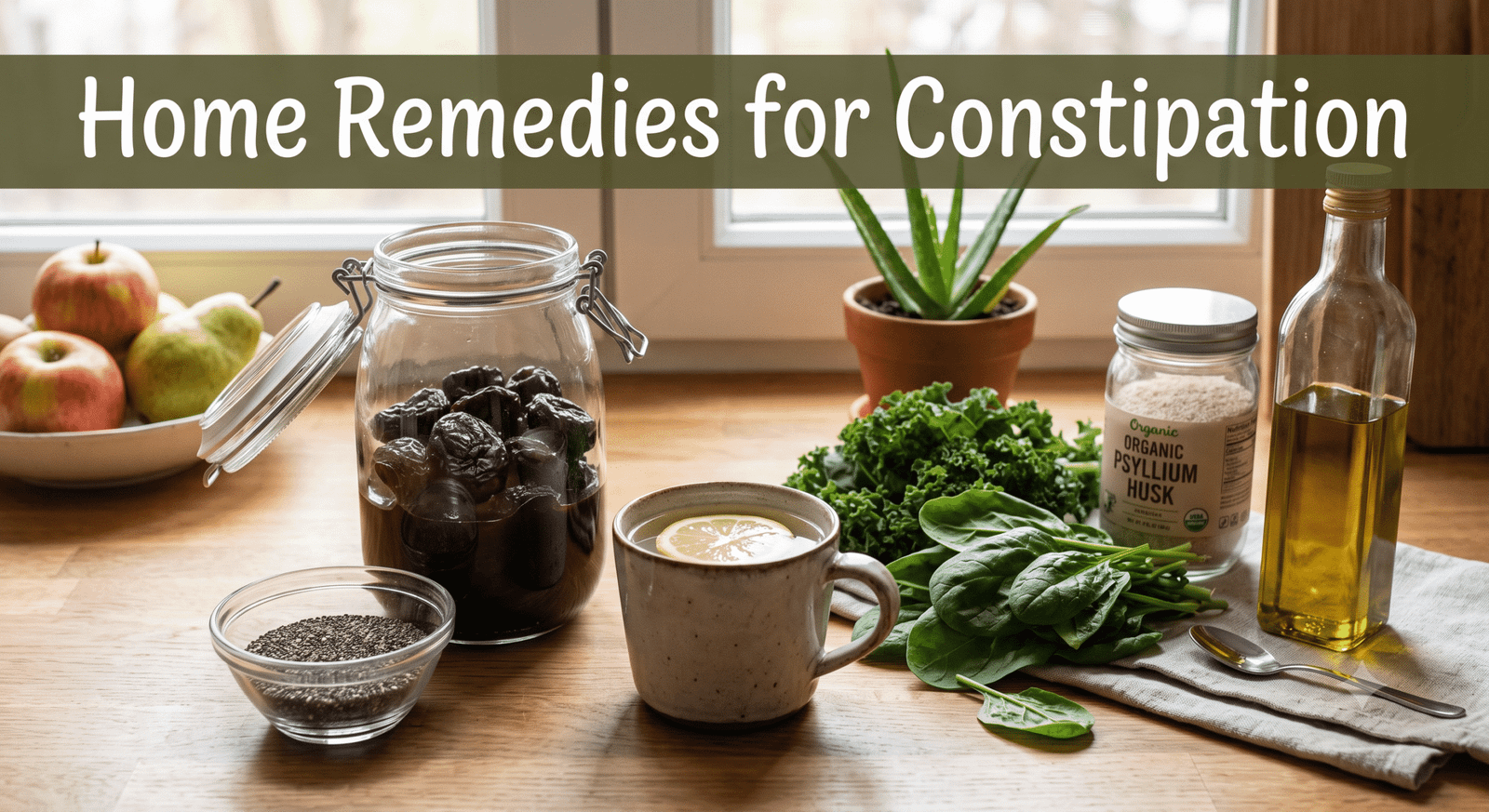
Home Remedies for Constipation: Foods and Lifestyle Tips That May Help
Constipation is more than simply “not going every day.” Clinically, it can involve fewer than three bowel movements a week, hard or dry stools, straining, or feeling that the bowel has not emptied completely. Occasional constipation is common, and everyday factors such as low fiber intake, inadequate fluids, reduced physical activity, travel, and changes in routine may contribute.
In practice, the most useful home remedies for constipation are usually simple habits rather than complicated remedies. Increasing fiber gradually, drinking enough fluids, staying physically active, and responding to the natural urge to pass stool may improve bowel regularity for many people.
However, persistent or severe constipation deserves medical attention, especially when accompanied by bleeding, significant abdominal pain, vomiting, unexplained weight loss, or other unusual symptoms.
Home Remedies for Constipation: Start With Your Diet
Food is often a sensible first place to look when dealing with occasional constipation. Dietary fiber adds bulk to stool, while some types of soluble fiber also hold water, helping stools stay softer and easier to pass.
Adults generally need around 22–34 grams of fiber per day, depending on factors such as age and sex. Rather than increasing fiber dramatically overnight, add it gradually to reduce bloating and gas.
Useful foods for constipation include oats, whole grains, lentils, chickpeas, beans, vegetables, nuts, seeds, and fruits.
Fiber-Rich Home Remedies for Constipation
Certain foods can be particularly convenient additions to a constipation-friendly diet.
Prunes: Prunes provide fiber and naturally contain sorbitol, a sugar alcohol that may help draw water into the bowel. Try a small serving and see how your digestive system responds.
Kiwi: Kiwi provides fiber and can be an easy addition to breakfast, yogurt, or a fruit bowl.
Pears and apples: Eating these fruits with the skin provides more fiber than drinking their juice.
Oats and flaxseed: Oatmeal topped with ground flaxseed can make a practical high-fiber breakfast. Increase seeds gradually and drink adequate fluids alongside them.
A simple example could be oatmeal and fruit at breakfast, lentils with vegetables at lunch, and whole grains with cooked vegetables at dinner.
Hydration Matters for Constipation Relief
Fiber works best when sufficient fluid is available. If you increase fiber without drinking enough, stools may remain hard and constipation can sometimes feel worse.
Water is a good everyday choice, but soups and water-rich fruits and vegetables also contribute to fluid intake. There is no single ideal amount of water for everyone because requirements vary with body size, activity, climate, pregnancy, medications, and health conditions.
A practical approach is to drink regularly throughout the day rather than waiting until you feel very thirsty.
Lifestyle Home Remedies for Constipation
Diet is only part of the picture. Your daily routine can influence bowel function as well.
Regular physical activity may encourage normal intestinal movement. Even a daily walk can be useful, particularly for people who spend much of their day sitting.
Toilet habits matter too. Try not to repeatedly ignore the urge to have a bowel movement. Some people find it easier to establish a regular toilet routine after breakfast, when the body’s natural gastrocolic reflex can stimulate bowel activity.
Position can also help. Placing the feet on a small stool while sitting on the toilet raises the knees and may make passing stool more comfortable. Avoid prolonged straining.
Common Mistakes When Trying Natural Constipation Remedies
One frequent mistake is suddenly eating very large amounts of bran, seeds, or other high-fiber foods. A rapid increase can cause uncomfortable gas and bloating. Build fiber intake progressively instead.
Another mistake is depending on herbal products, “detox” teas, or stimulant laxatives without understanding their ingredients. Natural does not automatically mean safe. Some products may interact with medications or be inappropriate for certain medical conditions.
Also consider whether a new medicine or supplement coincided with the constipation. Iron supplements, certain pain medicines, and some other medications can affect bowel habits. Do not stop prescribed treatment without speaking with a healthcare professional.
When Should You See a Doctor?
Home care may be reasonable for mild, occasional constipation, but symptoms should not simply be ignored when they persist.
Seek medical advice if constipation is ongoing, keeps returning, or represents a significant unexplained change in your normal bowel habits. Prompt medical evaluation is particularly important if you experience blood in the stool, severe or persistent abdominal pain, vomiting, fever, inability to pass gas, or unexplained weight loss.
Children, pregnant people, older adults, and individuals with existing medical conditions may also need more individualized advice before trying supplements or laxatives.
Conclusion: Choosing Safe Home Remedies for Constipation
The most practical home remedies for constipation often begin with everyday changes: gradually eating more fiber-rich foods, drinking adequate fluids, moving regularly, and developing consistent toilet habits. Foods such as prunes, kiwi, oats, lentils, vegetables, and whole grains can support a balanced approach to digestive health.
Give lifestyle changes time to work, but pay attention to what your body is telling you. If constipation continues despite these measures, becomes severe, or occurs with warning symptoms, consult a qualified healthcare professional to identify the underlying cause and discuss appropriate treatment.