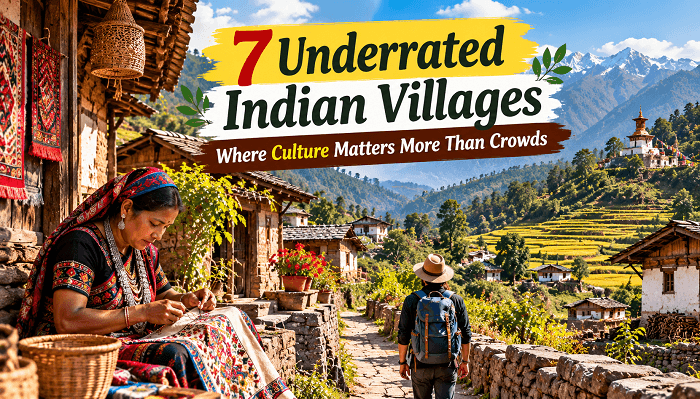
7 Underrated Indian Villages Where Culture Matters More Than Crowds
Imagine waking up to the sound of birds instead of traffic, watching artisans work with techniques passed down through generations, or sharing a locally prepared meal in a village where visitors are guests rather than spectators. These experiences reveal a different side of India, far from crowded monuments and heavily photographed tourist destinations.
The most rewarding journeys are not always about visiting famous landmarks. Some of India’s most memorable cultural experiences can be found in small communities where traditional crafts, architecture, food, music, and everyday customs remain closely connected to local life.
These underrated cultural villages in India offer opportunities to explore regional identities while supporting the people who preserve them. From the tribal art traditions of central India to the living heritage of Himalayan settlements, each destination has something distinctive to offer.
The following seven offbeat Indian villages are worth considering if you want a slower, more meaningful journey. Access, accommodation, and costs vary by season, so treat the budgets below as planning estimates rather than fixed prices.
1. Raghurajpur, Odisha: A Village of Traditional Art
Raghurajpur, near Puri, is known for its Pattachitra paintings, traditional palm-leaf engravings, and decorative crafts. Many artists work in or around their homes, making the village an appealing destination for travelers interested in the process behind India’s traditional art forms.
How to reach and when to visit
- Access: Travel to Puri by train, then hire a taxi or auto-rickshaw for the remaining journey, approximately 12–15 km depending on your starting point.
- Best season: October to March, when the weather is generally more comfortable for walking around the village.
- Estimated budget: ₹800–₹2,000 per person for a day trip from Puri, excluding long-distance travel and major art purchases.
- Cultural etiquette: Ask before photographing artists or entering their homes. If you like a painting, discuss its price respectfully instead of treating the artist’s time as a free demonstration.
- Responsible travel tip: Buy directly from artisans when possible. Ask about the materials, technique, and time involved in making each piece.
2. Bishnoi Villages, Rajasthan: Culture and Environmental Traditions
The Bishnoi communities of Rajasthan are widely associated with traditions of protecting trees and wildlife. A village visit around the Jodhpur region can introduce travelers to rural architecture, local food, handicrafts, and the relationship between community values and the natural environment.
- Access: Jodhpur is the main transport hub. Arrange a guided village visit or local transport through a reputable operator.
- Best season: October to March, when daytime temperatures are generally more suitable for outdoor excursions.
- Estimated budget: ₹1,500–₹3,500 per person for a day visit, depending on transport, guiding, meals, and activities.
- Cultural etiquette: Dress modestly, follow your host’s instructions, and never approach wildlife for photographs. Ask before taking pictures of residents or their homes.
- Responsible travel tip: Choose community-linked experiences where local guides, craftspeople, and hosts receive a fair share of visitor spending. Remember that Bishnoi communities are living communities, not open-air museums.
3. Mawlynnong, Meghalaya: Clean Surroundings and Khasi Heritage
Located in Meghalaya’s East Khasi Hills, Mawlynnong became known for its community-led cleanliness practices, green surroundings, and traditional Khasi culture. Its rural setting also makes it a useful base for exploring nearby landscapes and village life.
- Access: Travel from Shillong by road; the journey commonly takes around three to four hours, depending on traffic and road conditions.
- Best season: October to April for generally more manageable travel conditions. Monsoon months bring lush scenery but also heavier rain and potentially difficult roads.
- Estimated budget: ₹2,000–₹4,000 per person per day, including local transport, meals, and modest accommodation.
- Cultural etiquette: Respect village rules, keep noise low, and ask permission before photographing residents or entering private spaces.
Responsible travel tip: Carry reusable water bottles, minimize plastic waste, and consider staying in locally operated homestays instead of making only a brief stop.
4. Ziro Valley Villages, Arunachal Pradesh: Apatani Cultural Heritage
Ziro Valley is home to Apatani communities known for distinctive cultural traditions and agricultural practices. Its landscapes of rice fields, wooded hills, and settlements provide a setting for understanding how local knowledge shapes rural life.
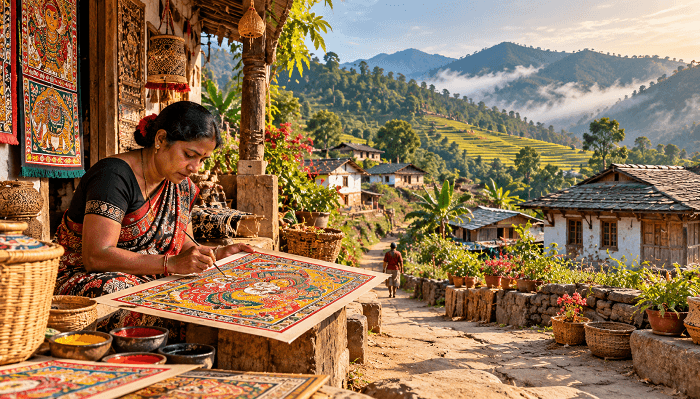
Traditional practices have changed over time, so visitors should avoid assuming that every household follows the same customs or lifestyle.
- Access: Travel to the Ziro area by road from Itanagar or Naharlagun. Routes and travel times vary, and visitors should check current transport conditions and applicable entry requirements before departure.
- Best season: March to May for spring landscapes, or September to October for generally pleasant conditions after the main monsoon period.
- Estimated budget: ₹2,500–₹5,000 per person per day, excluding flights and other long-distance travel. Permits, accommodation availability, and seasonal transport can affect the total.
- Cultural etiquette: Ask before photographing people, homes, ceremonies, or sacred spaces. Respect restrictions on access to community events.
- Responsible travel tip: Hire local guides and use community-run accommodation where available. Confirm current permit requirements for Indian and foreign visitors before finalizing plans.
5. Khonoma, Nagaland: A Village with a Conservation Story
Khonoma, near Kohima, is known for its Angami Naga heritage, traditional village architecture, and community conservation efforts. Its history and surrounding landscapes make it an interesting destination for travelers who want to understand how cultural identity and environmental stewardship can intersect.
- Access: Fly to Dimapur or travel by road to Kohima, then continue by road to Khonoma. Allow extra time for mountain roads.
- Best season: October to April is generally suitable for village walks and sightseeing, although conditions vary.
- Estimated budget: ₹2,000–₹4,000 per person per day, depending on accommodation, transport, meals, and guiding.
- Cultural etiquette: Ask permission before photographing residents, religious spaces, or community gatherings. Follow local guidance on trails and restricted areas.
- Responsible travel tip: Support local guides and accommodation providers. Do not remove plants, disturb wildlife, or enter community-managed conservation areas without permission.
6. Hodka, Gujarat: Discovering Kutch’s Living Craft Traditions
Hodka, in the Banni region of Kutch, offers opportunities to learn about local embroidery, traditional crafts, regional food, and distinctive rural architecture. The wider region is home to diverse communities, each with its own artistic and cultural traditions.
For travelers interested in heritage village tourism, Hodka is especially appealing because locally operated accommodation and craft experiences can make cultural learning part of the stay.
- Access: Reach Bhuj by train or air, then arrange a road transfer to Hodka. The drive generally takes around two hours, depending on the route and road conditions.
- Best season: November to February, when temperatures are typically more comfortable and the wider Kutch region attracts visitors for seasonal cultural events.
- Estimated budget: ₹2,500–₹5,000 per person per day, depending on the type of accommodation, meals, transport, and craft purchases.
- Cultural etiquette: Ask before photographing embroidery workshops or individual artisans. Respect the privacy of households and seek permission before handling handmade items.
- Responsible travel tip: Purchase crafts directly from makers or transparent local cooperatives. Avoid bargaining so aggressively that the time and skill required for handmade work are undervalued.
7. Malana, Himachal Pradesh: A Distinctive Himalayan Community
Malana, in the Kullu district of Himachal Pradesh, is known for its distinctive local traditions, village institutions, and mountain setting. Its cultural identity has attracted curiosity, but visitors should approach the community with sensitivity rather than treating it as a curiosity.
Practical travel advice for this offbeat Indian village
- Access: Travel to the Kasol or Jari area and continue by road toward the Malana approach. The final journey involves walking, and route conditions should be checked locally.
- Best season: April to June and September to October are generally preferable for hiking, subject to weather and trail conditions.
- Estimated budget: ₹1,500–₹3,500 per person per day, excluding travel to the region and depending on accommodation, transport, and meals.
- Cultural etiquette: Follow locally communicated restrictions on buildings, religious spaces, objects, and interactions. Ask before taking photographs, and never assume that access to a public path means unrestricted access to private property.
- Responsible travel tip: Stay on designated routes, carry your waste back, and follow current local instructions. Respect community boundaries even when a restriction seems unfamiliar to outsiders.
How to Plan a Meaningful Village Trip in India
Choosing a destination is only the first step. A little preparation can make your trip more comfortable and ensure that tourism benefits the community.
- Book locally where possible: Choose village homestays, local guides, and community-run experiences that help keep tourism income within the region.
- Check transport and permits: Remote destinations may have limited public transport, seasonal road closures, or entry requirements. Confirm these before departure.
- Carry cash: Small villages may have limited digital payment connectivity or ATM access.
- Learn a few local greetings: Even a simple greeting, offered respectfully, can make interactions more welcoming.
- Keep expectations realistic: Traditional lifestyles are not performances arranged for visitors. Workshops, ceremonies, and household visits depend on the willingness of local people to participate.
- Travel outside peak periods when practical: Visiting during quieter periods can reduce pressure on accommodation and infrastructure, although local festivals may be important to the experience.
Common Mistakes to Avoid
Do not assume that every village is inexpensive, that all residents welcome photography, or that a cultural tradition remains unchanged over centuries. Avoid entering homes or sacred spaces without permission, leaving litter, or purchasing cultural experiences from operators who cannot explain how local residents benefit.
Most importantly, do not confuse an authentic cultural experience with unrestricted access to another community’s private life.
Conclusion: Explore Underrated Cultural Villages in India Responsibly
From Raghurajpur’s traditional painters to Ziro’s Apatani heritage, Khonoma’s conservation story, and Hodka’s craft traditions, these underrated cultural villages in India offer a more thoughtful way to explore the country’s diversity.
Each destination reveals a different relationship between culture, landscape, livelihoods, and community identity. With careful planning, respectful behavior, and a willingness to learn, rural tourism India can become more than a sightseeing trip. It can support local livelihoods while helping travelers appreciate traditions on their own terms.
Ready to explore beyond India’s crowded tourist destinations? Choose one village, plan a locally guided visit, and discover the people, crafts, food, and stories that make its cultural heritage unique.