Dr. B. R. Ambedkar
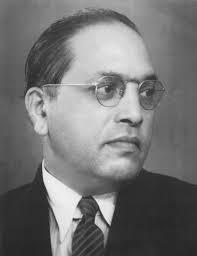
Dr. Bhimrao Ramji Ambedkar was one of the greatest social reformers, jurists, economists, and political thinkers in Indian history. He is best remembered as the chief architect of the Indian Constitution and a fearless champion of social justice, equality, and human rights. Throughout his life, Ambedkar fought against caste discrimination and worked tirelessly for the empowerment of marginalized communities.
Early Life and Social Background
Dr. B. R. Ambedkar was born on 14 April 1891 in Mhow, a military cantonment town in present-day Madhya Pradesh. He was born into a Mahar family, which was considered “untouchable” under the rigid caste system prevalent at that time. His father, Ramji Maloji Sakpal, served as a Subedar in the British Indian Army, and his mother, Bhimabai Sakpal, was a compassionate and hardworking woman.
From a very young age, Ambedkar experienced severe discrimination. He was forced to sit separately in school, denied access to drinking water, and treated as inferior due to his caste. These painful experiences deeply shaped his resolve to fight social injustice.
Education and Academic Excellence
Despite facing immense hardships, Ambedkar excelled academically. He completed his early education in Bombay (now Mumbai) and went on to graduate from Elphinstone College in 1912.
Recognizing his talent, the Maharaja of Baroda awarded him a scholarship to study abroad. Ambedkar pursued higher education at:
-
Columbia University, USA, where he earned a master’s degree and PhD in economics
-
London School of Economics (LSE), where he completed his doctoral studies
-
Gray’s Inn, London, where he trained as a barrister
Ambedkar was one of the most highly educated Indians of his time, with expertise in law, economics, political science, and sociology.
Return to India and Struggle Against Caste Discrimination
After returning to India, Ambedkar faced discrimination even in professional spaces. Despite his international education, he was treated unfairly due to his caste.
These experiences strengthened his resolve to organize and empower the oppressed. He began publishing newspapers such as Mooknayak and Bahishkrit Bharat to raise awareness about social injustice.
Social Reform Movements
Dr. Ambedkar led several movements to secure civil rights for Dalits and marginalized communities:
Mahad Satyagraha (1927)
Ambedkar led thousands of Dalits to assert their right to access public water tanks, challenging caste-based restrictions.
Temple Entry Movements
He fought for Dalits’ right to enter Hindu temples, symbolizing the demand for social equality.
Burning of Manusmriti
Ambedkar publicly burned the Manusmriti, a text he believed promoted caste inequality and oppression.
Political Career and Leadership
Ambedkar believed political power was essential for social reform. He founded political organizations such as:
-
Independent Labour Party
-
Scheduled Castes Federation
He represented the depressed classes at various national and international forums, including the Round Table Conferences in London.
Role in the Indian Constitution
After independence, Dr. Ambedkar was appointed as India’s first Law Minister and Chairman of the Drafting Committee of the Indian Constitution.
He played a pivotal role in shaping a constitution that guaranteed:
-
Equality before law
-
Fundamental Rights
-
Abolition of untouchability
-
Universal adult franchise
-
Social and economic justice
Ambedkar envisioned the Constitution as a living document capable of adapting to India’s changing needs.
Differences with Political Leadership
Ambedkar had ideological differences with Mahatma Gandhi, particularly on the issue of caste. While Gandhi emphasized reform within Hindu society, Ambedkar believed the caste system itself was fundamentally unjust.
Despite disagreements, Ambedkar remained committed to democratic processes and constitutional methods for change.
Conversion to Buddhism
In 1956, after years of reflection, Dr. Ambedkar embraced Buddhism, along with millions of his followers, as a rejection of caste oppression. He believed Buddhism represented equality, compassion, and rationality.
This event marked a major social transformation in India.
Personal Life
Dr. Ambedkar married Ramabai Ambedkar, who supported him during his early struggles. After her death, he later married Dr. Savita Ambedkar.
Ambedkar lived a disciplined and scholarly life. Despite poor health in later years, he continued to write and advocate for social justice.
His notable works include:
-
Annihilation of Caste
-
The Problem of the Rupee
-
Who Were the Shudras?
-
The Buddha and His Dhamma
Death and Legacy
Dr. B. R. Ambedkar passed away on 6 December 1956 in New Delhi, at the age of 65.
His legacy remains unmatched. He is remembered as:
-
The Father of the Indian Constitution
-
A symbol of resistance against oppression
-
A global icon of equality and human rights
Today, Ambedkar’s ideas continue to guide India’s social and democratic journey.
Highlight Points (Quick Summary)
-
🔹 Born on 14 April 1891, Mhow, Madhya Pradesh
-
🔹 Faced caste discrimination from childhood
-
🔹 Highly educated: Columbia University, LSE, Gray’s Inn
-
🔹 Social reformer and Dalit rights leader
-
🔹 Led Mahad Satyagraha
-
🔹 Founder of Independent Labour Party
-
🔹 Chairman of Constitution Drafting Committee
-
🔹 First Law Minister of India
-
🔹 Architect of Indian Constitution
-
🔹 Converted to Buddhism (1956)
-
🔹 Author of several influential books
-
🔹 Died on 6 December 1956, New Delhi