The Life & Legacy
Introduction
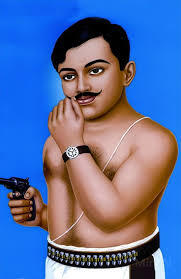
Chandrashekhar Azad was one of the most fearless and iconic revolutionaries of the Indian freedom struggle. Known for his unbreakable courage, patriotism, and sacrifice, Azad dedicated his entire life to freeing India from British rule. He is remembered not only for his revolutionary activities but also for his vow that he would never be captured alive by the British—a promise he kept till his last breath.
Azad became a symbol of resistance, inspiring countless young Indians to rise against injustice and colonial oppression. His life was short, but his impact on India’s freedom movement was profound and everlasting.
Early Life and Childhood
Chandrashekhar Azad was born on 23 July 1906 in Bhabhra, a small village in present-day Alirajpur district of Madhya Pradesh. His original name was Chandrashekhar Tiwari. His father, Sitaram Tiwari, was a Brahmin, and his mother, Jagrani Devi, was a deeply religious woman who wished her son would grow up to be a Sanskrit scholar.
From an early age, Chandrashekhar showed signs of bravery, independence, and a strong sense of justice. He was deeply influenced by stories of Indian heroes and the growing national movement against British rule.
Education and Early Influences
Chandrashekhar Azad received his early education in Bhabhra and later went to Kashi (Varanasi), where he studied at a Sanskrit school. Although he was intelligent and disciplined, he was more drawn toward action than academics.
The political environment of the time, especially the harsh policies of the British government, deeply affected him. The Jallianwala Bagh massacre (1919) left a permanent mark on his mind and strengthened his resolve to fight for India’s freedom.
Joining the Non-Cooperation Movement
In 1921, Mahatma Gandhi launched the Non-Cooperation Movement, calling upon Indians to resist British rule peacefully. Chandrashekhar Azad, still a teenager, joined the movement with great enthusiasm.
During a protest, he was arrested by British authorities and presented before a magistrate. When asked his name, he boldly replied:
-
Name: Azad (Free)
-
Father’s Name: Swatantrata (Freedom)
-
Residence: Jail
This act of defiance shocked the British officers. He was flogged severely, but the punishment only strengthened his determination. From that day onward, he became known as Chandrashekhar Azad.
Shift Toward Revolutionary Path
After the sudden withdrawal of the Non-Cooperation Movement in 1922, Azad became disillusioned with non-violent methods. He believed that armed resistance was necessary to overthrow British rule.
He joined revolutionary groups and came into contact with leaders such as:
-
Ram Prasad Bismil
-
Sachindra Nath Sanyal
These leaders shaped Azad’s revolutionary ideology and trained him in guerrilla warfare, use of arms, and underground operations.
Hindustan Republican Association (HRA)
Azad became an active member of the Hindustan Republican Association (HRA), which aimed to overthrow British rule through revolutionary action.
Kakori Conspiracy (1925)
One of the most important events in Azad’s revolutionary life was the Kakori Train Robbery, organized to fund revolutionary activities. Although Azad was not captured, many of his associates were arrested and later executed.
The execution of Ram Prasad Bismil, Ashfaqulla Khan, and others deeply affected Azad. He vowed to reorganize the revolutionary movement and continue the struggle.
Formation of HSRA
In 1928, Azad reorganized the HRA into the Hindustan Socialist Republican Association (HSRA), introducing socialist ideals into the revolutionary movement.
He became the chief strategist and commander of the HSRA. Under his leadership, the organization became stronger, more disciplined, and more focused.
Association with Bhagat Singh
One of the most important chapters in Azad’s life was his association with Bhagat Singh. Azad recognized Bhagat Singh’s intelligence and revolutionary zeal and mentored him closely.
Together, they planned major actions to awaken the masses and challenge British authority.
Saunders Assassination (1928)
In response to the death of Lala Lajpat Rai, who was brutally beaten by British police during a protest, Azad and his associates decided to take revenge.
-
Bhagat Singh and Rajguru shot British officer J.P. Saunders
-
Azad ensured their safe escape by covering them with his pistol
This incident shook the British administration and made Azad one of the most wanted revolutionaries in India.
Central Assembly Bombing (1929)
Azad supported Bhagat Singh and Batukeshwar Dutt in throwing non-lethal bombs in the Central Legislative Assembly. The goal was not to kill but to “make the deaf hear” and draw attention to India’s demand for freedom.
Bhagat Singh and Dutt courted arrest, while Azad continued to operate underground.
Life in Hiding
For years, Chandrashekhar Azad lived as a fugitive, constantly changing locations and disguises. Despite limited resources, he:
-
Trained young revolutionaries
-
Collected funds
-
Planned future actions
-
Evaded British intelligence
He was known for his discipline, leadership, and care for fellow revolutionaries.
Martyrdom at Alfred Park
On 27 February 1931, Azad was betrayed by an informer and surrounded by British police at Alfred Park in Allahabad.
A fierce gunfight followed. Azad fought bravely and wounded several officers. When he realized he had only one bullet left and escape was impossible, he fulfilled his lifelong vow.
He shot himself with his last bullet rather than being captured alive.
This act made him immortal in Indian history.
Age and Sacrifice
Chandrashekhar Azad was only 24 years old at the time of his death. Though his life was short, his sacrifice ignited revolutionary fervor across the country and inspired generations to come.
Ideology and Beliefs
Azad believed in:
-
Complete independence (Purna Swaraj)
-
Armed resistance against injustice
-
Social equality
-
Youth participation in nation-building
He respected Mahatma Gandhi but believed different paths were necessary for freedom.
Legacy
Chandrashekhar Azad remains a symbol of:
-
Fearless patriotism
-
Sacrifice
-
Revolutionary courage
-
Commitment to freedom
Many institutions, parks, and organizations are named in his honor. Alfred Park was renamed Azad Park to commemorate his martyrdom.
Highlight Points (Quick Facts)
-
⭐ Born on 23 July 1906, Bhabhra, Madhya Pradesh
-
⭐ Original name: Chandrashekhar Tiwari
-
⭐ Renamed himself “Azad” after arrest in 1921
-
⭐ Member of HRA and leader of HSRA
-
⭐ Close associate of Bhagat Singh
-
⭐ Involved in Kakori case, Saunders assassination, Assembly bombing
-
⭐ Most wanted revolutionary by British government
-
⭐ Died at Alfred Park, Allahabad (Prayagraj)
-
⭐ Martyred at the age of 24
-
⭐ Symbol of fearless resistance and sacrifice
Conclusion
Chandrashekhar Azad’s life teaches us that freedom often demands immense sacrifice. His courage, determination, and unwavering commitment to India’s independence make him one of the greatest revolutionaries in Indian history. Though he lived for only 24 years, his legacy continues to inspire the spirit of patriotism and resistance against injustice.