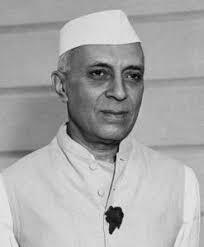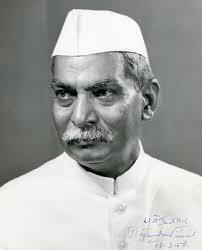
The Life & Legacy
Introduction
Dr. Rajendra Prasad was one of the greatest leaders of modern India and holds the historic distinction of being the first President of independent India. A freedom fighter, scholar, lawyer, and statesman, he was admired for his simplicity, honesty, humility, and unwavering commitment to democratic values. Unlike many leaders who sought power, Rajendra Prasad viewed public life as a sacred duty of service. His life stands as a shining example of moral leadership and constitutional integrity.
Early Life and Childhood
Dr. Rajendra Prasad was born on 3 December 1884 in the village of Ziradei, located in the Siwan district of Bihar, then part of British India. He was born into a well-to-do and culturally rich family. His father, Mahadev Sahai, was a scholar of Persian and Sanskrit, while his mother, Kamleshwari Devi, was a deeply religious woman who instilled strong moral values in him.
From an early age, Rajendra Prasad showed signs of exceptional intelligence and discipline. His childhood was shaped by a strong emphasis on education, Indian culture, and ethical living, which played a crucial role in molding his character.
Education and Academic Brilliance
Rajendra Prasad was an outstanding student throughout his academic career. His teachers often praised his memory, analytical skills, and dedication to learning.
-
He completed his early education in Bihar.
-
He later went to Calcutta (now Kolkata) for higher studies.
-
He studied at Presidency College, University of Calcutta, and later pursued law.
-
He earned a Doctorate in Law, becoming one of the most highly educated leaders of his time.
He was fluent in Hindi, English, Persian, and Sanskrit, and deeply knowledgeable about Indian philosophy and culture. His academic achievements earned him immense respect among scholars and peers.
Legal Career
After completing his studies, Rajendra Prasad began a successful legal career as a lawyer. He quickly gained recognition for his sharp intellect, honesty, and professionalism. His legal practice brought him both wealth and prestige.
However, despite his success, he felt a growing sense of responsibility toward the suffering of the Indian people under British rule. This inner conflict eventually led him to make a life-changing decision.
Entry into the Freedom Struggle
The turning point in Rajendra Prasad’s life came when he met Mahatma Gandhi. Deeply inspired by Gandhi’s ideals of truth, non-violence, and self-sacrifice, he gave up his flourishing legal career to join the Indian freedom movement.
He became a devoted follower of Gandhi and adopted a life of simplicity. He actively participated in several national movements, including:
-
Non-Cooperation Movement
-
Civil Disobedience Movement
-
Quit India Movement
For his involvement, he was imprisoned multiple times by the British authorities. Despite the hardships of prison life, his resolve never weakened.
Role in the Indian National Congress
Rajendra Prasad played a vital role in the Indian National Congress. He was elected as the President of the Congress Party on several occasions. Known for his calm demeanor and balanced judgment, he often acted as a bridge between different factions within the party.
He strongly believed in unity, discipline, and collective leadership. His administrative abilities and integrity made him one of the most trusted leaders of the freedom movement.
Contribution to the Constituent Assembly
After India achieved independence in 1947, Rajendra Prasad was elected as the President of the Constituent Assembly. This was one of the most important responsibilities of his life.
As President of the Assembly:
-
He ensured fair and orderly debates
-
He upheld democratic procedures
-
He encouraged consensus-building
-
He protected the dignity of the Constitution-making process
Under his guidance, the Constitution of India was drafted and adopted, laying the foundation for the world’s largest democracy.
First President of India
On 26 January 1950, when India became a republic, Dr. Rajendra Prasad was sworn in as the first President of India. His election symbolized continuity between India’s freedom struggle and its democratic future.
Presidential Tenure
Dr. Rajendra Prasad served as President from 1950 to 1962, completing two full terms, a record unmatched by any other Indian President.
As President, he:
-
Respected the limits of constitutional authority
-
Maintained political neutrality
-
Acted as a moral guide rather than a power center
-
Strengthened democratic traditions
His relationship with Prime Minister Jawaharlal Nehru was marked by mutual respect, even when differences of opinion arose.
Lifestyle and Personal Values
Despite holding the highest constitutional office, Dr. Rajendra Prasad lived a life of remarkable simplicity.
-
He wore simple khadi clothes
-
Lived modestly in Rashtrapati Bhavan
-
Donated personal property for public use
-
Avoided luxury and privilege
He believed that public servants should live like ordinary citizens. His personal conduct set a high moral standard for future leaders.
Writings and Intellectual Contributions
Dr. Rajendra Prasad was also a prolific writer. His autobiography, “Atmakatha”, provides valuable insight into India’s freedom struggle and early years of independence.
He also wrote extensively on:
-
Indian culture
-
History
-
Religion
-
Politics
His writings reflect deep wisdom, humility, and a strong moral compass.
Retirement and Final Years
After completing his second term as President in 1962, Dr. Rajendra Prasad retired from public life and returned to Sadaqat Ashram in Patna. There, he spent his final years in reflection, reading, and writing.
His health gradually declined, but he remained mentally sharp and spiritually content.
Death
Dr. Rajendra Prasad passed away on 28 February 1963 in Patna, Bihar, at the age of 78. The nation mourned deeply, as India lost one of its most principled and respected leaders.
Legacy
Dr. Rajendra Prasad’s legacy is immense and enduring. He is remembered as:
-
A founding father of Indian democracy
-
A guardian of constitutional values
-
A symbol of humility and integrity
-
A leader who placed duty above power
Many institutions, roads, and awards have been named in his honor, and his life continues to inspire generations of Indians.
Highlight Points (Quick Facts)
-
⭐ First President of India
-
⭐ Longest-serving President (1950–1962)
-
⭐ President of the Constituent Assembly
-
⭐ Freedom fighter and Gandhian
-
⭐ Scholar and lawyer
-
⭐ Author of Atmakatha
-
⭐ Known for simplicity and moral leadership
Conclusion
Dr. Rajendra Prasad proved that true greatness lies in character, humility, and service. In an age of power politics, his life reminds us that leadership rooted in ethics and compassion can shape the destiny of a nation. His contribution to India’s freedom, democracy, and constitutional governance will always be remembered with respect and gratitude.