The Life & Legacy
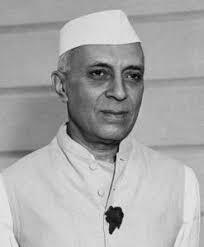
Jawaharlal Nehru was one of the most prominent leaders of India’s freedom struggle and the first Prime Minister of independent India. A visionary statesman, writer, and internationalist, Nehru played a decisive role in shaping modern India’s political, economic, and social foundations. He is remembered as a leader who combined idealism with pragmatism and democracy with scientific thinking.
Early Life and Family Background
Jawaharlal Nehru was born on 14 November 1889 in Allahabad, in present-day Uttar Pradesh, India. He was born into a wealthy and influential Kashmiri Brahmin family. His father, Motilal Nehru, was a renowned lawyer, freedom fighter, and leader of the Indian National Congress. His mother, Swarup Rani Nehru, was a gentle and cultured woman who deeply influenced his emotional and moral upbringing.
Nehru grew up in an environment of privilege but also political awareness. The Nehru household frequently hosted political discussions, and Jawaharlal was exposed early to ideas of nationalism, reform, and self-rule.
Education and Formation of Worldview
Jawaharlal Nehru received his early education at home under private tutors. At the age of 15, he was sent to Harrow School in England, followed by studies at Trinity College, Cambridge, where he studied natural sciences.
Later, he trained as a barrister at the Inner Temple, London. During his years in Europe, Nehru was deeply influenced by Western political thought, socialism, liberalism, and scientific rationalism. He developed a global outlook and a belief that India must modernize to overcome poverty and backwardness.
He returned to India in 1912 and enrolled as a lawyer, but his interest in legal practice was limited. His true calling lay in public life and national service.
Entry into the Indian Freedom Movement
Jawaharlal Nehru formally entered the freedom struggle after meeting Mahatma Gandhi in 1916. Gandhi’s personality and philosophy of non-violence deeply influenced him, though Nehru retained his own independent thinking.
He actively participated in the Non-Cooperation Movement (1920–22) and was imprisoned for the first time in 1921. Over the next two decades, Nehru would be imprisoned multiple times, spending nearly nine years in jail in total.
Despite imprisonment, Nehru used his time to read, write, and reflect on India’s past and future.
Leadership in the Indian National Congress
Jawaharlal Nehru rose rapidly within the Indian National Congress due to his charisma, intellect, and commitment. He represented the younger, more progressive generation of Congress leaders.
He served as President of the Indian National Congress several times, including in:
-
1929 (Lahore Session) – where the demand for Purna Swaraj (Complete Independence) was formally adopted
-
1936 and 1937
The Lahore Session of 1929 was historic, as Nehru unfurled the tricolor flag on the banks of the Ravi River and declared 26 January 1930 as Independence Day.
Role in Major National Movements
Civil Disobedience Movement
Nehru played a major role in the Civil Disobedience Movement (1930–34). He actively supported the Salt Satyagraha and was imprisoned several times.
Quit India Movement
During the Quit India Movement (1942), Nehru was arrested along with other senior leaders and imprisoned until 1945. This movement made it clear that British rule in India was no longer sustainable.
Vision for Independent India
Jawaharlal Nehru believed that political freedom must be accompanied by:
-
Economic development
-
Scientific progress
-
Social justice
He strongly supported democracy, secularism, and socialism. Nehru opposed communal politics and emphasized unity in diversity.
He believed India’s future lay in:
-
Heavy industries
-
Scientific research
-
Education
-
Planned economic development
Role During Independence and Partition
As independence approached, Nehru was deeply involved in negotiations with the British and other Indian leaders. He opposed the partition of India but ultimately accepted it to avoid prolonged civil war.
On the night of 14–15 August 1947, Jawaharlal Nehru delivered his famous speech:
“A Tryst with Destiny”
This speech marked the birth of independent India and remains one of the most celebrated speeches in history.
First Prime Minister of India
Jawaharlal Nehru became India’s first Prime Minister on 15 August 1947, a position he held until his death in 1964.
Nation Building
As Prime Minister, Nehru laid the foundations of modern India:
-
Established IITs, AIIMS, and universities
-
Promoted scientific research and technology
-
Built large dams, which he called the “Temples of Modern India”
-
Introduced Five-Year Plans for economic development
Democracy and Constitution
Nehru worked closely with Dr. B. R. Ambedkar and other leaders to implement the Indian Constitution. He ensured that democracy, civil liberties, and secularism remained central to India’s governance.
Foreign Policy and Non-Aligned Movement
Jawaharlal Nehru was a key architect of India’s foreign policy. He believed India should not align with any major power bloc during the Cold War.
He played a leading role in founding the Non-Aligned Movement (NAM) along with leaders like:
-
Josip Broz Tito
-
Gamal Abdel Nasser
-
Sukarno
Nehru promoted peaceful coexistence and cooperation among nations.
Personal Life and Character
Jawaharlal Nehru married Kamala Nehru, who was actively involved in the freedom movement. They had one daughter, Indira Gandhi, who later became Prime Minister of India.
Nehru was deeply fond of children, which earned him the affectionate title “Chacha Nehru.” His birthday, 14 November, is celebrated as Children’s Day in India.
He was also a prolific writer. His notable works include:
-
The Discovery of India
-
Glimpses of World History
-
An Autobiography
Death and Legacy
Jawaharlal Nehru passed away on 27 May 1964 in New Delhi, at the age of 74.
His death marked the end of an era. Nehru is remembered as:
-
The architect of modern India
-
A champion of democracy and secularism
-
A global statesman and visionary leader
His ideas continue to influence India’s political and intellectual life.
Highlight Points (Quick Summary)
-
🔹 Born on 14 November 1889, Allahabad
-
🔹 Son of Motilal Nehru
-
🔹 Educated at Cambridge & Inner Temple, London
-
🔹 Close associate of Mahatma Gandhi
-
🔹 President of Indian National Congress multiple times
-
🔹 Declared Purna Swaraj (1929)
-
🔹 Imprisoned many times during freedom struggle
-
🔹 Delivered “Tryst with Destiny” speech
-
🔹 First Prime Minister of India (1947–1964)
-
🔹 Founder of Non-Aligned Movement
-
🔹 Promoted science, education, and democracy
-
🔹 Known as Chacha Nehru
-
🔹 Died on 27 May 1964, New Delhi